 Wenzhou Kaixin Kaixin Metal Co.,LTD

If your business is sourcing piping materials for an upcoming project, you already know that the wrong choice can cost you downtime, rework, and unhappy end clients. That’s why so many procurement teams, contractors, and engineers turn to stainless steel pipe applications when reliability, hygiene, and long-term corrosion resistance are non-negotiable.
At KXINOX, you’re working with a source factory that manufactures a full range of Prodotti per condutture in acciaio inossidabile — from seamless and welded pipe to fittings and flanges — built to keep your business moving. In this guide, you’ll discover exactly where stainless steel pipe applications deliver the strongest return for your industry, how to choose the right piping system, and what to check before you place your next order.
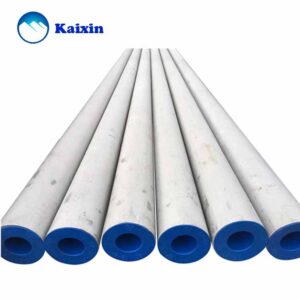
Why Your Business Should Consider Stainless Steel Pipe Applications
Before you commit budget to a piping material, it helps to understand what you’re actually paying for. Stainless steel pipe applications span nearly every heavy industry because the material offers a combination of properties that carbon steel, plastic, and copper simply can’t match at scale:
- Corrosion resistant stainless steel pipe performance in wet, chemical, or saline environments
- High mechanical strength at both low and elevated temperatures
- A smooth, non-porous surface that meets hygiene requirements for food, beverage, and pharmaceutical lines
- Long service life, which lowers your total cost of ownership even when the upfront price is higher
- Full recyclability, supporting your business’s sustainability and ESG reporting goals
When your business needs a piping solution that will still be performing at spec in twenty years, stainless steel pipe applications are usually the safer investment.
Top Industrial Stainless Steel Pipe Applications for B2B Buyers
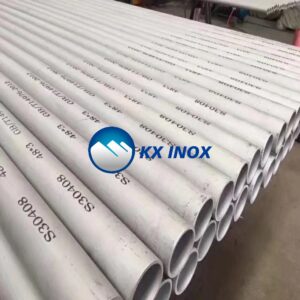
Stainless steel pipe is used for a wide variety of jobs, and the right grade and schedule depend entirely on your industry. Here’s where your business is most likely to see it deployed.
Construction and Infrastructure Projects
Stainless steel for construction applications includes structural framing, curtain wall support, handrails, HVAC ductwork, and fire protection systems. Architects and contractors specify stainless steel because it holds up against weathering, requires minimal maintenance, and keeps its finish over decades of exposure — protecting your reputation on every project you deliver.
Water Supply and Plumbing Systems
Stainless steel water pipes are increasingly the standard for municipal water mains, high-rise plumbing risers, and commercial building distribution. Stainless steel pipes for plumbing resist scale build-up, bacterial growth, and pinhole leaks that plague galvanized or copper alternatives. If your projects involve potable water lines, it’s worth reviewing our detailed stainless steel pipe for drinking water safety guide before you finalize your specification.
Chemical and Process Industries
A stainless steel process pipe is engineered to carry aggressive fluids, acids, and high-purity chemicals without contaminating the product or degrading the pipeline. If your business operates in chemical processing, petrochemical refining, or pulp and paper, process piping reliability directly affects your uptime and safety compliance.
Marine and Offshore Engineering
Marine stainless steel pipe is formulated to withstand constant saltwater exposure, humidity, and pressure cycling. Shipbuilders, offshore platform operators, and port infrastructure teams rely on marine-grade stainless piping systems to prevent the accelerated corrosion that would otherwise force frequent, costly replacements.
Food, Beverage, and Pharmaceutical Manufacturing
Sanitary stainless piping systems are a regulatory requirement in food, dairy, brewing, and pharmaceutical production. The non-reactive, easy-to-clean surface prevents bacterial contamination and satisfies FDA and 3-A sanitary standards, protecting both your product quality and your compliance record.
Oil, Gas, and Energy Infrastructure
Across upstream, midstream, and downstream operations, SS pipelines transport crude, natural gas, and refined products under extreme pressure and temperature. Energy companies depend on stainless steel for its ability to resist sour gas corrosion and maintain structural integrity across long transport distances.
Corrosion Resistant Stainless Steel Pipe: The #1 Reason Businesses Choose It
Corrosion is the single biggest driver of piping failure, unplanned shutdowns, and warranty claims. A corrosion resistant stainless steel pipe forms a passive chromium oxide layer that self-heals when scratched or exposed to oxygen, which is why stainless steel consistently outperforms carbon steel in humid, chemical, or coastal environments.
That said, not every grade resists corrosion equally, and the wrong grade in the wrong environment can still rust. Before you finalize a material spec, we recommend reading our breakdown on does 304 stainless steel pipe rust, which explains exactly when 304 is sufficient and when your business should upgrade to 316 or a duplex alloy.
Choosing the Right Stainless Piping Systems and Standards
Specifying stainless piping systems isn’t just about picking “stainless steel” — it’s about matching the grade, wall thickness, and manufacturing standard to your operating conditions. Two pipes that look identical on a spec sheet can behave very differently depending on which national standard they were produced to. If your team sources internationally, it’s worth understanding AISI vs ASTM stainless steel pipe standards so you can compare quotes from different suppliers on equal terms and avoid costly mismatches during installation.
Stainless Steel Pipe Used For: Quick Reference by Grade
| Grado | Typical Application | Why Businesses Choose It |
|---|---|---|
| 304 / 304L | Plumbing, food processing, general fabrication | Cost-effective, good general corrosion resistance |
| 316 / 316L | Chemical processing, marine, pharmaceutical | Molybdenum content boosts chloride and acid resistance |
| Duplex 2205 / 2507 | Offshore, oil and gas, high-pressure lines | High strength plus superior pitting resistance |
| Sanitary Tube (Polished) | Dairy, beverage, pharmaceutical lines | Smooth interior finish meets hygiene standards |
Why Partner with KXINOX for Your Stainless Steel Pipeline Products
Your business deserves a supplier who understands that every project has different pressure ratings, certifications, and lead-time requirements. KXINOX manufactures seamless pipe, welded pipe, sanitary tube, and pipe fittings under strict ISO 9001 quality control — so your stainless steel pipe applications perform exactly as specified, on schedule.
Request Your Custom Quote Today
FAQ
1. What is stainless steel pipe used for in industrial settings?
It’s used for transporting water, chemicals, gases, and process fluids across construction, plumbing, marine, food and beverage, oil and gas, and pharmaceutical industries wherever hygiene and corrosion resistance matter.
2. Is stainless steel pipe good for plumbing?
Yes. Stainless steel pipes for plumbing resist corrosion, scale, and bacterial growth better than many traditional materials, making them a durable choice for both commercial and residential water systems.
3. What grade of stainless steel pipe resists corrosion best?
316 and 316L offer stronger corrosion resistance than 304 due to added molybdenum, making them ideal for marine, chemical, and coastal environments. Duplex grades go even further for high-chloride conditions.
4. Can stainless steel pipe be used for drinking water systems?
Yes, stainless steel is approved for potable water applications in many regions because it’s non-toxic, lead-free, and won’t leach contaminants into the water supply.
5. What’s the difference between stainless steel process pipe and standard pipe?
Process pipe is manufactured to tighter tolerances and cleanliness standards to safely carry chemicals, high-purity fluids, or pressurized gases without contamination or failure.
6. Why is marine stainless steel pipe different from standard pipe?
Marine-grade pipe typically uses 316L or duplex alloys specifically selected to resist chloride-induced pitting and crevice corrosion caused by constant saltwater exposure.
7. How do I know which stainless piping system suits my project?
Your choice depends on the fluid or gas being transported, operating temperature and pressure, and the environment’s corrosion risk. Our team can help match a grade and standard to your specific application.
8. Is stainless steel suitable for large-scale construction applications?
Yes. Stainless steel for construction applications is used in structural elements, HVAC, and facades because it maintains strength and appearance with minimal long-term maintenance.
9. What’s the typical lead time for bulk stainless steel pipeline orders?
Lead times vary by grade, size, and order volume. As a factory-direct supplier, KXINOX can often offer faster turnaround than trading companies — contact us with your specifications for an accurate timeline.
Ready to Source the Right Stainless Steel Pipeline Products for Your Business?
Whatever industry you serve, choosing the right stainless steel pipe applications now saves your business time, money, and risk down the line. Let KXINOX’s engineering and production team help you specify, quote, and deliver the exact pipeline products your project needs.
 English
 Afrikaans
 Arabic
 Bengali
 Catalan
 Chinese
 French
 Dutch (Belgium)
 Dutch
Dutch German
 Czech
Czech Greek
Greek Hindi
Hindi Japanese
 Italian
 Portuguese
 Spanish (Chile)
 Spanish (Colombia)
 Spanish (Argentina)
 Persian
 Estonian
 Albanian
 Russian
 Spanish (Peru)
 Indonesian
 Thai
Thai Vietnamese
 Georgian
 Korean
 Nepali
 Polish
 Ukrainian
 Malayalam
 Xhosa
Xhosa