



































 شركة ونزو كايشين كايشين كايشين للمعادن المحدودة

When you’re sourcing piping components for an industrial project, stainless steel flanges are one of the most critical parts of the system. Whether your business is building a chemical processing line, a food and beverage facility, or a marine pipeline network, the flanges you choose determine how well your system handles pressure, temperature, and corrosion over its lifetime.
If your team has ever dealt with a leaking joint, a mismatched bolt pattern, or a flange that corroded faster than expected, you already know how costly the wrong choice can be. This guide breaks down everything you need to know about stainless steel flanges — from the different types available to how you can select the right stainless steel pipe flanges for your specific application. By the end, you’ll have a clear framework for evaluating suppliers and specifying flanges with confidence.
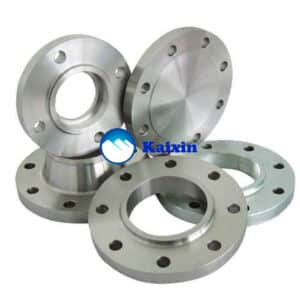
What Are Stainless Steel Flanges?
Stainless steel flanges are disc-shaped or ring-shaped fittings that connect pipes, valves, pumps, and other equipment within a piping system. Instead of welding two pipe ends directly together, you bolt two flanges (or a flange and a fitting) together with a gasket in between to create a secure, leak-resistant seal. This design gives your business the flexibility to disassemble sections of piping for maintenance, inspection, or replacement without cutting into the line.
Because stainless steel resists corrosion, oxidation, and extreme temperatures far better than carbon steel, stainless steel pipe flanges are the go-to choice for industries where hygiene, chemical exposure, or outdoor weathering are concerns. The raw pipe used alongside these flanges matters just as much — if you want to understand how the base pipe is manufactured, take a look at our breakdown of seamless vs. welded stainless steel pipe production.
Common Types of Stainless Steel Flanges
Not every project calls for the same flange design. Your business will typically choose between the following stainless steel flanged pipe fittings, based on pressure rating, installation method, and how often the joint needs to be opened:
| Flange Type | Key Feature | Best For |
|---|---|---|
| Weld Neck Flange | Long tapered hub, full penetration weld | High-pressure, high-temperature piping |
| Slip-On Flange | Slides over pipe, fillet welded | Low-pressure lines, easy installation |
| Blind Flange | Solid disc, no bore | Sealing pipe ends, pressure testing |
| Socket Weld Flange | Pipe inserted into socket, single fillet weld | Small-diameter, high-pressure lines |
| Threaded Flange | Screwed connection, no welding | Non-weldable or hazardous environments |
| Lap Joint Flange | Used with a stub end, rotates freely | Frequent dismantling, alignment flexibility |
| Companion Flange | Bolts to a fixed flange, connects hoses/valves | Pump, valve, and hose connections |
Among these, the stainless steel companion flange deserves special mention — it’s the flange your business bolts onto a fixed pipe flange to connect flexible hoses, pumps, or valves, making it essential for systems that require quick connect-disconnect capability.
Why Your Business Needs High-Quality SS Pipe Flanges
Investing in reliable ss pipe flanges protects your business in several practical ways:
- Corrosion resistance: Stainless steel flanges hold up against moisture, chemicals, and outdoor exposure far longer than carbon steel alternatives, reducing replacement frequency.
- Hygienic performance: Smooth, non-porous surfaces make stainless steel flanges and fittings ideal for food, beverage, and pharmaceutical lines where contamination is unacceptable.
- Structural strength: High tensile strength allows your system to handle demanding pressure and temperature conditions without deforming.
- Lower long-term costs: Fewer replacements and less unplanned downtime mean a better return on your piping investment over time.
- Regulatory compliance: Many industries require materials that meet ASME, ANSI, or DIN standards — stainless steel flanges are widely certified to these specifications.
How to Choose the Right Stainless Steel Flanges and Fittings for Your Application
Selecting the correct flanged stainless steel fittings comes down to a few key decisions:
1. Material grade. 304 stainless steel works well for general industrial and mildly corrosive environments, while 316 offers superior resistance in chloride-heavy or highly corrosive settings. If you’re unsure whether 304 stainless steel can handle your environment, check out our detailed guide on whether 304 stainless steel pipe will rust before finalizing your grade selection.
2. Pressure class. Match your flange’s pressure rating (Class 150, 300, 600, etc.) to your system’s operating pressure — under-rating a flange creates a serious safety risk.
3. Standard and dimensions. Confirm whether your project requires ANSI/ASME B16.5, DIN, or JIS dimensional standards, since bolt patterns and thicknesses vary between them.
4. Face type. Raised face (RF) flanges are common in general industrial use, while flat face (FF) flanges are often specified for cast iron equipment or low-pressure systems.
Sourcing your stainless steel pipe with flanges and matching fittings from a single supplier also reduces the risk of compatibility issues between components, which is why many procurement teams prefer to standardize with one manufacturer across a project.
Industries That Rely on Stainless Steel Flanges and Fittings
Your business is in good company if you’re specifying stainless steel flanges — they’re a standard component across:
- Chemical and petrochemical processing
- إنتاج الأغذية والمشروبات
- Pharmaceutical and biotech manufacturing
- Marine and offshore engineering
- Water and wastewater treatment
- Oil and gas pipelines
- HVAC and industrial ventilation systems
Sourcing Stainless Steel Flanges From a Trusted Manufacturer
When you’re evaluating suppliers, look beyond price. Confirm that your manufacturer can provide mill test certificates, holds relevant ISO or PED certifications, and offers custom sizing when off-the-shelf options don’t fit your specs. Lead time and minimum order flexibility also matter if your project timeline is tight.
Browse KXINOX’s stainless steel flange products, including weld neck, slip-on, blind, and weld neck flange options.
FAQs
1. What is the difference between a weld neck flange and a slip-on flange?
A weld neck flange has a tapered hub that’s welded to the pipe with a full-penetration weld, making it stronger and better suited for high-pressure or high-temperature service. A slip-on flange slides over the pipe end and is fillet welded on both sides, which is faster to install but generally rated for lower pressures.
2. What stainless steel grade is best for flanges — 304 or 316?
304 is suitable for general industrial and mildly corrosive environments. 316 contains molybdenum, which gives it stronger resistance to chlorides and is preferred for marine, chemical, or coastal applications.
3. What is a companion flange used for?
A companion flange bolts onto a fixed pipe flange to create a connection point for hoses, pumps, or valves, allowing quick attachment and detachment without disturbing the rest of the piping system.
4. How do you measure a flange size?
Flange size is typically specified by the nominal pipe size (NPS or DN) it fits, along with the pressure class, which together determine the outside diameter, bolt circle, and bolt hole count.
5. What does the pressure “Class” of a flange mean?
The pressure class (such as Class 150, 300, or 600) indicates the maximum pressure a flange can safely handle at a given temperature, based on ASME B16.5 standards.
6. Can stainless steel flanges be welded to carbon steel pipe?
It’s technically possible using compatible filler materials, but it’s generally discouraged because the dissimilar metals can cause galvanic corrosion at the joint over time.
7. What’s the difference between ANSI and DIN flange standards?
ANSI/ASME standards are commonly used in North America and follow inch-based dimensions, while DIN standards are used across Europe and follow metric dimensions. Bolt patterns and flange thicknesses differ between the two, so they aren’t interchangeable.
8. How do you prevent galling on stainless steel flange bolts?
Applying an anti-seize compound before assembly and avoiding over-tightening are the most effective ways to prevent galling, which occurs when stainless steel threads bind and gall due to friction.
9. Do stainless steel flanges need gaskets?
Yes, gaskets are placed between two mating flange faces to create a leak-proof seal, since the metal surfaces alone typically aren’t perfectly flat enough to prevent leakage under pressure.
10. What is the difference between raised face and flat face flanges?
A raised face flange has a small raised area around the bore that concentrates gasket pressure for a tighter seal, while a flat face flange has a completely flat surface, often used when mating with flat-faced cast iron equipment.
الخاتمة
Choosing the right stainless steel flanges isn’t just a technical detail — it directly affects your system’s safety, uptime, and long-term operating costs. By understanding the different flange types, matching the correct material grade to your environment, and working with a supplier who can back up their products with proper certification, your business can avoid the costly mistakes that come from mismatched or low-quality components.