 Wenzhou Kaixin Kaixin Metal Co., Ltd.
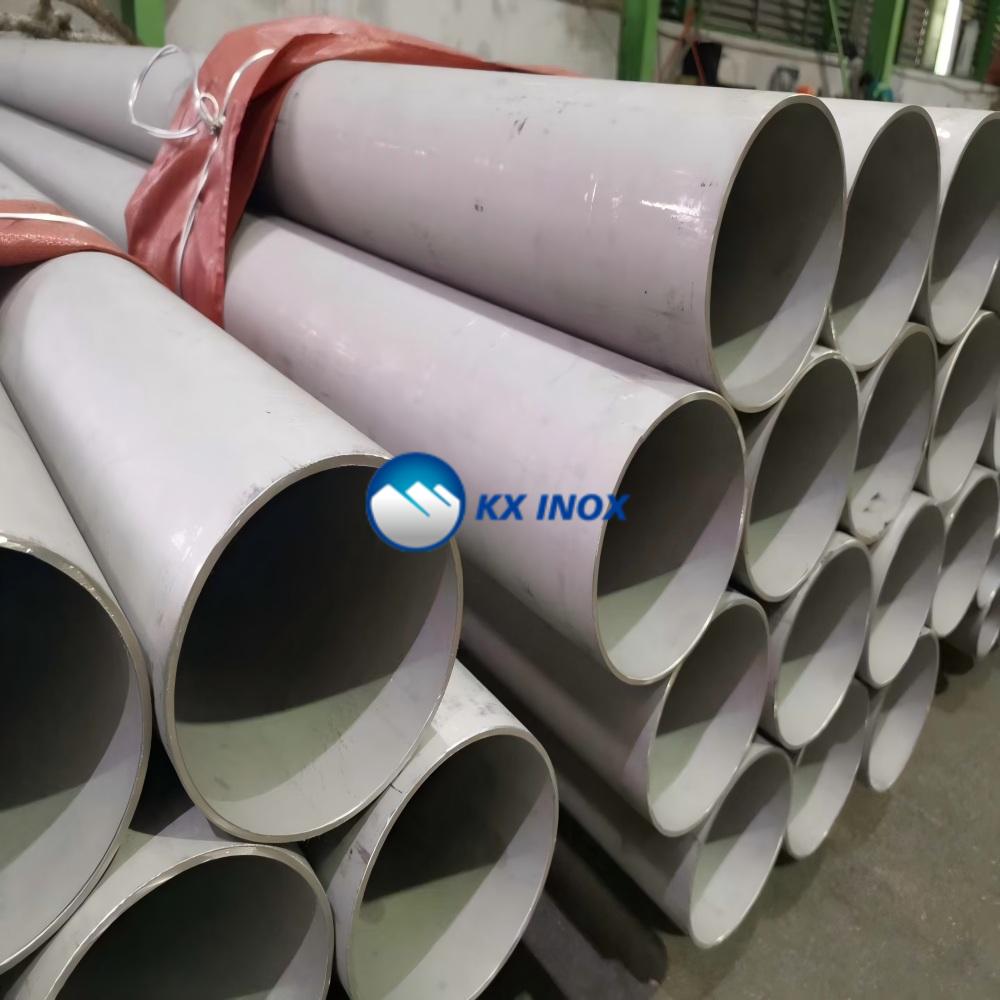
ASTM A213 TP347H Stainless Steel Seamless Pipe:Key Selection for High Temperature and High Pressure Environments
En el interior de la caldera de una central térmica, el vapor a temperaturas extremadamente altas ruge a través de las tuberías; en la zona central de los equipos de refinería de petróleo, los medios corrosivos y las temperaturas extremas interactúan entre sí. Detrás de estas tareas que parecen imposibles, ASTM A213 TP347H stainless steel seamless pipes play a crucial role, silently supporting the energy lifeline and efficient production of modern industry. As a material specifically designed for high temperature, high pressure, and corrosive environments under the ASTM A213 standard, TP347H seamless pipe achieves performance breakthroughs with its unique material science.
In depth analysis: Core definition of ASTM A213 TP347H
ASTM A213: This standard, developed by the American Society for Testing and Materials, is the authoritative specification for seamless ferritic and austenitic alloy steel pipes for boilers, superheaters, and heat exchangers. It specifies in detail the chemical composition, mechanical properties, manufacturing process, testing methods, and inspection requirements of materials to ensure the reliability of products in harsh service environments.
TP347H: This is a specific material grade classification in the standard. Its core is austenitic stainless steel with added stabilizing element niobium (Nb) (equivalent to 0Cr18Ni11Nb in China and X6CrNiNb18-10 in Europe). The suffix “H” represents its high carbon content (0.04-0.10%) version, which is the key to its excellent high-temperature strength (especially creep strength).
>>>>Seamless pipe: Different from welded pipe, seamless pipe is manufactured through integral forming processes such as perforation, extrusion, or hot rolling/cold drawing. It has no weak points in welds, higher structural integrity and pressure bearing capacity, and is particularly suitable for high-pressure and high-temperature applications.
¿Por qué el material TP347H es capaz de soportar condiciones de alta temperatura y alta presión?
>>>Its excellence lies in its exquisite alloy design and metallurgical properties:
Excellent oxidation and corrosion resistance: As an austenitic stainless steel, TP347H naturally possesses excellent resistance to oxidation and corrosion in various chemical media, including many acid and salt solutions. The formation of a dense chromium oxide (Cr ₂ O ∝) protective film on the surface is the basis for its corrosion resistance.
>The key high-temperature strength – the stabilizing effect of niobium: This is the core advantage that distinguishes TP347H from ordinary 304 ⁄ 316 series and even TP347. The addition of niobium element preferentially combines with carbon to form stable niobium carbide (NbC). This effectively inhibits the precipitation of harmful chromium carbide (Cr ₂ ∝ C ₆) at grain boundaries, thereby:
Mejora significativamente la resistencia a la corrosión intergranular: previene el riesgo de agrietamiento por corrosión causado por la deficiencia de cromo en los límites de grano.
>Significantly enhanced high-temperature endurance strength and creep strength: TP347H can still maintain excellent deformation and fracture resistance at long-term service temperatures ranging from 650 ° C to 750 ° C or even higher. The high carbon content (H-type) further enhances this advantage and provides additional solid solution strengthening effect.
>Good high-temperature organizational stability: By optimizing the niobium content and processing heat treatment process, the formation rate of harmful phases (such as Sigma phase) at high temperatures can be effectively controlled, extending the service life.
>Application scenario: an indispensable industrial cornerstone
Son estas características fundamentales las que hacen que ASTM A213 TP347H seamless pipe the preferred material in the following fields:
Power plant boiler system: This is its biggest application area. As a key component of the superheater and reheater pipelines, it must withstand high temperature and high pressure steam erosion from 570 ° C-650 ° C (subcritical) to 600 ° C-620 ° C (ultra/ultra supercritical) to resist oxidation, creep, and steam side oxide skin peeling problems. TP347H also has relatively good resistance to steam oxidation, which can reduce the damage of debris to downstream turbines.
>Petrochemical and coal chemical industries: used in core equipment such as cracking furnaces, conversion furnaces, reforming units, hydrogenation reactors, etc., for high-temperature furnace tubes, heat exchanger tubes, collection tubes, etc., to resist high-temperature flue gas corrosion, internal process medium corrosion, and stress under high temperature.
>Heat Recovery System (HRSG): In gas turbine combined cycle power plants, high-temperature flue gas waste heat is recovered to produce steam.
>Other high-temperature industries, such as high-temperature kiln components, high-temperature gas pipelines, etc.
>Manufacturing and Quality Core of ASTM A213 TP347H Seamless Pipe
El cumplimiento estricto de los requisitos estándar es fundamental para garantizar el rendimiento:
Selección de materiales y fundición: Se utilizan materias primas de alta pureza y se emplean procesos avanzados de fundición (como el horno de arco eléctrico + descarbonización con argón y oxígeno [AOD] o la fundición por inducción al vacío [VIM]) para controlar con precisión la composición química, garantizando especialmente que el contenido de niobio y carbono se mantenga dentro del rango óptimo.
Seamless forming process: usually adopts hot extrusion forming or hot perforation/rolling+cold drawing/cold rolling process route. Cold processing (cold drawing/cold rolling) can not only precisely control dimensional tolerances and achieve better surface smoothness, but also produce processing strengthening effects.
Solution heat treatment: This is the most critical step in the manufacturing process. The TP347H tube must undergo high temperature (usually ≥ 1040 ° C) solution treatment and rapid cooling (water quenching). This process can:
Disolver los carburos formados durante los procesos de laminación o de trabajo en frío.
>Uniformly dissolve alloying elements (especially niobium) in the austenitic matrix.
>Restore austenite structure, obtain optimal intergranular corrosion resistance and good plasticity toughness.
>To lay the foundation for the stabilizing effect of niobium in the subsequent service process.
>Strict testing: Standard requirements include chemical analysis, tensile testing, hardness testing, hydrostatic testing/non-destructive testing (to ensure sealing), intergranular corrosion testing (if necessary), non-destructive testing (ultrasonic or eddy current testing to ensure internal and surface defects), size and external inspection, etc. High demand applications may increase high-temperature endurance or creep testing.
>Selection and application suggestions
Temperature is key: When the long-term service temperature exceeds 550 ° C-600 ° C, the advantages of TP347H over TP304H, TP321H, or TP316H begin to emerge, especially at medium to high stress levels. At ultra supercritical parameters (>600 ° C), TP347H is almost one of the essential materials for the high-temperature section of superheaters/reheaters.
>Focus on sensitization risk areas: The intergranular corrosion resistance of TP347H is crucial for components that may experience sensitization in the welding heat affected zone (450 ° C-850 ° C) or operate within the sensitization temperature range during equipment operation.
>Cost performance trade-off: TP347H has a higher cost than ordinary austenitic stainless steel pipes due to the presence of valuable niobium elements and high manufacturing process requirements. But its significant value in extending equipment lifespan and reducing unplanned downtime far exceeds the initial investment, especially in critical high-temperature and high-pressure areas.
>Supplier selection: It is crucial to choose reliable manufacturers who strictly comply with ASTM A213 standards, have mature production equipment and quality control systems, and have rich industry experience. Ensure the provision of complete Material Certification (MTC) and request third-party inspection reports if necessary.
Cuando el vapor caliente circula por los tubos de la caldera, cuando la torre de refinación
 English
 Afrikaans
 Arabic
 Bengali
 Catalan
 Chinese
 French
 Dutch (Belgium)
 Dutch
Dutch German
 Czech
Czech Greek
Greek Hindi
Hindi Japanese
 Italian
 Portuguese
 Spanish (Chile)
 Spanish (Colombia)
 Spanish (Argentina)
 Persian
 Estonian
 Albanian
 Russian
 Spanish (Peru)
 Indonesian
 Thai
Thai Vietnamese
 Georgian
 Korean
 Nepali
 Polish
 Ukrainian
 Malayalam
 Xhosa
Xhosa