 Wenzhou Kaixin Kaixin Metal Co.,LTD

Why the 304L vs 316L Decision Matters for Your Cooling Loop
If you are specifying stainless steel pipe for a data center liquid cooling system, the single choice that most affects long-term reliability is the grade: 304L or 316L. Both are austenitic, low-carbon stainless steels that resist corrosion, weld cleanly, and meet the hygiene and pressure demands of a coolant loop. But they are not interchangeable, and getting the split wrong either burns budget on grade you did not need or quietly undermines the corrosion margin on the part of the loop that can least afford it.
This guide walks you through exactly where each grade belongs in a data center cooling system, how coolant chemistry (glycol blends and deionized water) changes the math, the welded-vs-seamless question, and the total cost of ownership behind the spec. It is written for the people who actually place the order: procurement leads, mechanical engineers, and facilities specifiers.
304L vs 316L: The Two Grades at a Glance
Both grades share the same chromium-nickel austenitic family. The difference comes down to one added element and the “L” (low carbon) chemistry:
- 304L – roughly 18% chromium, 8% nickel, and very low carbon. It is the workhorse: strong general corrosion resistance, full structural strength, and the lower price point because it skips the expensive molybdenum addition.
- 316L – adds 2–3% molybdenum plus a little more nickel, and keeps carbon low. That molybdenum is the secret ingredient: it sharply improves 316L stainless steel pipe resistance to pitting and crevice corrosion, especially where chlorides or aggressive water treatment are present.
The low-carbon “L” designation matters most when the pipe is welded rather than mechanically joined: it prevents sensitization (carbide precipitation at the weld heat-affected zone) that would otherwise make the joint vulnerable to corrosion.
| Property | 304L Stainless Steel Pipe | 316L Stainless Steel Pipe |
|---|---|---|
| Key alloying addition | 18% Cr, 8% Ni | 18% Cr, 10% Ni, 2–3% Mo |
| Chloride resistance | Good in controlled, low-chloride loops | Excellent; built for chloride/pitting resistance |
| Deionized water service | Adequate on the facility/rough side | Preferred on the clean secondary loop |
| Weld corrosion margin | Low-carbon “L” protects HAZ | Low-carbon “L” protects HAZ |
| Relative cost | Lower (no molybdenum) | Higher (molybdenum + richer alloy) |
| Best fit in a cooling loop | Distribution, structural, controlled runs | Clean side, welded manifolds, harsh chemistry |
For a one-line primer on the base grade, see our 304L stainless steel pipe product page, which covers chemistry and available schedules.
Why Corrosion Resistance Decides Your Loop’s Uptime
A liquid cooling loop is a hostile environment for the wrong metal: continuous moisture, condensation, cleaning agents, and water-treatment additives are present for the entire life of the facility. The failure mode you are trying to avoid is pitting corrosion – a localized attack that starts as a pinhole and works through the wall, leading to leaks, contaminated coolant, and unplanned downtime for sensitive server hardware.
Stainless steel earns its place through the self-healing passive chromium-oxide layer on its surface. When minor damage occurs, chromium reacts with oxygen to regenerate protection without coatings or maintenance. The gradedifferentiator is chloride resistance: chlorides (from treatment chemicals, coastal airborne salt, or even trace contamination) are the main driver of pitting. That is exactly where 316L’s molybdenum pays for itself.
Rule of thumb: if the loop sees chlorides, deionized water on the clean side, or welded fabrication, specify 316L. If the chemistry is controlled and the service is straightforward, 304L carries the load at a lower cost.
Coolant Chemistry: Glycol Blends vs Deionized Water
Your coolant choice is part of the grade decision, not separate from it. Most data center loops run one of two fluids:
- Glycol cooling system (typically a propylene-glycol or water-glycol blend, e.g. PG25) – glycol is less aggressive than pure water, which slightly eases the corrosion budget. Both 304L and 316L perform well in controlled glycol loops.
- Deionized water cooling – DI water is “hungry” metal: with ions removed, it can actually accelerate corrosion if the passive layer is compromised. On the clean secondary loop that runs to racks and cold-plate microchannels, the tighter corrosion margin of 316L is the safer specification.
In practice, facilities often run glycol on the primary side and deionized or treated water on the secondary side. That split is the natural place to split your grade: 304L on the robust primary distribution, 316L on the clean, corrosion-sensitive secondary loop.
Welded vs Seamless Stainless Steel Pipe for Cooling Loops
The second structural decision is manufacturing route, and it interacts with grade choice:
- Welded stainless steel pipe – made from rolled strip and longitudinally welded. Cost-effective, readily available in large diameters, and perfectly serviceable where the weld is accessible and the chemistry is controlled. The low-carbon “L” grade keeps the heat-affected zone corrosion-resistant.
- Seamless stainless steel pipe – extruded with no longitudinal weld, giving uniform strength and one less potential leak path. Preferred for higher-pressure runs, critical joints, and any section where a failure is expensive.
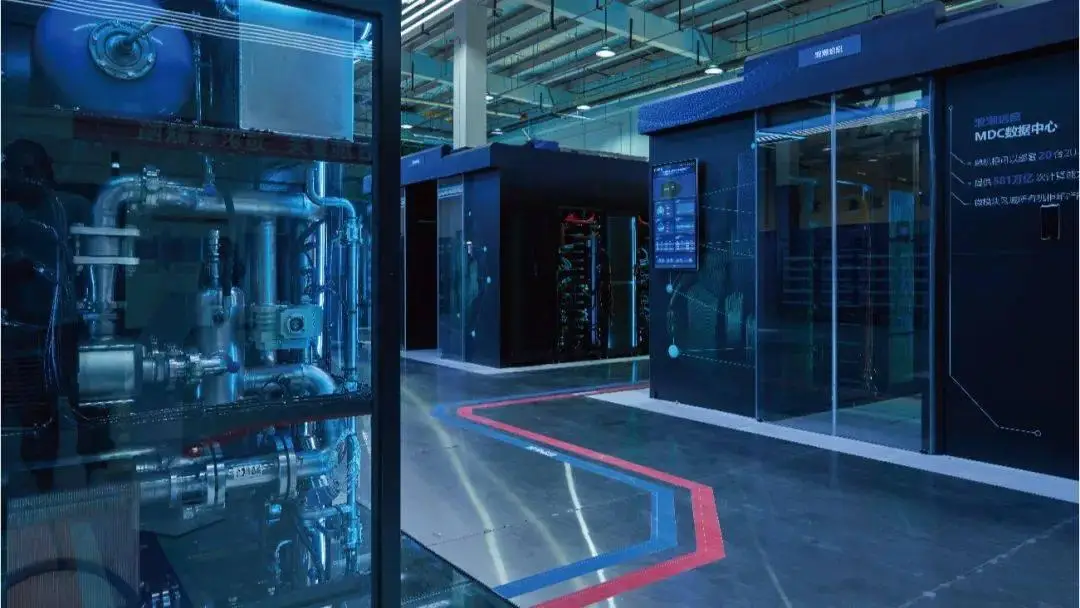
For cooling systems, a common, defensible specification is seamless 316L on the clean, high-value secondary loop and welded or seamless 304L on the lower-demand primary distribution – balancing leak risk against budget.
Where You Should Specify 304L vs 316L
Use this decision framework rather than defaulting to one grade everywhere:
| Specify 316L when… | Specify 304L when… |
|---|---|
| Coolant is deionized or aggressively treated | Controlled glycol blend, stable chemistry |
| Loop runs near coast or airborne salt | Inland, low-chloride environment |
| Pipes are welded manifolds / fabricated assemblies | Mechanical joints, simple distribution runs |
| Clean secondary loop to racks / cold plates | Primary facility-side distribution |
Get a Grade Recommendation for Your Loop
Not sure where 304L ends and 316L begins in your specific cooling design? Send us your loop schematic, coolant chemistry, and service conditions – our engineering team will return a graded specification mapped to each run.
Total Cost of Ownership, Not Just Unit Price
316L costs more per meter – the molybdenum and richer alloying see to that. The temptation is to standardize on one grade. If you standardize, 316L is the safe direction because it covers everything 304L does. But a large network built entirely in 316L carries real cost that the controlled, lower-demand runs never cash in.
The disciplined approach is to place each grade where it earns its keep. On a build with thousands of connections, the saving from running 304L on the primary distribution – while reserving 316L for the clean, welded, corrosion-sensitive runs – adds up to meaningful CapEx relief without sacrificing uptime. Factor in the 30+ year service life of properly specified stainless and the lifecycle math favors right-grade placement over blanket upgrading.
Specifying With Confidence: Quality & Compliance
For B2B procurement, the grade on the paper has to match the metal in the rack. Insist on:
- Mill Test Report (MTR) listing exact chromium, nickel, and molybdenum content against the relevant ASTM grade.
- Positive Material Identification (PMI) – a handheld XRF test on the finished pipe before shipment proves chemistry on the factory floor.
- Standards compliance – cooling pipes are typically supplied to ASTM A312 / A269 / A270 (and A511 for mechanical tubing). Request ISO and third-party inspection documentation.
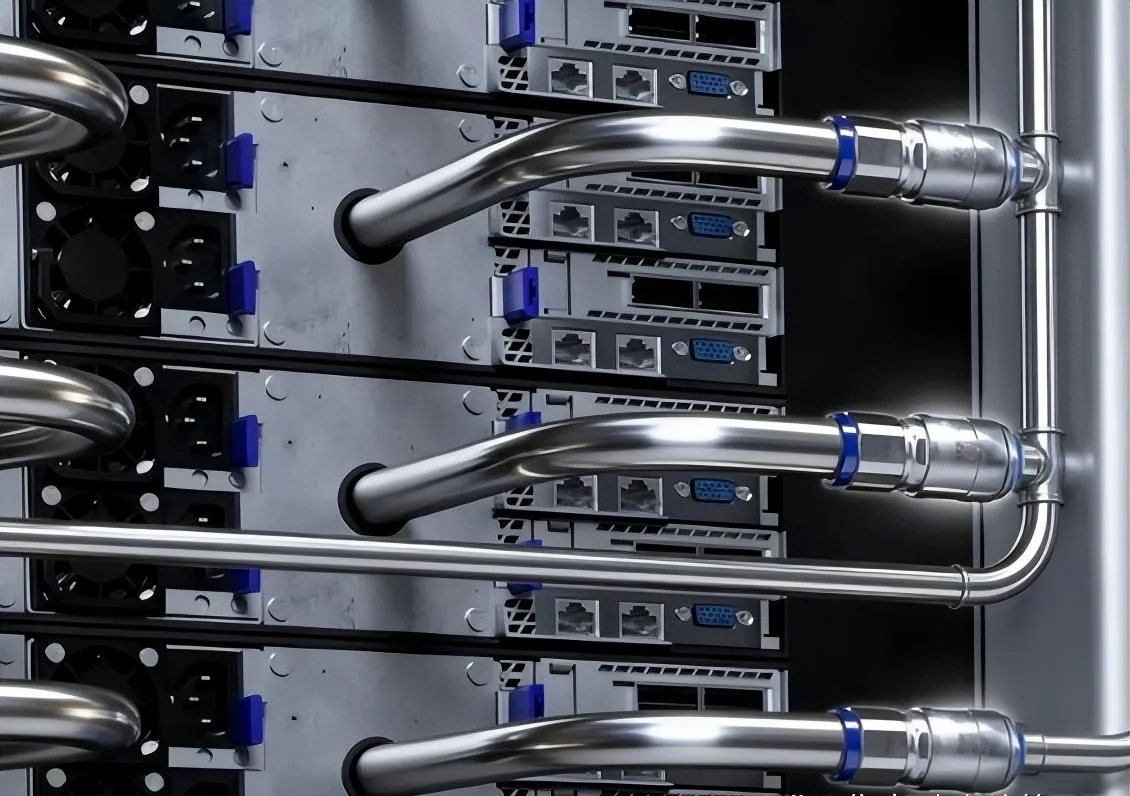
Kaixin (KXINOX), Wenzhou Kaixin Metal, is a stainless steel pipe manufacturer and nickel-alloy supplier shipping to data-center, semiconductor, and industrial clients worldwide. We provide full MTR and PMI documentation, ASTM-compliant 304L/316L seamless and welded pipe, and global export logistics – so your specified grade is the grade you receive.
Ready to Source Your Cooling Pipe?
Get a competitive quote on 304L or 316L stainless steel pipe – seamless or welded – with full mill certification. Our team responds with lead time and a technical summary tailored to your loop.
Frequently Asked Questions
Q1. What wall thickness (schedule) should I specify for 304L/316L cooling pipes?
For most secondary cooling loops, Schedule 5S or 10S thin-wall pipe is sufficient and reduces weight and cost; higher-pressure primary runs often use Schedule 40S. Base the choice on design pressure, not on the grade – 304L and 316L share the same pressure ratings at a given schedule.
Q2. Can 304L and 316L stainless be used together in the same cooling loop?
Yes, and it is common practice. Because both are austenitic and close in potential, coupling them does not create a damaging galvanic cell the way mixing stainless with carbon steel would. The usual caution is simply to keep dissimilar metals (e.g., brass or carbon steel) out of the coolant path.
Q3. How do I verify the delivered pipe is really 316L and not 304?
Require an MTR with the molybdenum percentage (316L shows 2–3% Mo; 304L shows essentially none) and confirm with an on-site or supplier PMI (XRF) test. This is the only reliable way to catch a grade substitution before installation.
Q4. Does 316L require passivation after welding in a cooling system?
The low-carbon “L” chemistry already resists weld sensitization, so passivation is not strictly required. However, a light pickling or passivation after fabrication removes free iron from cutting and handling and restores the optimal passive layer – a worthwhile step for the clean secondary loop.
Q5. Is 316L worth the premium for an inland, controlled-facility data center?
If the facility is inland, the coolant is a stable glycol blend, and the pipes are largely mechanically joined, 304L is usually the economically rational choice on the primary side. Reserve 316L for the clean secondary loop and any welded manifolds to capture the corrosion margin where it matters.
Q6. Which ASTM standards apply to these pipes in liquid cooling?
Pressure-bearing welded and seamless pipe is typically ASTM A312 (welded/seamless) or A269/A270 for tubing and sanitary loops. Mechanical/specific-purpose tubing may reference A511. Always tie the purchase order to the specific ASTM grade and request the corresponding MTR.
Related Resources
From the Kaixin (KXINOX) knowledge base:
- Why Stainless Steel Pipes Are Essential for AI Data Center Liquid Cooling
- Will 304 Stainless Steel Pipe Rust? The Ultimate Guide to SS 304 Corrosion Resistance
- SS Tube Production: Seamless vs Welded Pipe Processes
- Low Carbon Stainless Steel Pipe: The Ultimate Guide to 316L vs 316
- 904L vs 316L Stainless Steel Pipe: Is the Premium Price Worth It?
- Standard Pipe Dimensions Calculator
 English
 Afrikaans
 Arabic
 Bengali
 Catalan
 Chinese
 French
 Dutch (Belgium)
 Dutch
Dutch German
 Czech
Czech Greek
Greek Hindi
Hindi Japanese
 Italian
 Portuguese
 Spanish (Chile)
 Spanish (Colombia)
 Spanish (Argentina)
 Persian
 Estonian
 Albanian
 Russian
 Spanish (Peru)
 Indonesian
 Thai
Thai Vietnamese
 Georgian
 Korean
 Nepali
 Polish
 Ukrainian
 Malayalam
 Xhosa
Xhosa