 Wenzhou Kaixin Kaixin Metal Co.,LTD

steel pipes for tap water
Steel pipes can be used in tap water systems, but the right choice depends on the type of steel, the age of the plumbing, the water chemistry, and local code requirements. Older galvanized steel water pipes often raise concerns because they can corrode, collect scale, and trap contaminants, while modern stainless steel options can be a durable choice when properly specified and installed. If you are renovating, inspecting an older home, or choosing new water supply pipes, the goal is simple: safe drinking water, reliable flow, and materials that will hold up over time.
Are steel pipes safe for tap water?
Steel pipes for tap water can be safe when they are made from suitable materials, approved for potable water, and installed correctly. The biggest distinction is between older galvanized steel and modern stainless steel. Galvanized tap water pipes were common in many older buildings, but over time the zinc coating can wear down, corrosion can build inside the pipe, and water quality problems may appear.
Stainless steel is generally a better fit for potable water systems because it resists corrosion more effectively. However, not every stainless grade is appropriate for drinking water, and not every steel pipe fitting is automatically safe. Fittings, valves, threaded connections, and joining materials should be rated for potable water use and comply with applicable plumbing standards.
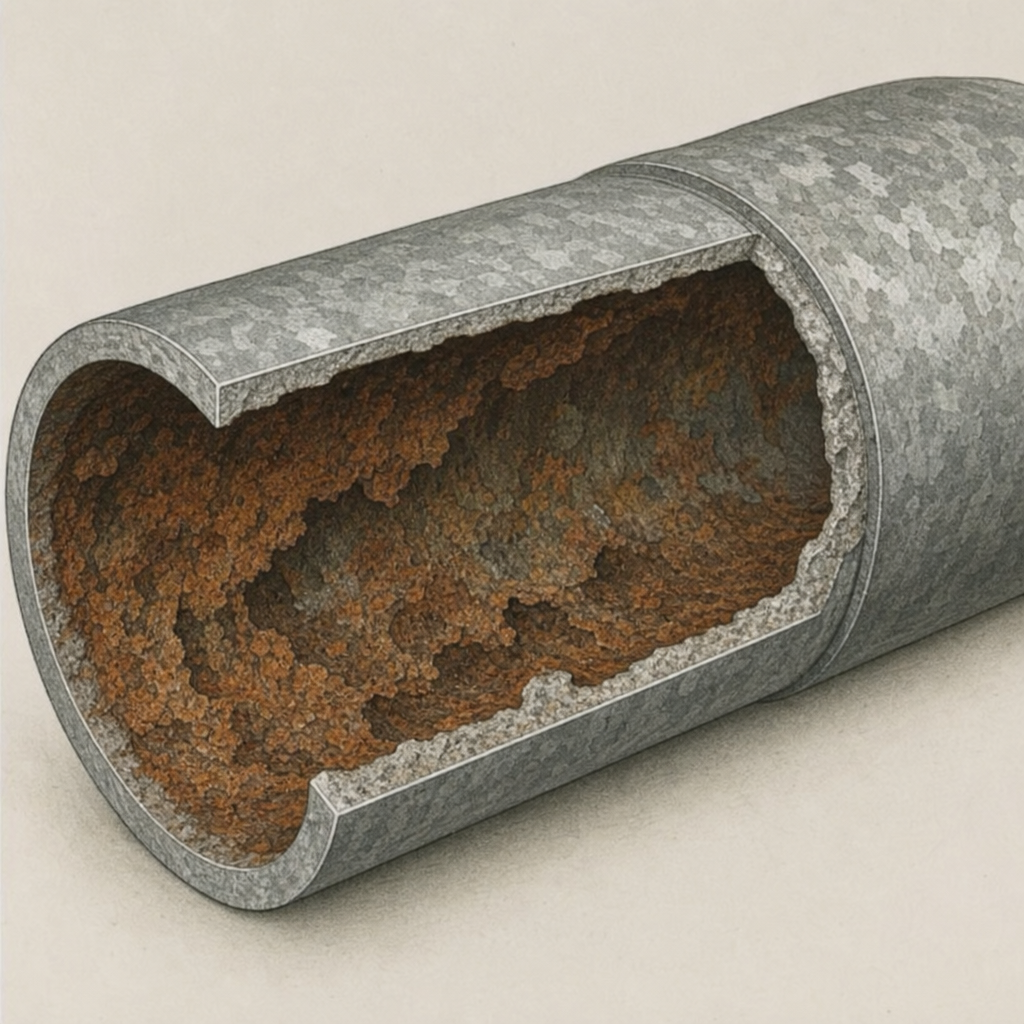
cutaway view of old galvanized steel pipe with internal corrosion
For homeowners, safety is not just about the pipe label. It is also about what has happened inside the system over years of use. A galvanized line downstream of an old lead service line or lead-containing fitting may hold lead in internal scale. When water chemistry changes or pipes are disturbed during renovation, that scale can release contaminants into the water.
The main types of steel water pipes
Plumbing steel pipes are not all the same. Understanding the common options helps you make a more practical decision before repair or replacement work begins.
Galvanized steel
Galvanized steel is carbon steel coated with zinc to slow rust. It was widely used in older residential plumbing, especially before newer plastic and copper systems became common. Its strength is a benefit, but its long-term performance in drinking water systems is often limited by internal corrosion and mineral buildup.
As galvanized pipes age, they may reduce water pressure, create rusty or discolored water, and increase the risk of leaks. In homes with decades-old galvanized lines, replacement is often more practical than repeated patch repairs.
Stainless steel
Stainless steel is more corrosion-resistant and can be a strong choice for modern steel pipes for tap water. Grades such as 304 and 316 are commonly discussed for water applications, with 316 offering stronger resistance in harsher environments because of its alloy composition. The best choice depends on water chemistry, locati0n, budget, and code requirements.
Stainless steel pipe installation must still be done carefully. Poor joining methods, incompatible fittings, or contact with unsuitable metals can create problems even when the pipe itself is high quality.
Other steel grades
Some lower-grade stainless steels are designed for different uses and may not be suitable for potable water. This is why selecting plumbing materials should not be based only on appearance or price. Always confirm that the pipe and steel pipe fittings are intended for drinking water systems.
Warning signs in older tap water pipes
Many water quality problems begin quietly. A pipe may look acceptable from the outside while the inside is narrowed by rust, scale, or sediment. If you live in an older home, pay attention to patterns rather than one-off issues.
Common signs that steel water pipes may need inspection include:
- Brown, yellow, or reddish water, especially after water has been sitting overnight
- Lower water pressure at several fixtures, not just one faucet
- Metallic taste or odor from the tap
- Frequent leaks near threaded joints or fittings
- Visible rust around exposed pipe sections
- Plumbing records showing galvanized pipe, lead service lines, or unknown older fittings
- Water test results showing elevated lead, iron, or other contaminants
These signs do not always prove the pipes are unsafe, but they are good reasons to take the next step. A licensed plumber can identify pipe materials, check connections, and recommend whether repair, partial replacement, or full repiping makes sense.
Which steel pipe fittings work best for potable water?
The best steel pipe fittings for potable water are those that match the pipe material, resist corrosion, and are certified or approved for drinking water use. Stainless steel fittings are often preferred with stainless systems because they help maintain compatibility and reduce corrosion risks. In mixed-material systems, the transition points need extra attention because dissimilar metals can react when connected incorrectly.
When choosing fittings, look beyond size and thread type. Ask whether the fitting is rated for potable water, whether it is compatible with the pipe grade, and whether it meets the standards required in your area. Lead-free requirements are especially important for drinking water components.
A practical selection checklist includes:
- Confirm the pipe and fitting are approved for potable water.
- Match stainless fittings with stainless pipe where possible.
- Use proper transition fittings when connecting steel to copper, plastic, or other materials.
- Avoid unknown surplus fittings for drinking water applications.
- Check whether gaskets, sealants, and joint compounds are safe for potable water.
- Follow local plumbing code and manufacturer installation guidance.
This step matters because fittings are often where leaks, corrosion, and contamination risks begin. A high-quality pipe system can still fail if the connections are wrong.
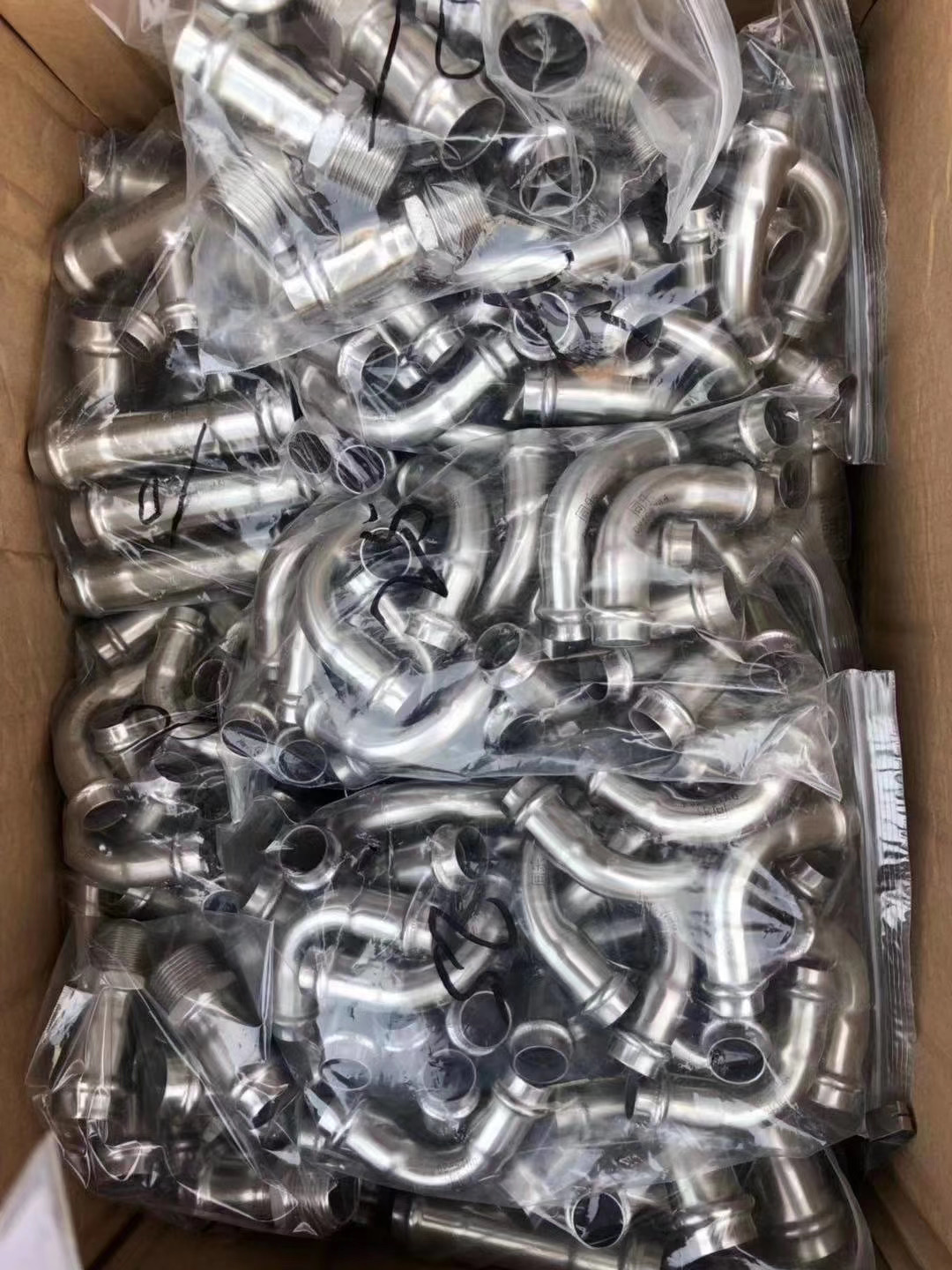
organized stainless steel pipe fittings for potable water plumbing
Installation and maintenance make the difference
Steel pipe installation is more demanding than many people expect. Galvanized steel often requires cutting, threading, and careful sealing, which can make repairs labor-intensive. Stainless steel may require specialized joining methods and experienced handling to avoid damaging the material or creating weak points.
Good installation reduces future risk. Pipes should be properly supported, protected from unnecessary stress, and connected with compatible materials. In areas where condensation, soil contact, or harsh water conditions are concerns, corrosion protection becomes even more important.
Maintenance is also part of water safety. If older galvanized plumbing remains in use, consider periodic water testing, especially after plumbing work, service interruptions, or changes in municipal water treatment. Flushing stagnant water before drinking or cooking may help reduce short-term exposure, but it should not be treated as a permanent fix for deteriorated pipes.
Point-of-use filters certified for lead reduction can be useful when contamination is a concern. Still, filtration does not repair the underlying pipe system. If tests show persistent issues, replacement is usually the more reliable long-term path.
When replacement is the smarter option
Replacing water supply pipes can feel disruptive, but repeated small repairs may cost more over time and leave water quality questions unresolved. If galvanized pipes are heavily corroded, leaking, or connected to older lead-containing components, replacement should be discussed seriously.
A phased replacement may be possible in some homes, especially during kitchen, bathroom, or basement renovations. However, partial work must be planned carefully. Replacing one section can disturb sediment in nearby old lines, and mixing new and old materials without proper transitions can create new corrosion points.
Before starting, ask your plumber to document:
- Which pipe materials are currently installed
- Whether any lead service line, lead solder, or older brass components may be present
- Which new material is recommended and why
- Whether stainless steel, copper, PP-R, PEX, or another option best fits the home
- What testing should be done before and after the work
- How long water should be flushed after installation
This gives you a clearer basis for decisions instead of relying on guesswork. It also helps align the project with water quality goals, budget, and code compliance.
Balancing durability, cost, and water quality
There is no single pipe material that is best for every building. Stainless steel offers strength and corrosion resistance, but it can require careful specification and skilled installation. Galvanized steel may still exist in older systems, but it is rarely the first choice for new residential tap water pipes because of its aging and corrosion concerns.
For most projects, the best approach is to consider the whole system rather than one component. Pipes, fittings, valves, water chemistry, installation quality, and maintenance all work together. A durable material installed poorly can disappoint, while a properly designed system can provide cleaner water and fewer problems.
If you are evaluating steel pipes for tap water, start with identification and testing. Know what is in the walls, confirm whether the water is safe, and choose replacement materials that are approved for potable water. That combination of practical inspection and informed material selection is the most reliable way to protect both your plumbing system and the water your household uses every day.
 English
 Afrikaans
 Arabic
 Bengali
 Catalan
 Chinese
 French
 Dutch (Belgium)
 Dutch
Dutch German
 Czech
Czech Greek
Greek Hindi
Hindi Japanese
 Italian
 Portuguese
 Spanish (Chile)
 Spanish (Colombia)
 Spanish (Argentina)
 Persian
 Estonian
 Albanian
 Russian
 Spanish (Peru)
 Indonesian
 Thai
Thai Vietnamese
 Georgian
 Korean
 Nepali
 Polish
 Ukrainian
 Malayalam
 Xhosa
Xhosa