 Wenzhou Kaixin Kaixin Metal Co.,LTD

Reviewed by the KAIXIN Pipeline Engineering Team · Updated for 2026 AI data-center builds
If you are planning, specifying, or upgrading an AI data center, the cooling loop is no longer a back-of-house detail—it is the system that decides whether your racks stay online. As rack densities push past 30 kW and accelerated compute keeps climbing, air cooling simply cannot keep up. Liquid cooling, with roughly 1,000× the heat capacity of air, has moved from optional to essential. And at the heart of every reliable loop is a material decision you should not leave to chance: the pipe.
This guide explains why tubo in acciaio inox is the default choice for AI data center liquid cooling, which grades to specify, and how to design a loop that stays leak-tight for a decade or more.
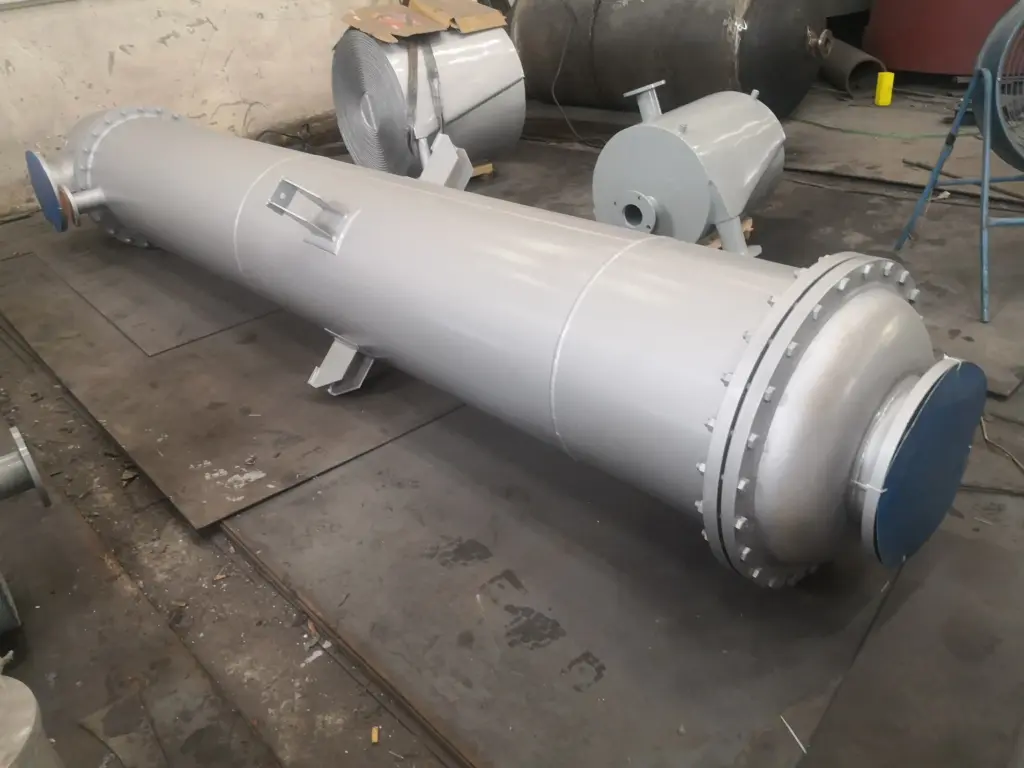
Designing a liquid-cooling loop?
Our engineers can help you specify the right grade, size, and schedule for your AI data center. Start with a short conversation about your coolant and layout.
Why Liquid Cooling Is Now the Standard for AI Data Centers
Modern AI servers generate heat loads that overwhelm traditional raised-floor air conditioning. When you pack GPUs into high-density racks, the only way to move that heat efficiently is with a fluid. Liquid cooling systems—whether direct-to-chip, cold-plate, or immersion—let you capture heat exactly where it is produced and move it to a coolant distribution unit (CDU) without saturating the room with warm air.
For you, the practical consequence is simple: the piping you choose has to survive constant fluid contact, thermal cycling, vibration from pumps, and the occasional condensation event. Few materials do all of that as dependably as stainless steel.
Why Stainless Steel Pipes—and Not Alternatives—Belong in Your Cooling Loop
You have options: copper, carbon steel, plastics such as PEX, and stainless steel. Each has a place, but for the primary distribution network of a mission-critical facility, stainless steel wins on the points that actually matter:
- Corrosion resistance. In high-humidity, condensation-prone spaces, stainless steel resists the internal scaling and pitting that clog narrow cooling channels and contaminate sensitive circuits.
- Coolant compatibility. Properly specified austenitic grades tolerate deionized water, glycol mixes, and many dielectric coolants without leaching ions into the loop.
- Pressure and temperature stability. Stainless maintains its strength through thermal cycling and holds rated pressure with conservative safety factors.
- Weldability and clean joints. Stainless welds predictably, so you get repeatable, liquid-tight connections instead of relying on dissimilar-metal joints that corrode.
- Long service life. A correctly specified loop can run for the life of the facility, which is exactly what you want when downtime is measured in dollars per minute.
That combination is why operators building for uptime standardize on stainless for the parts of the loop they cannot afford to fail.
Stainless Steel Tubing vs. Pipe: Picking the Right Profile
When you hear “pipe” and “tube” used interchangeably, the distinction matters for your design. Tubi in acciaio inossidabile is typically made to precise outside-diameter tolerances, which makes it ideal for manifolds, headers, and tight-bend routing inside a CDU or rack. Pipe is specified by nominal diameter and schedule, better suited to the larger distribution runs between the CDU and the row. For most AI cooling loops you will use both: tubing where precision and flow control matter, pipe where volume and pressure matter.
Which Grade Should You Specify? 304L, 316L, and Beyond
The grade you choose sets the ceiling on corrosion performance and cost. For cooling loops, the low-carbon “L” grades are usually the right call because they resist weld-zone sensitization:
- 304L – The cost-effective default for clean, indoor loops with deionized water or mild glycol. Excellent general corrosion resistance.
- 316L – Adds molybdenum for far better resistance to chlorides and aggressive coolants. Choose 316L when your facility sits in a coastal or humid environment, or when coolant chemistry is aggressive.
- 316Ti / 347H – Stabilized grades for higher-temperature or more demanding service, useful in hybrid cooling or where the loop sees sustained heat.
Our full range of 304L and 316L stainless steel pipe is supplied to ASTM A312/A269/A270 and EN standards, with mill test reports so your QA team can verify chemistry before installation.
| Grado | Key Addition | Ideale per | Notes |
|---|---|---|---|
| 304L | Low carbon (≤0.03%) | Indoor loops, DI water, mild glycol | Cost-effective general duty |
| 316L | + Molybdenum | Coastal/humid, chloride, aggressive coolant | Best all-round corrosion resistance |
| 316Ti | Stabilizzato al titanio | Higher-temperature service | Stabilized against sensitization |
| 347H | Niobium-stabilized | Sustained elevated temperature | Long-term high-temp stability |
Need a spec sheet or a tailored quote?
Tell us your coolant chemistry, pressure, and layout. We will return a documented stainless steel pipe package with mill test reports.
For a representative option, see our Tubo senza saldatura in acciaio inossidabile ASTM A213 TP316, a common choice where chloride resistance matters.
Cooling Manifolds and the Coolant Distribution System
The coolant distribution system is where stainless steel earns its keep. Manifolds, headers, and distribution rings must stay dimensionally stable under pressure while supporting the weight of fluid without sag or joint stress. This is where your choice of raccordi per tubi in acciaio inossidabile, flanges, and valves matters: every connection is a potential leak path, so you want components that match the pipe metallurgy and seal reliably through years of thermal cycling.
Corrosion Resistance in Real Data-Center Conditions
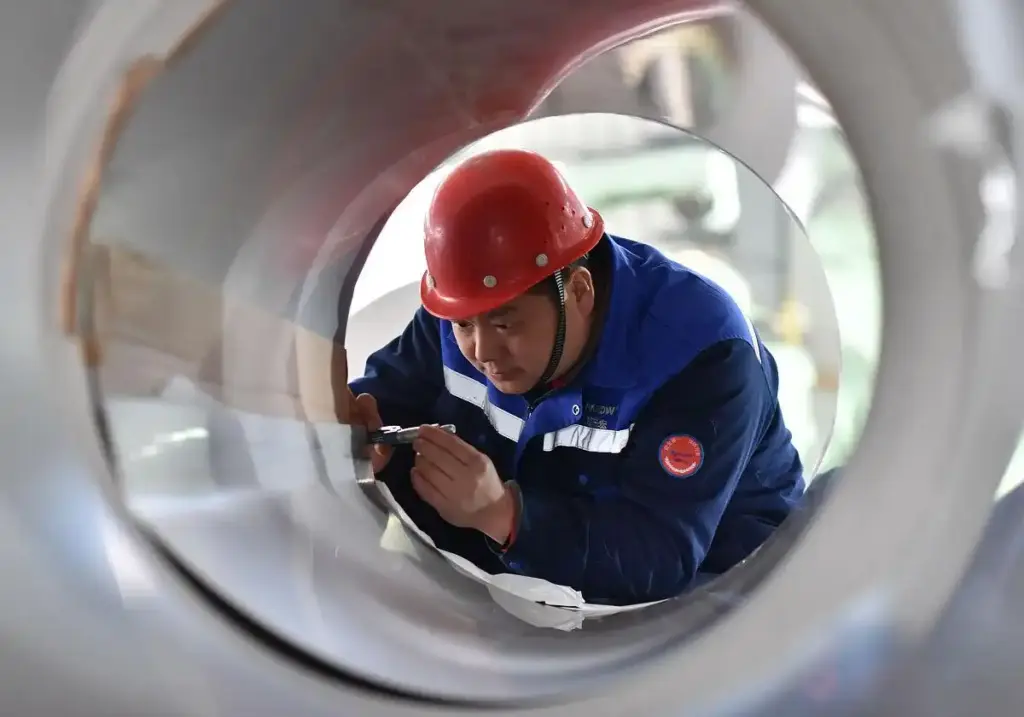
In the field, your loop meets condensation, glycol, trace chlorides from make-up water, and pump-induced vibration. The grade and surface finish you specify decide whether those conditions cause slow degradation or nothing at all. For sustained high-temperature or aggressive-service sections, stabilized austenitics such as our ASTM A213 TP347H stainless steel seamless pipe extend service life, while duplex grades can be considered where both weight and strength are constrained. The takeaway for you: match the grade to the worst condition the loop will actually see, not the average.
How KAIXIN Supports Your Cooling Infrastructure
At KAIXIN (Wenzhou Kaixin Metal / KXINOX) we supply stainless steel pipe, tubing, fittings, and flanges to ASTM and EN standards with full mill test reports and third-party inspection on request. Our team supports B2B buyers with custom sizes, cut-to-length, and documentation packages that slot straight into your procurement and QA workflow. When you specify KAIXIN, you get a supply partner that understands both the metallurgy and the deadline.
Ready to specify your cooling infrastructure?
KAIXIN supplies 304L/316L stainless steel pipe, tubing, fittings, and flanges to ASTM/EN standards—custom sizes and cut-to-length available.
Key Takeaways
- Liquid cooling is now standard for high-density AI racks; the pipe is a critical reliability component, not a commodity.
- Stainless steel leads on corrosion resistance, coolant compatibility, weldability, and life-cycle cost.
- Specify 304L for general loops and 316L where chlorides or aggressive coolant are present.
- Design manifolds and CDUs with matching stainless fittings and flanges to eliminate leak paths.
- Match the grade to the worst real-world condition, and verify chemistry with mill test reports.
Domande frequenti
What flow velocity should I design for in a stainless steel cooling loop?
Typical design velocities are about 1–3 m/s for water/glycol in stainless distribution piping. Higher velocities improve heat transfer but raise pressure drop and erosion-corrosion risk at fittings, so size the pipe so the CDU pump can deliver the required flow within its head curve.
Can stainless steel be used with two-phase or dielectric coolants?
Yes. Austenitic 304L/316L are compatible with many dielectric and two-phase fluids, but you should verify coolant chemistry—especially halide content—and control surface finish. For dielectric loops, keep particulate low and maintain passivation so the fluid stays clean.
How do I avoid galvanic corrosion where stainless meets other metals in the CDU?
Avoid direct stainless-to-carbon-steel or stainless-to-copper contact in wet locations. Use dielectric isolation, non-conductive gaskets, or isolate the joint with flanges and liners so the dissimilar metals never share an electrolyte.
What surface finish (Ra) is recommended for cooling manifolds?
For manifold interiors, a smooth finish (commonly Ra ≤ 0.8 µm, often electropolished for sanitary loops) reduces biofilm adhesion and particulate trap sites. External surfaces can remain standard mill finish without affecting performance.
Are there code or compliance requirements for data-center cooling piping?
Depending on jurisdiction and operating pressure, loops may fall under pressure-equipment directives (such as the EU PED) or local mechanical/plumbing codes. Keep the documentation chain complete: material certificates, weld procedures, and hydrotest records.
How does stainless steel compare to copper or PEX for AI cooling?
Copper has better thermal conductivity but is more vulnerable to certain coolants and galvanic issues; PEX is inexpensive but limited in temperature, pressure, and lifespan. Stainless balances coolant compatibility, pressure rating, and service life for critical loops.
What lead times and MOQs should B2B buyers expect for cooling-grade stainless pipe?
For standard 304L/316L sizes, stock-to-short lead times are common; custom outside-diameter, wall, or stabilized grades may need mill lead times. Minimum order quantities vary by size—share your bill of materials early so your supplier can phase deliveries to your build schedule.
Risorse correlate
- Tecniche per una piegatura efficace dei tubi in acciaio inossidabile – practical fabrication guidance for installers and engineers.
- Tubi senza saldatura in acciaio inossidabile (Categoria di prodotto) – browse 304L/316L grades with full specifications.
 English
 Afrikaans
 Arabic
 Bengali
 Catalan
 Chinese
 French
 Dutch (Belgium)
 Dutch
Dutch German
 Czech
Czech Greek
Greek Hindi
Hindi Japanese
 Italian
 Portuguese
 Spanish (Chile)
 Spanish (Colombia)
 Spanish (Argentina)
 Persian
 Estonian
 Albanian
 Russian
 Spanish (Peru)
 Indonesian
 Thai
Thai Vietnamese
 Georgian
 Korean
 Nepali
 Polish
 Ukrainian
 Malayalam
 Xhosa
Xhosa