 Wenzhou Kaixin Kaixin Metal Co.,LTD
Advantages of Stainless Steel Medical Tubes
When your product depends on clean performance, dimensional consistency, and dependable material strength, stainless steel medical tubes are a practical choice for demanding healthcare and life science applications. A well-specified medical stainless steel tube can support fluid transfer, device assembly, access systems, surgical instruments, and precision components where ordinary tubing is not enough. If you need a stainless steel tube, stainless steel capillary tube medical solution, or custom medical grade tubing, the right supplier can help match tube size, finish, and processing to the way the part will be used.
Why choose stainless steel medical tubes?
Stainless steel medical tubes are chosen because they combine strength, corrosion resistance, cleanability, and tight dimensional potential in a compact form. For medical device manufacturers, this means tubing can be designed for small spaces, repeated handling, controlled flow, and precise assembly without relying on bulky components. Compared with many general-purpose stainless steel pipes, medical tubing is typically selected with closer attention to surface quality, wall consistency, edge condition, and downstream processing needs.

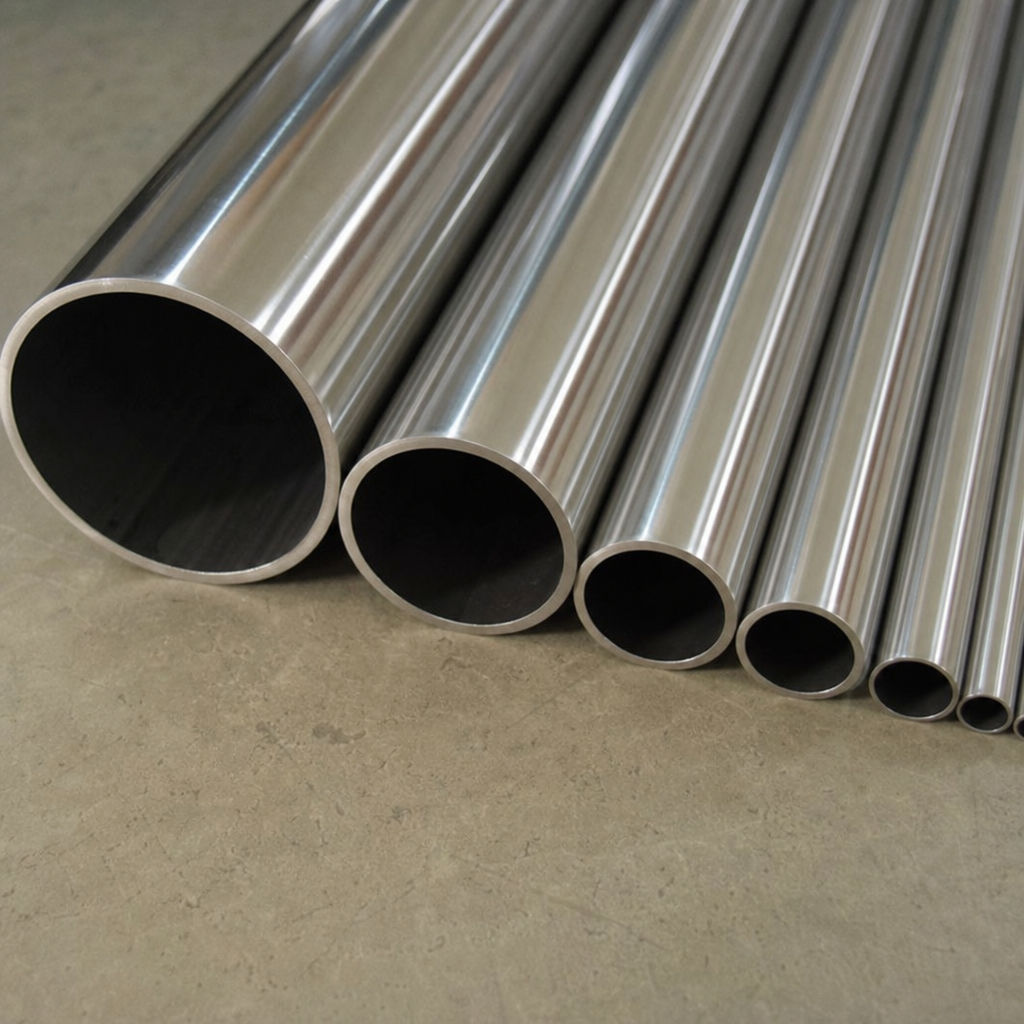
Close-up of polished stainless steel medical tubes arranged for inspection
Built for demanding medical and surgical applications
A Stainless steel medical tube is not just a metal tube cut to length. It is part of a larger device or instrument, so the material must support reliable fabrication, cleaning, joining, and performance in use. Stainless steel is often favored where a tube must stay stable under mechanical stress while maintaining a clean, professional finish.
Typical uses for medical Umbhobho wentsimbi engatyiwayo products include:
- Surgical tubing for instrument shafts, access tools, and precision assemblies.
- Umbhobho omncinci wentsimbi engatyiwayo medical components for small-diameter flow paths, sensing, dispensing, or sampling systems.
- Medical device tubing used in diagnostic, laboratory, and therapeutic equipment.
- Needle and cannula-related components where straightness, wall control, and surface condition matter.
- Custom cut tube sections for assemblies that require consistent lengths and clean ends.
- Medical grade tubing for manufacturers that need traceable, specification-driven material selection.
These applications often demand more than basic availability. The tube may need to fit into a molded component, pass through a narrow device channel, accept laser welding, withstand forming, or maintain a smooth flow path. That is why choosing the correct stainless steel tube early in the design process can reduce rework later.
Key advantages for device manufacturers
Stainless steel medical tubing offers a strong balance of performance advantages in one material family. It is rigid enough for many structural and instrument uses, yet workable enough for many precision manufacturing steps when the grade, wall thickness, and temper are selected correctly.
Important advantages include:
- High strength in small diameters: Thin, compact tubes can still provide useful mechanical support, making them suitable for slim instruments and miniaturized devices.
- Ukumelana nomhlwa Stainless steel helps protect components exposed to cleaning processes, fluids, and controlled medical environments.
- Smooth, cleanable surfaces: Properly finished tubing can support cleaning, assembly, and fluid movement with fewer surface irregularities.
- Dimensional consistency: Precision medical tubing can be specified with close attention to outside diameter, inside diameter, and wall thickness.
- Uguquguquko ekwenzeni Depending on the tube and specification, stainless steel can be cut, formed, welded, deburred, polished, or passivated for the intended design.
- Professional appearance: A clean metallic finish is valued in visible surgical, laboratory, and device components.
For example, a compact diagnostic device may need a narrow tube that guides fluid from one chamber to another while fitting inside a tight housing. A Umbhobho omncinci wentsimbi engatyiwayo medical component can help support controlled routing without the softness or kinking concerns associated with some flexible materials. In another case, a surgical instrument may need a tube that acts as both a pathway and a structural shaft, where rigidity and clean finishing are essential.
Product options and specification support
Every medical tube project starts with the application. A tube used for fluid transfer will be specified differently from one used as a structural sleeve, cutting instrument, or device housing. Because of that, a capable medical stainless steel tube supplier should help clarify the practical details before production or procurement begins.
Common specification points include:
- Outside diameter and inside diameter requirements.
- Wall thickness and tolerance expectations.
- Tube length, cut condition, and end finish.
- Straightness, roundness, and Ugqibo lomphezulu needs.
- Material grade or medical grade tubing requirement.
- Seamless or welded construction preference, where applicable.
- Cleaning, polishing, passivation, or deburring requirements.
- Packaging expectations for protection during transport and handling.
If your drawing is still under development, start with the function of the tube. Does it carry fluid, support another component, guide a tool, or form part of a surgical instrument? Once the use is clear, the stainless steel tube specification can be aligned with performance, manufacturing, and inspection requirements.

Engineer measuring a small-diameter medical stainless steel tube with precision tools
Medical tubing that supports cleaner production workflows
The right tube can make assembly easier. Consistent dimensions help parts fit together more predictably, while clean cut ends can reduce extra preparation before welding, bonding, insertion, or inspection. For production teams, this can mean fewer interruptions caused by fit problems, burrs, uneven surfaces, or inconsistent tube lengths.
Stainless steel pipes are often associated with industrial transfer lines, but medical tubing is a more specialized category. The difference is not just size. Medical stainless steel tubing is typically selected for precision, cleanliness, finish, and compatibility with device manufacturing processes. That distinction matters when a component must become part of a regulated or quality-controlled product.
Quality-focused supply for custom requirements
A medical stainless steel tube supplier should do more than provide standard stock. Medical and surgical projects often require a practical conversation about what the tube needs to do, how it will be processed, and what inspection expectations apply. Even when the product is simple, early clarification can help avoid mismatched materials or unnecessary cost.
A useful sourcing process may include:
- Share the application so the supplier understands whether the tubing is structural, fluidic, surgical, or part of a device assembly.
- Provide drawings or target dimensions including outside diameter, inside diameter, wall thickness, length, and tolerance needs.
- Confirm finish and end condition such as smooth cut, deburred, polished, or prepared for additional processing.
- Discuss quantity and packaging so sample, prototype, and production needs are handled appropriately.
- Cela ikowuti based on the full specification instead of relying on a generic tube price.
Pricing for stainless steel medical tubes depends on size, material, tolerance, finish, processing, order quantity, and documentation needs. Rather than listing a one-size-fits-all price, request a project-based quotation so the offer reflects the tubing you actually need.
Choose the right stainless steel tube for your device
Medical devices, surgical tools, and laboratory systems often depend on small components that must perform without drawing attention. Stainless steel medical tubing is one of those components: simple in shape, but critical in function. By selecting the right medical stainless steel tube and working with a supplier that understands precision requirements, you can improve fit, handling, cleanliness, and manufacturing confidence.
If you are sourcing surgical tubing, stainless steel capillary tube medical parts, or custom medical grade tubing, send your dimensions, application details, and expected quantity for a tailored quote. The more clearly the tube requirement is defined, the easier it is to match the product to your device, process, and performance needs.
 English
 Afrikaans
 Arabic
 Bengali
 Catalan
 Chinese
 French
 Dutch (Belgium)
 Dutch
Dutch German
 Czech
Czech Greek
Greek Hindi
Hindi Japanese
 Italian
 Portuguese
 Spanish (Chile)
 Spanish (Colombia)
 Spanish (Argentina)
 Persian
 Estonian
 Albanian
 Russian
 Spanish (Peru)
 Indonesian
 Thai
Thai Vietnamese
 Georgian
 Korean
 Nepali
 Polish
 Ukrainian
 Malayalam
 Xhosa
Xhosa