 Wenzhou Kaixin Kaixin Metal Co.,LTD
Ukuthelekisa iigradi neentlobo zemibhobho yentsimbi engatyiwayo
Stainless steel tubing gives you a clean, corrosion-resistant way to move fluids, protect components, build frames, or finish fabricated assemblies. This page helps you compare common stainless steel tubing grades and construction types so you can request the right product instead of settling for a generic piece of metal tubing. Whether you need seamless stainless tubing, welded steel tubing, or a specific size such as 1/2 stainless steel tubing, the best choice depends on pressure, environment, finish, and fabrication needs.
Which stainless steel tubing is right for your application?
The right stainless tubing is the grade, size, wall thickness, and manufacturing method that matches how the tube will actually be used. A decorative rail, a food-contact line, a hydraulic assembly, and a structural frame can all require different material decisions even if they look similar at first glance. Start with the environment, then match the tubing type to the performance requirement, and confirm the size and tolerance before ordering.
Use this quick buying checklist before comparing steel tube suppliers:
- Imeko yokusebenza: Indoor, outdoor, washdown, marine, chemical, high heat, or sanitary use.
- Imfuno yomatshini: Bending, vibration, pressure, load bearing, or tight assembly tolerances.
- Preferred construction: Seamless stainless tubing for high-pressure or precision needs, or welded steel tubing for cost-effective general fabrication.
- Grade requirement: Common options include 304 for general corrosion resistance and 316 when added resistance is needed in harsher environments.
- Size and wall: Outside diameter, inside diameter, wall thickness, and length should match the drawing or installation requirement.
- Gqiba: Mill, brushed, polished, or sanitary-style finishes may affect appearance, cleanability, and fabrication.
- Amaxwebhu: Some projects may require material certifications, traceability, or compliance documentation.
Stainless steel tubing grades built around real use cases
Grade selection is where many purchasing mistakes happen. Stainless steel is not one single material, and choosing only by price can lead to premature corrosion, difficult fabrication, or a part that does not meet the job’s standards. For general purpose Imibhobho yentsimbi engatyiwayo, 304 is often selected because it balances formability, corrosion resistance, availability, and cost. It works well for many shop, architectural, equipment, and light industrial applications.
For more demanding environments, 316 stainless tubing is often considered because it offers stronger resistance in chloride-prone, marine, chemical, and frequent washdown conditions. That does not mean every project needs 316. It means the extra performance should be matched to a real exposure risk. If the tubing will be installed near salt, cleaning chemicals, or corrosive process fluids, grade choice deserves careful review before purchase.
Other grades may be suitable for specialized applications, but the product should be selected from the project requirement rather than from a simple “best grade” assumption. A good supplier can help narrow the choice by asking what the tube carries, where it sits, whether it will be welded, and how it will be finished.
Seamless and welded tubing options
Seamless stainless tubing is made without a longitudinal weld seam, which makes it a strong option for pressure, critical flow, instrumentation, and applications where uniform structure matters. It is often chosen when specifications call for tighter consistency, higher performance expectations, or demanding operating conditions. If failure would be costly or access for replacement is difficult, seamless tubing may be the safer purchasing path.
Welded steel tubing is a practical choice for many fabrication and general service needs. It is commonly used for frames, guards, supports, architectural elements, equipment components, and transfer lines where the required performance fits the manufacturing method. Welded tubing can offer strong value, broad availability, and clean surface options, especially when the project does not require seamless construction.
When comparing ipayipi yentsimbi engatyiwayo and tubing, remember that the terms are not always interchangeable. Stainless steel pipe is commonly associated with nominal pipe sizes and fluid handling systems, while tubing is often specified by outside diameter and wall thickness. If your drawing calls for Imibhobho yentsimbi engatyiwayo, stainless tubing, or steel tubing, confirm the sizing standard before ordering.
Sizes, shapes, and finishes for fabrication-ready ordering
A correct order is more than “stainless tube.” Size, wall, length, shape, and finish all influence how the material performs once it reaches the shop or jobsite. Round stainless steel tubing is widely used for fluid transfer, handrails, machine components, and structural assemblies. Square and rectangular tubing are often selected for frames, racks, supports, and clean architectural lines.
Common buying details to define include:
- Diameter or profile: Round, square, rectangular, or application-specific shape.
- Ubukhulu bodonga: Lighter walls may reduce weight, while heavier walls can support more demanding service.
- Ubude: Stock lengths may work for fabrication, while cut-to-length material can reduce handling and scrap.
- Finish condition: Aesthetic surfaces may matter for visible products, while industrial uses may prioritize performance.
- Fabrication plans: Bending, welding, flaring, machining, polishing, or end finishing can influence the grade and wall choice.
- Inani: Prototype, maintenance, short-run production, and repeat-volume orders may need different sourcing approaches.
If you are searching for 1/2 Imibhobho yentsimbi engatyiwayo, confirm whether the measurement refers to outside diameter, inside diameter, or nominal pipe size. That small detail can prevent fit problems with fittings, clamps, valves, and existing equipment.
Product benefits for buyers, fabricators, and maintenance teams
Stainless steel tubing is valued because it combines strength, clean appearance, and corrosion resistance in a single material family. For fabricators, it can provide predictable forming and welding behavior when the correct grade and wall are selected. For maintenance teams, it can reduce replacement frequency in environments where carbon steel would rust or require protective coatings.
Iingenelo eziphambili ziquka:
- Amandla okusebenza ixesha elide Properly selected stainless tubing resists many common corrosion problems.
- Clean visual finish: Suitable for exposed equipment, railings, displays, and architectural details.
- Versatile fabrication: Can be cut, welded, bent, machined, and finished for many assemblies.
- Multiple construction choices: Seamless and welded options let you balance performance and budget.
- Broad application range: Useful across manufacturing, food and beverage equipment, laboratories, marine environments, construction, and general repairs.
The practical benefit is fewer compromises. Instead of adapting a design around the wrong tube, you can source material that fits the drawing, operating conditions, and expected lifespan.
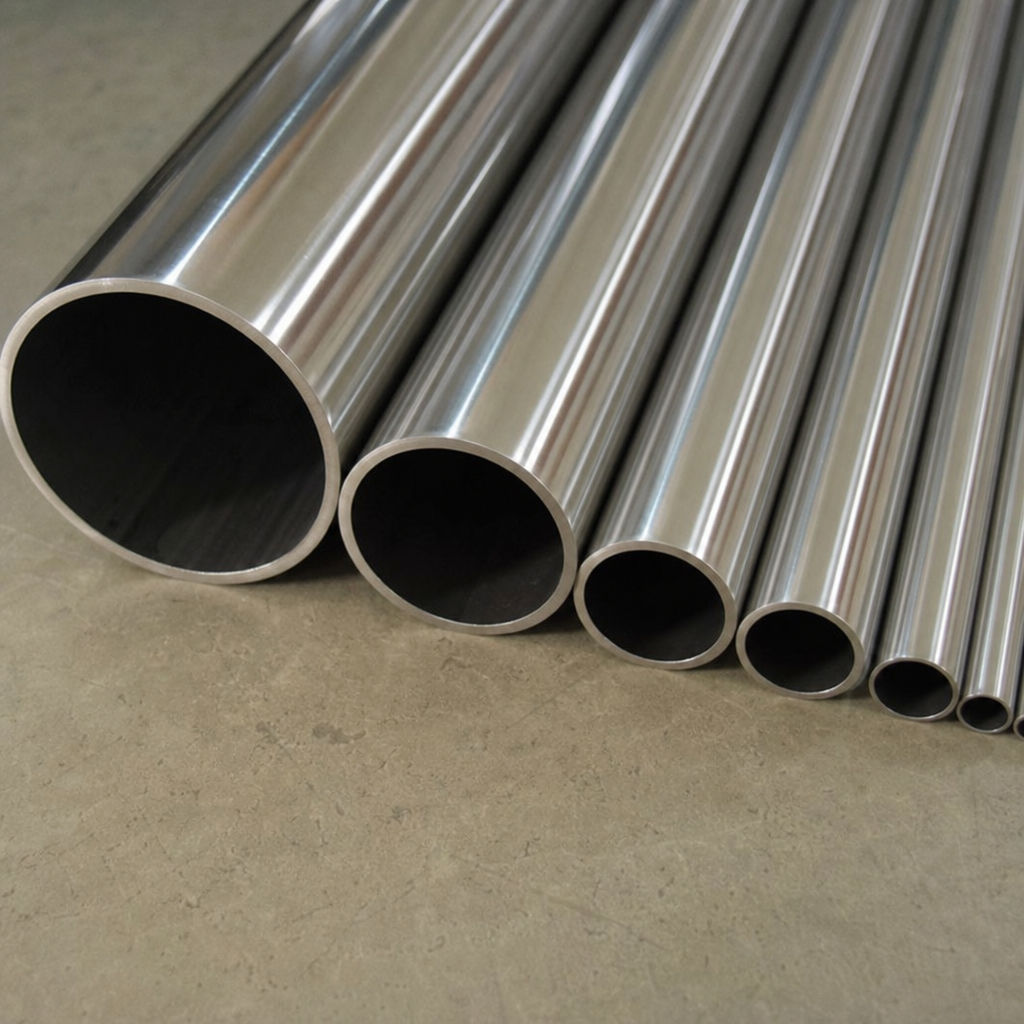
polished stainless steel tubing in multiple diameters
Iinkcukacha ezithathelwayo ingqalelo kumaxabiso nakwiikowuti
Pricing for stainless steel tubing depends on grade, size, wall thickness, construction type, finish, length, quantity, market conditions, and any documentation or processing requirements. Seamless stainless tubing may cost more than welded alternatives, but it can be the correct value when the application calls for it. Welded tubing may offer a better fit when appearance, general corrosion resistance, and fabrication efficiency are the main priorities.
To receive a useful quote, prepare the following details if available:
- Grade, such as 304 or 316.
- Ulwakhiwo oludityanisiweyo ngokungenamthungo okanye oludityaniswe ngokuwelda.
- Outside diameter or required Ubungakanani bompayipi.
- Wall thickness or schedule.
- Lengths and total quantity.
- Finish requirements.
- End use or service environment.
- Any certifications, testing, or traceability needs.
Providing this information helps avoid vague pricing and reduces the chance of ordering material that needs to be replaced or reworked.
Order stainless tubing with confidence
The best tubing manufacturers and steel tube suppliers do more than list inventory. They help you connect the grade, type, size, and finish to the job in front of you. If you already have a drawing, specification, sample, or part number, use it to confirm the exact stainless steel tubing you need. If you are still comparing options, start with the environment and performance requirements, then decide between seamless and welded construction.
Request a quote for stainless steel tubing, stainless steel pipe, or related metal tubing with your size, grade, quantity, and finish requirements. If you are not sure what to choose, ask for guidance before ordering so your material arrives ready for the way it will actually be used.
 English
 Afrikaans
 Arabic
 Bengali
 Catalan
 Chinese
 French
 Dutch (Belgium)
 Dutch
Dutch German
 Czech
Czech Greek
Greek Hindi
Hindi Japanese
 Italian
 Portuguese
 Spanish (Chile)
 Spanish (Colombia)
 Spanish (Argentina)
 Persian
 Estonian
 Albanian
 Russian
 Spanish (Peru)
 Indonesian
 Thai
Thai Vietnamese
 Georgian
 Korean
 Nepali
 Polish
 Ukrainian
 Malayalam
 Xhosa
Xhosa