 Wenzhou Kaixin Kaixin Metal Co.,LTD

Intshayelelo
Choosing between material 316L stainless steel and high-alloy 904L for your piping system is a massive financial and technical decision. While both offer corrosion resistance, the massive gap in the 904L stainless steel price vs. 316L requires a careful cost-benefit analysis. This guide explores the “recipe” of these metals to help your business decide where to invest.
Why the 316L Stainless Steel Chemical Composition is the Industry Standard
If you walk into a food processing plant, a brewery, or a pharmaceutical lab, you are almost certainly surrounded by material 316L stainless steel pipes. It’s the “Goldilocks” of the industrial world—not too expensive, yet tough enough to handle most everyday “battles.”
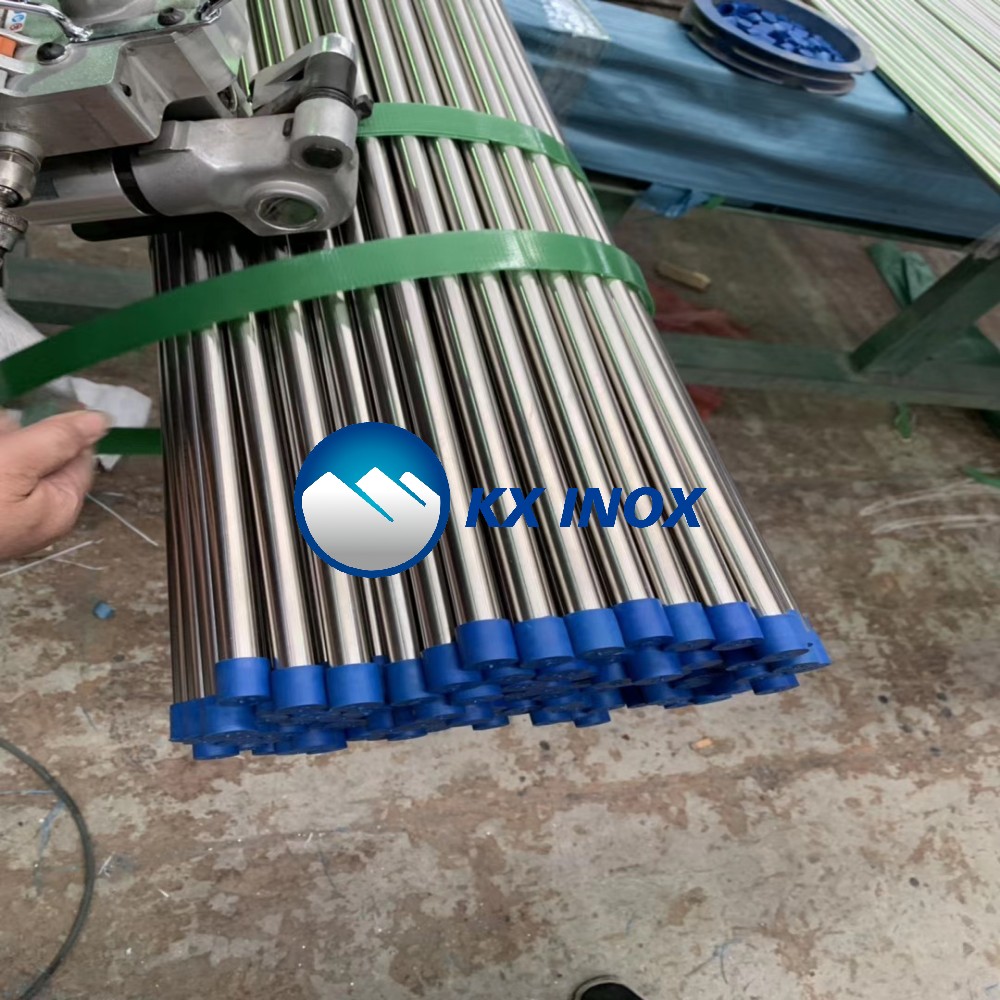
The “L” Factor: 316 ss vs 316L
In your business, you probably do a lot of welding to join long runs of pipe. This is where the “L” becomes your best friend. In the 316 versus 316L debate, the “L” stands for Low Carbon. While standard 316 is great, 316L keeps carbon levels below 0.03%. This prevents the pipe from becoming “sensitized” during welding. Without this, your pipe joints could turn into a rusty mess in just a few months.
A Shield Against Pitting
The ss 316L chemical composition features a secret weapon: Molybdenum (usually 2% to 3%). Think of it as an invisible shield for the pipe’s inner wall. It stops “pitting”—those tiny, needle-like holes that salt and chlorides love to punch into metal. For standard drainage or chemical transport, it’s an absolute powerhouse.
Easy on the Budget
Because it’s produced in massive quantities worldwide, the 316L stainless steel price per kg is relatively stable. You can plan your project budget without worrying about wild price swings every other Tuesday. It’s reliable, predictable, and works for 90% of industrial piping applications.
Why the 904L Stainless Steel Chemical Composition is So Unique for High-Pressure Pipes
If 316L is your reliable workhorse, 904L is a high-performance beast designed for the most punishing pipelines on Earth. It was originally “cooked up” to survive in dilute sulfuric acid, one of the most “metal-hungry” chemicals out there.
The High-Alloy Recipe: The 904L stainless steel chemical composition is loaded with 23%–28% Nickel and 19%–23% Chromium. This massive Nickel boost provides superior structural stability for pipes used in high-heat, high-pressure chemical reactors.
The Copper Advantage in Acid Lines: What truly defines the ss 904L chemical composition is the addition of 1.2% to 1.5% Copper. Copper makes the pipe surface “passivate” differently, allowing it to survive in sulfuric and phosphoric acid where even 316L pipes would dissolve in weeks.
Technical Designation: Often referred to by its work-number 904L 1.4539 N08904, this grade is a “super-austenitic” steel, essential for offshore oil and gas pipelines.
Comparing Chemical Composition: 316L vs. 904L Pipe Performance
To really see why your business might need one over the other, let’s peel back the curtain on the “recipes.” The elements inside these pipes dictate how long your pipeline stays in one piece before needing a replacement.
| Icandelo | SS 316L Chemical Composition | SS 904L Chemical Composition | Impact on Your Pipe |
| Ikromiyam | 16% – 18% | 19% – 23% | The “skin” that stops surface rust. |
| I-nikeli | 10% – 14% | 23% – 28% | The “muscle” that prevents pressure cracking. |
| Imolibdenam | 2% – 3% | 4% – 5% | The “armor” against salt-water pitting. |
| Copper | Akukho nanye | 1.2% – 1.5% | The “secret sauce” for surviving strong acids. |
| PREN Value | ~24 | ~35 | High score = much longer life in seawater. |
Is 904L Worth the Premium? A Deep Dive into Price and Performance
Now, let’s address the elephant in the room: the 904L stainless steel price. It is significantly higher than 316L—sometimes double or even triple. But before you open your wallet, look at the “hidden” math of pipe maintenance and return on investment.
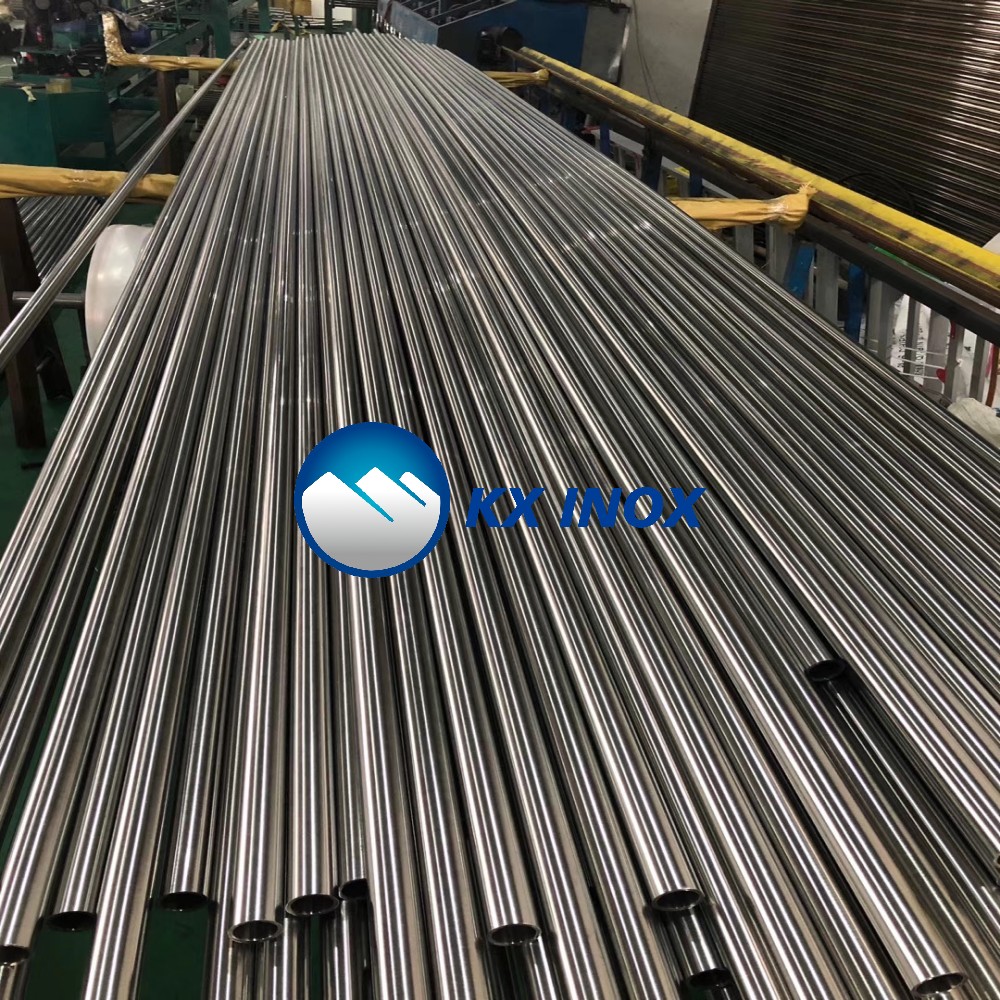
The Reality of Over-Engineering: For many piping projects, buying 904L is like buying a tank to go grocery shopping—it’s impressive, but unnecessary. Unless your pipes are constantly handling high-concentration hot sulfuric acid or submerged in tropical seawater, the 316L stainless steel chemical composition is more than enough. Choosing 316L allows your business to stay under budget without compromising on safety.
Where 316L Wins the ROI Battle: In standard food processing, pharmaceutical lines, and mild chemical transport, the lifespan of a high-quality material 316L stainless steel pipe can be decades.
The “Maintenance” Misconception: Some think 904L means “zero maintenance.” But every piping system needs inspection. If you use the massive savings from choosing the 316L stainless steel price per kg, you can invest in a better monitoring system or higher-quality ss tube welding and finishing, which actually does more to prevent leaks than just buying an expensive alloy.
When to Actually Say “Yes” to 904L: The only time 904L is truly “worth it” is when you are dealing with aggressive reducing acids or extreme chloride concentrations where 316L would fail in less than 24 months. In those rare, high-risk “mission critical” zones, the 904L stainless steel price acts as an insurance policy. For everything else? 316L is your best business partner.
Additional Price Factors: Why 904L and 316L Pipe Quotes Vary
When you start looking at a 316L stainless steel price per kg or a 904L quote, the numbers might seem to jump around. Here’s why the market is so “bouncy.”
The Nickel Rollercoaster: Because 904L is packed with Nickel, its price is tied to the global metal markets. If the price of Nickel spikes on the London Metal Exchange, your 904L stainless steel price will follow suit immediately. 316L is more stable because its recipe is simpler and produced in much higher volumes.
The Manufacturing Difficulty: 904L is a “tough” metal. It is harder on the stainless steel pipe mold and wears out cutting tools faster. This means the labor cost to fabricate a 904L pipe is higher. It takes more time, more energy, and more specialized equipment to get that perfect finish. If you’re curious about how these technical challenges are handled on the factory floor, take a behind-the-scenes look at our stainless seamless steel pipe production flow.
Stock vs. Custom: You can find material 316L stainless steel pipes sitting in warehouses almost anywhere. 904L is often “made to order.” For small projects, you might face a setup fee because the factory has to stop their usual production line just to run your specialty batch of pipes.
When Should Your Business Choose 904L Pipe over 316L
Selecting between these two grades isn’t just about the upfront cost; it’s about matching the metal’s “recipe” to the specific stress of your workspace.
When 316L Stainless Steel Pipes are the Optimal Choice
For the majority of commercial and light industrial applications, 316L is not just a budget-friendly option—it is the standard for a reason.
Food, Beverage, and Sanitary Lines: If your business moves clean water, milk, wine, or pharmaceutical ingredients, the 316L stainless steel chemical composition is more than enough to maintain purity and resist corrosion.
Controlled Indoor Environments: When pipes are housed inside a temperature-controlled facility or used in mild outdoor settings away from the coast, the added protection of 904L is unnecessary.
Budget-Sensitive, Low-Risk Projects: If you are working with a tight initial capital expenditure and the fluids being transported are non-acidic, sticking with the 316L stainless steel price per kg allows you to allocate funds to other critical areas of the build.
When 904L Pipes Become a Technical Necessity
In high-stress zones, 316L can fail rapidly. If your operations fall into the following categories, the high-nickel ss 904L chemical composition is required to prevent catastrophic system failure.
Submerged Marine and Offshore Operations: Standard marine-grade steel often falls victim to “pitting” in warm, stagnant seawater. For offshore rigs or desalination plants, 904L pipes provide the localized corrosion resistance needed to survive decades under the waves.
Aggressive Chemical Processing: If your facility handles reducing acids—specifically sulfuric, phosphoric, or oxalic acids—904L is the industry benchmark. The added copper in its chemistry creates a passive layer that keeps the pipe walls intact where 316L would simply dissolve.
High-Risk “Mission Critical” Systems: In industries where a single pipe leak could lead to an environmental disaster or a total plant shutdown, the 904L stainless steel price is a small insurance premium to pay for structural certainty.
How to Source Quality Pipes from China Suppliers
Buying from china stainless steel tube suppliers is a smart move for your bottom line, but the “cheapest” quote often hides the most expensive mistakes. In the piping industry, what you see isn’t always what you get.
Spotting “Fake” Prices Before You Pay: The market for stainless steel is transparent. If a supplier offers you a 316L stainless steel price per kg that is significantly lower than the London Metal Exchange (LME) raw material cost, red flags should go up. Often, “discount” pipes are actually 201 or 304 grades disguised as 316L. They look identical to the naked eye, but they will fail in your system within months.
Inspect the “Skin” of the Pipe: A professional china stainless steel tube supplier treats their inventory like jewelry. If you see pipes stored on a dirty floor or handled with rusty steel chains, the surface is already contaminated with “free iron,” which leads to localized rusting. High-quality suppliers use nylon slings and clean, organized racking systems.
Logistics: If your supplier plans to “loose-load” your seamless stainless steel pipe into a container with just some plastic wrap, you can expect dents and scratches. Demand reinforced wooden crates and internal PVC spacers to ensure the pipes don’t “clash” during their weeks at sea.
Imibuzo ebuzwa rhoqo
Why is 904L pipe so much more expensive than 316L?
High levels of Nickel and Molybdenum drive up raw material costs significantly for 904L.
Can I weld 316L to 904L pipes?
Yes, but you must use the correct filler metal to keep the joint from rusting.
Does 316L pipe rust in seawater?
It can suffer from “pitting” in warm, stagnant seawater; 904L is much safer for marine pipelines.
Is 904L harder to cut than 316L?
Yes, it is much tougher and abrasive, which wears out tools and takes longer to machine.
Isiphelo
Deciding between 904L vs 316L stainless steel pipes is a balance of environmental severity and your budget. While 904L is a powerful alloy, for many businesses, high-quality material 316L stainless steel offers the perfect ROI. Not sure which one you need? Qhagamshelana noKaixin today for an expert technical guidance!
 English
 Afrikaans
 Arabic
 Bengali
 Catalan
 Chinese
 French
 Dutch (Belgium)
 Dutch
Dutch German
 Czech
Czech Greek
Greek Hindi
Hindi Japanese
 Italian
 Portuguese
 Spanish (Chile)
 Spanish (Colombia)
 Spanish (Argentina)
 Persian
 Estonian
 Albanian
 Russian
 Spanish (Peru)
 Indonesian
 Thai
Thai Vietnamese
 Georgian
 Korean
 Nepali
 Polish
 Ukrainian
 Malayalam
 Xhosa
Xhosa