 Công ty TNHH Kim loại Kaixin Wenzhou

stainless steel tubing data center cooling
As data centers run denser equipment and tighter operating targets, cooling infrastructure has become a core part of reliability planning. Stainless steel tubing can support data center cooling by helping move fluids safely, consistently, and cleanly through industrial cooling systems, HVAC loops, and liquid cooling networks. For facility teams, the right tubing choice can reduce maintenance concerns, support thermal management goals, and give engineers more confidence in long-term performance.
Why does tubing matter in data center cooling?
Tubing matters because every cooling strategy depends on controlled fluid movement. Whether a facility uses chilled water, glycol mixtures, condenser water, or a more specialized liquid cooling loop, the tubing network must handle pressure, temperature changes, water chemistry, installation stress, and ongoing maintenance access. If that network is poorly specified, even advanced cooling equipment can be limited by leaks, corrosion, fouling, or inconsistent flow.
In data center cooling, the piping and tubing are not background components. They connect chillers, pumps, heat exchangers, cooling distribution units, rear-door heat exchangers, air handlers, and other thermal management equipment. A small weak point in the fluid path can create operational risk, especially in environments where uptime and predictable cooling are critical.
That is why many engineers evaluate ống thép không gỉ and stainless steel tubing for demanding cooling applications. Stainless steel is often selected where corrosion resistance, cleanliness, durability, and mechanical strength are priorities. It is not the only material used in cooling systems, but it can be a strong fit when the application calls for long service life and stable performance.
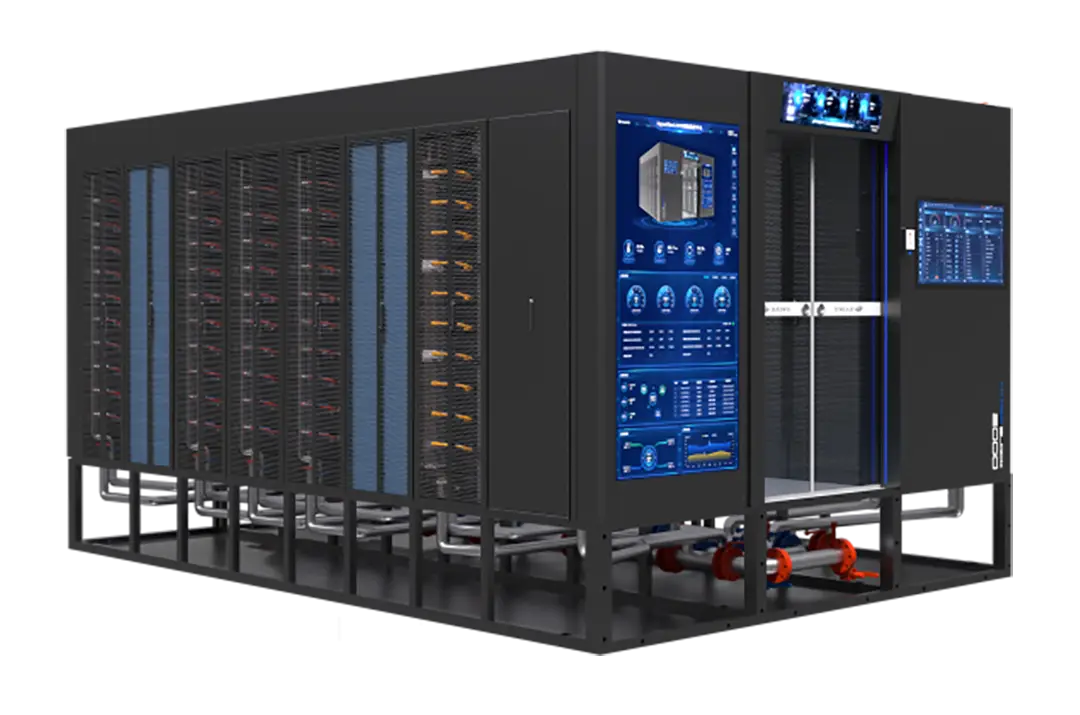
stainless steel tubing connected to data center cooling equipment
Stainless steel supports durable cooling infrastructure
Stainless steel tubing is valued in industrial cooling systems because it can perform well in environments where moisture, changing temperatures, and chemical treatment are part of daily operation. Data centers may use treated water or glycol-based fluids, and the tubing material must be compatible with that fluid and the surrounding conditions.
A well-designed stainless steel tubing network can help limit corrosion concerns, protect fluid quality, and reduce the likelihood of contamination inside the loop. Smooth internal surfaces may also support efficient flow when the system is properly sized, installed, and maintained. That matters because cooling performance is not only about the cooling source; it is also about how reliably the system delivers that cooling to the heat load.
Ống thép không gỉ are also useful where mechanical resilience is important. Data center facilities often include crowded mechanical rooms, overhead routing, tight service corridors, and equipment zones where vibration, supports, bends, and connection points must be planned carefully. Tubing that maintains integrity under real operating conditions helps create a more dependable system.
Common roles for stainless steel tubing in cooling systems
Ống thép không gỉ can appear in several parts of a data center cooling design. The best use depends on the facility layout, cooling method, water chemistry, pressure requirements, and maintenance strategy.
Typical applications may include:
- Chilled water distribution: Moving chilled water between mechanical equipment, heat exchangers, and cooling units.
- Liquid cooling loops: Supporting direct-to-chip, rack-level, or cooling distribution unit connections where compatible with the full system design.
- Heat exchanger connections: Carrying fluids to and from equipment that transfers heat out of the data hall or technical space.
- HVAC tubing runs: Connecting air handling units, coils, pumps, and other HVAC components that support room-level cooling.
- Process and utility cooling: Serving supporting equipment that needs stable temperature control alongside core IT cooling.
Each application has different requirements. For example, a main chilled water header may prioritize capacity, pressure rating, and accessibility, while tubing near sensitive equipment may require compact routing, clean connections, and careful leak prevention. The material decision should fit the full design instead of being treated as a generic specification.
What should engineers consider before specifying stainless steel tubing?
Engineers should consider fluid compatibility, operating pressure, temperature range, flow rate, joining method, code requirements, and maintainability before choosing stainless steel tubing. The right decision is rarely based on material alone; it comes from matching stainless steel to the demands of the cooling loop and the expectations of the facility team.
Important planning factors include:
- Fluid chemistry Cooling fluids can include inhibitors, biocides, glycol, or treated water. The tubing material, seals, valves, fittings, and equipment must all be compatible with the fluid.
- System pressure and temperature Tubing must be rated for normal operation as well as expected transients, startup conditions, and maintenance events. Temperature swings can affect expansion, supports, and connection design.
- Installation environment Data centers often require clean installation practices, careful routing, and coordination with electrical, fire protection, and IT infrastructure. Space constraints can influence bend radius, fitting selection, and service access.
- Joining and connection methods Welded, compression, flanged, grooved, or other connection approaches may be considered depending on the system. Each method affects installation speed, inspection needs, leak risk, and future maintenance.
- Lifecycle expectations A lower upfront cost is not always the best long-term choice if it increases maintenance complexity or replacement risk. Stainless steel may support a lifecycle-focused approach where reliability and durability are priorities.
Stainless steel tubing and thermal management strategy
Thermal management in a data center is a system-level challenge. It includes airflow, liquid flow, heat transfer, controls, monitoring, redundancy, and maintenance practices. Stainless steel tubing supports that strategy by providing a durable pathway for cooling fluids, but it must be part of a coordinated design.
For example, if a facility is moving toward higher-density racks, the cooling design may need shorter fluid paths, improved heat exchange, or more flexible distribution near the IT load. Stainless steel tubing can help in these environments when the design calls for strong, corrosion-resistant lines that can be routed with precision. However, tubing size, layout, insulation, valves, sensors, and connection points all influence the final result.
Good thermal management also depends on keeping systems serviceable. Valves should be accessible. Drains, vents, strainers, and monitoring points should be planned intentionally. Supports should prevent unnecessary stress. Insulation should be selected and installed to manage condensation and energy loss where applicable.
Practical benefits for facility owners and operators
The practical value of stainless steel tubing data center cooling designs comes from risk reduction and operational confidence. When cooling fluid infrastructure is designed well, operators have fewer weak points to manage and a clearer path to consistent performance.
Potential benefits include:
- Improved corrosion resistance in suitable fluid environments.
- Strong mechanical performance for demanding routing and equipment spaces.
- Cleaner fluid pathways that can help protect connected cooling components.
- Độ bền lâu dài when installed and maintained correctly.
- Compatibility with industrial cooling systems that require robust materials and precise connections.
- Support for scalable cooling layouts as facilities adapt to changing IT loads.
These benefits are not automatic. They depend on proper specification, quality fabrication, skilled installation, pressure testing, commissioning, and ongoing maintenance. Stainless steel is a capable material, but the full system design determines how well it performs.
When is stainless steel the right choice?
Stainless steel is often the right choice when the cooling system needs durability, corrosion resistance, cleanliness, and a long-term service mindset. It is especially worth considering when downtime risk, water quality, equipment protection, or demanding mechanical conditions make material performance a high priority.
It may not be necessary for every line in every facility. Some systems use a mix of materials based on locati0n, function, budget, and engineering requirements. The key is to evaluate ống thép không gỉ and tubing where their strengths match the application, rather than applying one material everywhere by default.
A practical selection process should involve mechanical engineers, facility operators, contractors, and equipment suppliers. Together, they can confirm compatibility, installation approach, inspection requirements, and maintenance access before construction begins. That collaboration helps prevent mismatches between design intent and real-world operation.
Key takeaways for better cooling design
Ống thép không gỉ can be a valuable part of modern data center cooling, especially where reliability, cleanliness, and long service life matter. It supports industrial cooling systems and HVAC tubing networks by helping move cooling fluids through the facility with strength and stability.
Before specifying it, teams should confirm:
- The cooling fluid and treatment plan are compatible with the tubing and all connected components.
- Tubing sizes support the required flow rates without creating avoidable pressure loss.
- Installation methods match the facility’s cleanliness, schedule, and inspection needs.
- Supports, insulation, valves, and access points are included in the design.
- The material choice supports both current loads and reasonable future expansion.
Data center cooling is too important to treat tubing as a minor detail. By selecting materials carefully and designing the fluid network as part of the larger thermal management strategy, teams can build cooling systems that are more dependable, maintainable, and ready for the demands of modern IT environments.
 English
 Afrikaans
 Arabic
 Bengali
 Catalan
 Chinese
 French
 Dutch (Belgium)
 Dutch
Dutch German
 Czech
Czech Greek
Greek Hindi
Hindi Japanese
 Italian
 Portuguese
 Spanish (Chile)
 Spanish (Colombia)
 Spanish (Argentina)
 Persian
 Estonian
 Albanian
 Russian
 Spanish (Peru)
 Indonesian
 Thai
Thai Vietnamese
 Georgian
 Korean
 Nepali
 Polish
 Ukrainian
 Malayalam
 Xhosa
Xhosa