 वेन्झोउ काइक्सिन काइक्सिन मेटल कं., लि.

मानक पाइप आयाम क्याल्कुलेटर
A standard pipe dimensions calculator helps you translate a nominal pipe size into practical details such as outside diameter, wall thickness, inside diameter, and thread reference. It is useful when comparing materials, planning fittings, checking flow space, or choosing replacements across steel, copper, PVC, and threaded pipe systems.
What does a standard pipe dimensions calculator do?
A standard pipe dimensions calculator gives a fast reference point for common pipe measurements, but it should not be treated as a substitute for the exact manufacturer specification. Pipe sizing can be confusing because “nominal” size often does not equal the actual measured diameter, especially with standard steel pipe dimensions and other schedule-based systems.
A good calculator or pipe size chart usually helps you check:
- Nominal pipe size or trade size
- Outside diameter, often the key fitting dimension
- Wall thickness or schedule where applicable
- Approximate inside diameter
- Material category, such as steel, copper, or PVC
- Thread reference for british standard pipe thread dimensions when threaded connections are involved
This makes it easier to avoid mismatched fittings, undersized flow paths, or assumptions based only on the name printed on a pipe.
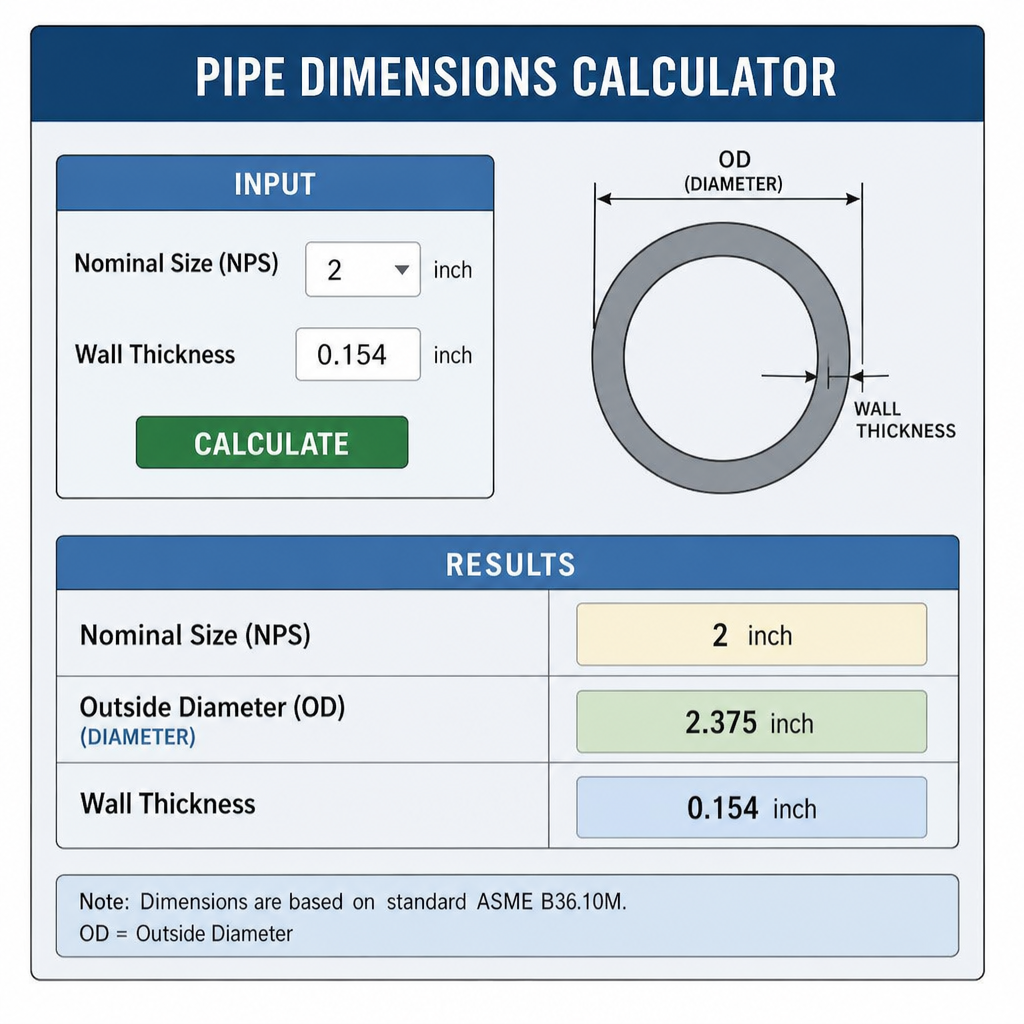
pipe dimensions calculator showing diameter wall thickness and nominal size
Standard pipe sizes depend on material
Standard pipe sizes are not universal across every material. Steel, copper, and PVC are each commonly described using their own conventions, and a measurement that makes sense in one system may not translate directly into another.
Steel pipe dimensions
Standard steel pipe dimensions are often organized by nominal pipe size and schedule. The outside diameter typically stays consistent for a given nominal size, while the wall thickness changes by schedule. A higher schedule usually means a thicker wall and a smaller inside diameter, which can affect flow, weight, pressure suitability, and fitting selection.
Copper pipe dimensions
Standard copper pipe dimensions are commonly described by type or tube size rather than steel-style pipe schedule. Copper is widely used in plumbing, heating, and refrigeration contexts, so the intended application matters. When using a calculator, confirm whether it refers to actual outside diameter, nominal trade size, or a specific copper tube type.
PVC pipe dimensions
Standard PVC pipe dimensions may also use nominal size and schedule, especially for pressure-rated pipe. However, drainage, conduit, and pressure systems can follow different product rules. Always match the calculator result to the intended pipe category, not just the material name.
How should you use a pipe size chart correctly?
Use a pipe size chart as a cross-check between the pipe name, actual measurement, and fitting requirement. Start with the pipe material, then select the nominal size, then verify the outside diameter and wall thickness before making a selection.
A practical workflow looks like this:
- Identify the pipe material: steel, copper, PVC, or another system.
- Confirm the standard or sizing family used by the project.
- Measure the outside diameter with a reliable tool if the pipe already exists.
- Check wall thickness, schedule, or type where relevant.
- Compare the result with the fitting, valve, flange, or thread requirement.
- Use manufacturer data for final procurement or installation decisions.
This approach is especially important when replacing old pipe, connecting different materials, or working with imported components.
Thread dimensions need separate attention
British standard pipe thread dimensions are a separate issue from pipe body dimensions. Threaded connections depend on thread form, pitch, taper or parallel style, and sealing method. Two pipes may have similar diameters but incompatible threads, so a standard pipe dimensions calculator should be paired with a thread reference when threaded fittings are involved.
Key takeaways for accurate pipe selection
- Nominal pipe size is a naming system, not always the measured size.
- Outside diameter is often the most important dimension for matching fittings.
- Wall thickness affects inside diameter, flow space, and strength.
- Steel, copper, and PVC sizing systems should not be mixed casually.
- Threaded connections require thread-specific confirmation.
- A calculator is a planning tool; final choices should follow project specifications and manufacturer data.
Used carefully, a standard pipe dimensions calculator saves time and reduces sizing mistakes. The safest results come from combining calculator output with a material-specific pipe size chart, accurate field measurements, and the exact standard required for the job.
 English
 Afrikaans
 Arabic
 Bengali
 Catalan
 Chinese
 French
 Dutch (Belgium)
 Dutch
Dutch German
 Czech
Czech Greek
Greek Hindi
Hindi Japanese
 Italian
 Portuguese
 Spanish (Chile)
 Spanish (Colombia)
 Spanish (Argentina)
 Persian
 Estonian
 Albanian
 Russian
 Spanish (Peru)
 Indonesian
 Thai
Thai Vietnamese
 Georgian
 Korean
 Nepali
 Polish
 Ukrainian
 Malayalam
 Xhosa
Xhosa