When sourcing stainless steel products for a new project, the terms “pipe” and “tube” are often used interchangeably. However, stainless steel pipe and tube are specified, manufactured, and tested differently, and choosing the wrong one can lead to dimensional mismatches, unnecessary costs, or performance issues.
The key to understanding stainless steel pipe vs tube is not simply their appearance. You need to consider how the product is measured, which standard it follows, its dimensional tolerance, material requirements, and the conditions in which it will operate.
This guide explains the difference between pipe and tube, compares their main characteristics, and provides practical selection advice for industrial applications.
1. What Is Stainless Steel Pipe?
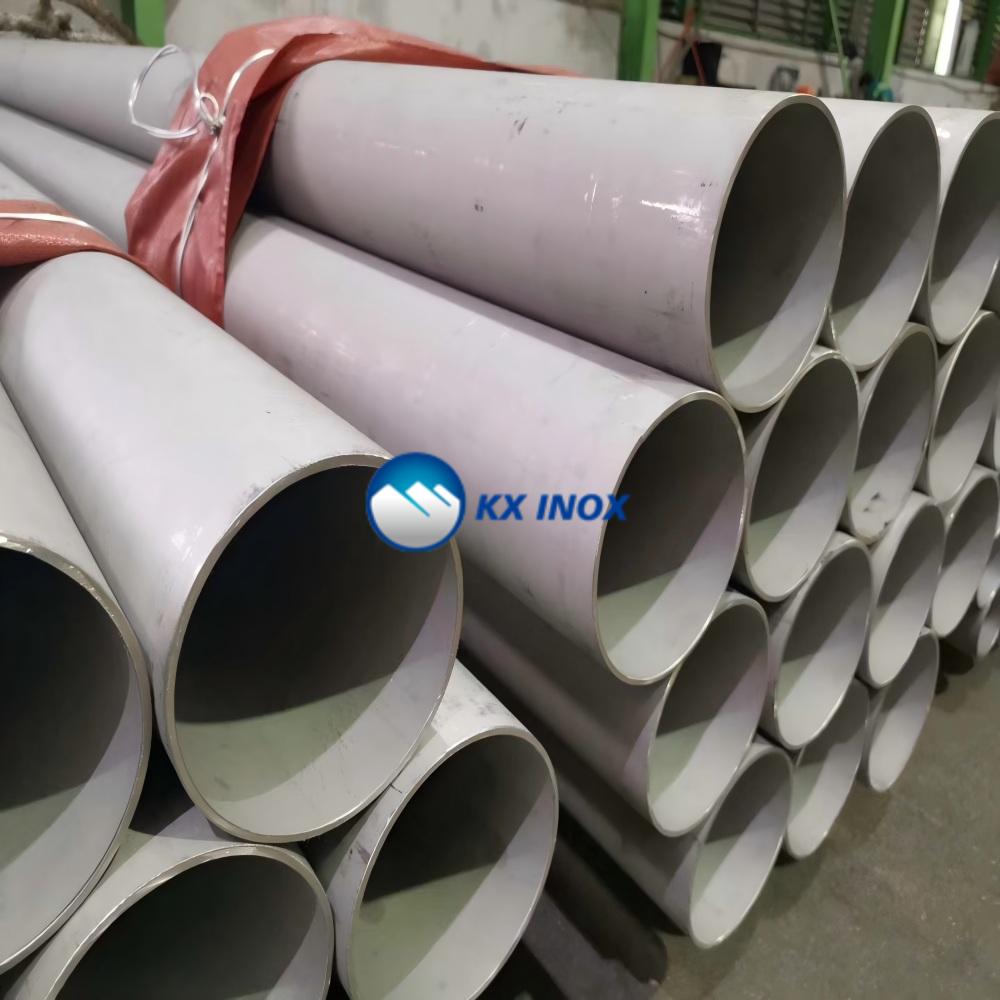
സ്റ്റെയിൻലെസ്സ് സ്റ്റീൽ പൈപ്പ് is a hollow, generally round product primarily designed to transport liquids, gases, steam, or other process media. Pipe dimensions are commonly specified by nominal pipe size (NPS) and schedule, with the actual outside diameter and wall thickness determined by the applicable dimensional standard.
For example, ASTM A312 covers seamless, straight-seam welded, and heavily cold-worked austenitic stainless steel pipe intended for high-temperature and general corrosive service.
Stainless steel pipes are widely selected when pressure handling, flow capacity, corrosion resistance, and compatibility with piping components are important.
Common options include seamless and welded stainless steel pipe, with grades such as 304, 304L, 316, 316L, 321, 347H, and other specialty grades available for different service conditions.
2. What Is Stainless Steel Tube?
Stainless steel tube is a hollow product manufactured with greater emphasis on precise dimensions, mechanical properties, surface finish, or specific application requirements. Round tubes are common, while square, rectangular, and other profiles are also available depending on the manufacturing specification.
Unlike standard pipe sizing, tubes are generally ordered by actual outside diameter and wall thickness. This makes them suitable for applications where dimensional accuracy and controlled geometry are critical.
For example, ASTM A213 stainless steel tube is specifically intended for seamless boiler, superheater, and heat-exchanger service. The specification includes requirements for heat treatment, mechanical testing, and nondestructive or hydrostatic testing.
Therefore, a tube should not automatically be considered a smaller or thinner version of a pipe. The applicable specification and intended service determine what the product actually is.
3. 6 Differences Between Stainless Steel Pipe and Tube
Although stainless steel pipes and tubes may look similar, they are designed according to different standards and performance requirements. Understanding these differences helps buyers select the correct product, avoid specification errors, and optimize project costs.
Quick Comparison Table
| പ്രത്യേകത | സ്റ്റെയിൻലെസ്സ് സ്റ്റീൽ പൈപ്പ് | സ്റ്റെയിൻലെസ്സ് സ്റ്റീൽ ട്യൂബ് |
|---|
| Size and Measurement | Specified by Nominal Pipe Size (NPS) and Schedule | Specified by actual Outside Diameter (OD) and Wall Thickness |
| Manufacturing Process | Seamless or welded, primarily for fluid transport | Seamless, welded, or cold-drawn for precision applications |
| Manufacturing Standards | ASTM A312, ASTM A358, ASTM A778, etc. | ASTM A213, ASTM A269, ASTM A270, etc. |
| Dimensional Tolerance | Standard industrial tolerances | Tighter dimensional tolerances |
| Material and Performance Requirements | Focus on pressure resistance and corrosion protection | Focus on dimensional accuracy, mechanical properties, and heat transfer |
| Cost and Customization | Generally more economical in standard sizes | Higher customization capability but often higher cost |
Size and Measurement
The most fundamental difference between pipe and tube is how they are measured and specified.
Stainless steel pipes are typically designated by Nominal Pipe Size (NPS) and Schedule (SCH). The nominal size serves as an industry reference rather than representing the exact internal or external diameter. For example, a 2-inch pipe does not necessarily have a 2-inch outside diameter.
സ്റ്റെയിൻലെസ്സ് സ്റ്റീൽ ട്യൂബുകൾ, on the other hand, are specified using their actual outside diameter, wall thickness, and sometimes inside diameter. This method provides more precise dimensional control and allows engineers to select tubing based on exact design requirements.
For procurement teams, this distinction is critical because ordering a tube using pipe dimensions—or vice versa—can result in costly purchasing mistakes.
Manufacturing Process
Both stainless steel pipes and tubes can be produced through seamless or welded manufacturing methods, but the production focus is different.
Industrial stainless steel pipe production prioritizes pressure containment, flow efficiency, and compliance with piping standards. Seamless pipes are often selected for high-pressure systems, while welded pipes are widely used for general process applications.
Stainless steel tubes frequently undergo additional processing such as cold drawing, annealing, polishing, or precision sizing. These extra manufacturing steps improve dimensional consistency, surface finish, and mechanical properties.
As a result, tubing production generally involves tighter quality control requirements than standard pipe manufacturing.
Manufacturing Standards
Another major difference between pipe and tube is the governing specification.
Pipes are commonly manufactured according to standards such as:
- ASTM A312 Stainless Steel Pipe
- ASTM A358 Electric-Fusion-Welded Pipe
- ASTM A778 Welded Stainless Steel Pipe
These standards focus on pressure service, fluid transportation, corrosion resistance, and industrial process requirements.
Tubes are commonly manufactured according to standards such as:
- ASTM A213 Stainless Steel Tube
- ASTM A269 Stainless Steel Tubing
- ASTM A270 Sanitary Stainless Steel Tubing
These standards emphasize dimensional precision, mechanical properties, cleanliness, and application-specific performance.
Understanding the applicable standard is often more important than simply identifying a product as a pipe or tube.
Dimensional Tolerance
Dimensional tolerance refers to the allowable variation in size during manufacturing.
സ്റ്റെയിൻലെസ്സ് സ്റ്റീൽ പൈപ്പുകൾ are generally produced with tolerances suitable for industrial piping systems. Since pipe connections rely on standardized fittings and flanges, slight dimensional variations are usually acceptable within specification limits.
Stainless steel tubes typically require much tighter tolerances for outside diameter, wall thickness, concentricity, and straightness. Precision dimensions are especially important in industries such as pharmaceuticals, instrumentation, aerospace, and heat exchanger manufacturing.
When equipment performance depends on exact dimensions, tubing is often the preferred choice.
Material and Performance Requirements
Although pipes and tubes may be manufactured from the same stainless steel grades, their performance priorities are often different.
Stainless steel pipes are commonly selected based on:
- Pressure resistance
- തേയ്മാന പ്രതിരോധം
- Flow capacity
- ദീർഘകാല ഈടിൻ്റെ ഉറപ്പ്
For example, ASTM A312 stainless steel pipe is widely used in chemical plants, oil and gas facilities, and industrial processing systems where reliable fluid transportation is essential.
Stainless steel tubes are often selected based on:
- Heat transfer efficiency
- Mechanical strength
- ഉപരിതല ഗുണനിലവാരം
- Dimensional precision
For example, ASTM A213 stainless steel tube is specifically designed for boilers, superheaters, and heat exchangers operating under high temperatures and demanding service conditions.
Therefore, material selection should always consider the intended application rather than focusing solely on the stainless steel grade.
Cost and Customization
Cost differences between pipe and tube are primarily driven by manufacturing complexity and customization requirements.
Standard stainless steel pipes are generally available in common schedules and dimensions, making them easier to source and more economical for large-volume projects. Because pipe dimensions are highly standardized, production efficiency is higher and unit costs are typically lower.
Stainless steel tubes often require tighter tolerances, specialized dimensions, polished finishes, or additional testing. These requirements increase manufacturing time and production costs but provide greater flexibility for customized applications.
From a procurement perspective, the best choice should be based on total lifecycle value rather than purchase price alone. Selecting a product that precisely matches the application’s requirements can reduce installation costs, maintenance expenses, and long-term operational risks.
4. Applications of Stainless Steel Pipes and Tubes
The choice between pipe and tube depends heavily on the application.
Oil and Gas Industry
Industrial stainless steel pipe is used in process piping, refineries, gas handling systems, offshore equipment, and other environments where corrosion resistance and reliable fluid transportation are required.
Tubes may also be used in heat exchangers, instrumentation, and equipment components where controlled dimensions are important.
Chemical Processing
Chemical plants often require stainless steel products that can withstand corrosive media, elevated temperatures, and demanding operating conditions. Grades such as 316L and other corrosion-resistant alloys may be considered depending on the chemicals involved.
Food and Beverage Industry
Stainless steel is widely used in processing and storage systems because it is corrosion-resistant, durable, and suitable for hygienic environments.
Tube and pipe selection should consider internal surface finish, cleanliness, welding requirements, and applicable sanitary standards.
Pharmaceutical Industry
Pharmaceutical processing systems place greater emphasis on cleanliness, surface condition, corrosion resistance, and dimensional consistency. Specialized stainless steel tubing can be used in process equipment, fluid handling, and other precision applications.
Heat Exchanger and Boiler Systems
This is an area where the pipe-versus-tube distinction becomes especially important.
Heat exchanger and boiler components commonly use stainless steel tubes because their geometry and material properties are closely tied to heat transfer and high-temperature performance. ASTM A213, for example, specifically covers seamless tubes for boiler, superheater, and heat-exchanger applications.
Construction and Industrial Equipment
Stainless steel tube is frequently used for frames, supports, machinery components, architectural structures, and fabricated assemblies. Pipe is more commonly associated with fluid-handling systems, although the final application and applicable specification should always determine the product selection.
5. How to Choose Stainless Steel Pipe or Tube?
If you are comparing stainless steel pipe vs tube for a project, use the following purchasing sequence.
Consider Your Application
First determine whether the product will transport fluid or gas, transfer heat, provide structural support, or form part of precision equipment.
A process piping system will normally start with a pipe specification, while a heat exchanger or precision mechanical component may require tubing.
Check Pressure and Temperature Requirements
Identify the design pressure, operating pressure, operating temperature, and potential temperature fluctuations.
For high-pressure or high-temperature applications, do not select a product based only on its stainless steel grade. The complete material specification, wall thickness, manufacturing method, testing requirements, and applicable design code must be evaluated.
Determine the Required Size and Dimensions
For pipe, confirm NPS, schedule, outside diameter, wall thickness, and length.
For tube, confirm actual OD, wall thickness, ID where relevant, length, shape, and dimensional tolerance.
Providing exact dimensions at the quotation stage can reduce back-and-forth communication and help suppliers recommend a suitable product.
Choose the Right Material Grade
Common choices include 304, 304L, 316, and 316L, while grades such as 321H, 347H, 310S, and duplex stainless steels may be considered for more demanding environments.
The correct grade depends on corrosion exposure, temperature, pressure, mechanical requirements, and fabrication conditions.
Select the Correct Standard
Never treat ASTM A213 and ASTM A312 as interchangeable specifications.
A213 is specifically a tube specification for boiler, superheater, and heat-exchanger applications, while A312 covers austenitic stainless steel pipe for high-temperature and general corrosive service.
Always confirm the required ASTM, ASME, EN, DIN, or other project standard before placing an order.
Work With a Reliable Supplier
A qualified stainless steel pipe supplier should be able to provide more than a product price. Check whether the supplier can support material selection, dimensional requirements, applicable standards, testing, surface finish, documentation, and delivery.
Kaixin, for example, manufactures and supplies stainless steel seamless pipe, stainless steel tube, capillary tube, duplex stainless steel products, and related products. Its product range includes ASTM A213 and ASTM A312 specifications, as well as grades such as 304, 316L, 321H, and 347H.
For projects requiring customized dimensions, special grades, or specific inspection requirements, working directly with an experienced stainless steel tube manufacturer can also simplify technical communication and sourcing.
6. FAQ
What is the main difference between stainless steel pipe and tube?
The main difference is how they are specified and intended for use. Pipe is generally designed around fluid or gas transportation and is commonly identified by NPS and schedule. Tube is generally specified by actual OD and wall thickness and is widely used for heat transfer, mechanical, structural, and precision applications.
Is ASTM A213 a pipe or tube standard?
ASTM A213 is a tube specification. It covers seamless ferritic and austenitic alloy-steel boiler, superheater, and heat-exchanger tubes.
Which is better for high-pressure applications, pipe or tube?
Neither is automatically better. The correct choice depends on the applicable standard, material grade, wall thickness, manufacturing process, design pressure, temperature, and project code. A properly specified seamless pipe or tube can be suitable for demanding pressure service.
Are stainless steel pipes and tubes interchangeable?
Not necessarily. Even when their dimensions appear similar, they may have different sizing systems, tolerances, standards, testing requirements, and intended applications. Always confirm the specification before substitution.
Can stainless steel tubes be used for fluid transportation?
Yes. Some stainless steel tubes are specifically designed for fluid, heat-transfer, boiler, or process applications. ASTM A213 tubes, for example, are used in boiler, superheater, and heat-exchanger service.
What is the difference between ASTM A213 and ASTM A312?
ASTM A213 covers seamless ferritic and austenitic alloy-steel tubes for boiler, superheater, and heat-exchanger applications. ASTM A312 covers seamless, welded, and heavily cold-worked austenitic stainless steel pipe for high-temperature and general corrosive service.
7. Conclusion
Choosing between stainless steel pipe and tube is not simply a matter of selecting one based on appearance or price. The correct product depends on the application, dimensions, pressure and temperature conditions, material grade, manufacturing method, and required standard.
For fluid transportation, industrial stainless steel pipe specified to the correct piping standard is often the logical starting point. For heat exchangers, boilers, precision equipment, or applications requiring controlled dimensions, stainless steel tubing may be more appropriate.
Kaixin provides stainless steel pipe and tube solutions in multiple grades, dimensions, manufacturing conditions, and international specifications. If you already have a material grade, ASTM standard, OD, wall thickness, quantity, or application requirement, you can contact Kaixin for a suitable product recommendation and quotation.
Need help choosing between stainless steel pipe and tube? Contact Kaixin today with your specifications and project requirements to get a professional product recommendation and quotation.
 വെൻഷോ കൈക്സിൻ കൈക്സിൻ മെറ്റൽ കോ., ലിമിറ്റഡ്

 English
 Afrikaans
 Arabic
 Bengali
 Catalan
 Chinese
 French
 Dutch (Belgium)
 Dutch
Dutch German
 Czech
Czech Greek
Greek Hindi
Hindi Japanese
 Italian
 Portuguese
 Spanish (Chile)
 Spanish (Colombia)
 Spanish (Argentina)
 Persian
 Estonian
 Albanian
 Russian
 Spanish (Peru)
 Indonesian
 Thai
Thai Vietnamese
 Georgian
 Korean
 Nepali
 Polish
 Ukrainian
 Malayalam
 Xhosa
Xhosa