 വെൻഷോ കൈക്സിൻ കൈക്സിൻ മെറ്റൽ കോ., ലിമിറ്റഡ്

You are specifying pipe for a line that keeps eating 316L, either a sulfuric acid transfer main or a wellstream carrying CO2, chlorides and a little H2S. Alloy 825 (UNS N08825) sits in the gap between standard stainless and the very expensive nickel alloys, and that gap is where most specification mistakes happen. This guide gives you the chemistry, the ASTM B423 and B705 requirements, the real service limits in sulfuric acid and sour gas, plus a decision path you can defend to your corrosion engineer and to purchasing.
Read this first: Alloy 825 pipe is a titanium-stabilised nickel-iron-chromium alloy with molybdenum and copper, supplied to ASTM B423 as seamless pipe or ASTM B705 as welded pipe. You specify it when a line carries sulfuric acid, mixed acids or sour gas with chlorides, where 316L corrodes too fast and Alloy 625 is technically more than the duty needs.
What Alloy 825 Pipe Is, and Where It Fits
UNS N08825 is a fully austenitic nickel-iron-chromium alloy with deliberate additions of molybdenum, copper and titanium. The nickel content, roughly 38 to 46 percent, is what buys you resistance to chloride stress corrosion cracking. Chromium handles oxidising conditions, molybdenum resists pitting and crevice attack, copper is the reason the alloy performs in sulfuric acid, and titanium keeps the weld heat-affected zone from sensitising.
That combination is why Alloy 825 does not belong to a single industry. You will find it in acid transfer lines, pickling and leaching circuits, phosphoric acid evaporators, scrubber systems, brine and seawater-adjacent equipment, and in oil and gas topsides where the produced fluid is wet, salty and mildly sour. If you want the wider picture of how this grade sits against C276, 625 and the duplex family, our nickel alloy piping products selection guide maps the whole range before you narrow down.
The practical question is never whether Alloy 825 is a good alloy. It is. The question is whether your duty actually needs it, because you will pay roughly three to five times the 316L price per kilogram for the privilege. If you want the specific grade datasheet and stock position, the Alloy 825 seamless pipe page on our site carries the current size and documentation detail.

Alloy 825 Chemical Composition to ASTM B423
Chemistry is the first thing to verify, because a great deal of what is sold as 825 is close enough to pass a magnet test and nothing else. These are the ASTM B423 limits you should be holding your supplier to, and they are the numbers that should appear on the mill certificate.
| ഘടകം | Weight % | What it does for you |
|---|---|---|
| നിക്കൽ (നി) | 38.0 – 46.0 | Chloride stress corrosion resistance; stabilises the austenite |
| ക്രോമിയം (Cr) | 19.5 – 23.5 | Oxidising resistance, passivation, high-temperature scale resistance |
| ഇരുമ്പ് (Fe) | 22.0 min | Balance element; keeps cost below the nickel-based superalloys |
| Molybdenum (Mo) | 2.5 – 3.5 | Pitting and crevice resistance in chloride-bearing acids |
| Copper (Cu) | 1.5 – 3.0 | The key to sulfuric acid performance under reducing conditions |
| Titanium (Ti) | 0.6 – 1.2 | Stabilises carbon; prevents sensitisation after welding |
| Carbon (C) | 0.05 max | Low limit protects intergranular corrosion resistance |
| മാംഗനീസ് (Mn) | 1.0 പരമാവധി | Deoxidation in melting; kept low for corrosion resistance |
| സിലിക്കൺ (Si) | 0.5 max | Deoxidation; excess harms ductility |
| ഗന്ധകം (S) | പരമാവധി 0.03 | Impurity control; affects weldability |
| Aluminium (Al) | 0.2 max | Deoxidation only |
Limits per ASTM B423 for UNS N08825. Ask for the heat number and the product analysis, not just the ladle analysis, when the order is going into a pressure circuit.
Mechanical Properties You Can Put on a Purchase Order
Annealed Alloy 825 pipe is not a high-strength material, and that is deliberate. The annealed condition is what delivers the corrosion resistance you are paying for, so do not let a supplier substitute cold-worked or stress-relieved stock to hit a strength figure. These minimums are the ones that matter on a purchase order.
| സ്വത്ത് | Requirement (annealed) | അഭിപ്രായം |
|---|---|---|
| വലിവ് ബലം | 586 MPa (85 ksi) min | Higher strength is available in cold-worked condition only |
| Yield strength (0.2%) | 241 MPa (35 ksi) min | Design allowables in ASME are lower still |
| വീർപ്പം | 30% min in 50 mm | Confirms the material is genuinely annealed |
| കാഠിന്യം | Typically 150 – 190 HBW | Not a B423 acceptance criterion for pipe, but a useful cross-check |
| സാന്ദ്രത | 8.14 g/cm³ | Use this for freight and weight-based pricing |
| Melting range | 1370 – 1400 °C | Governs welding practice, not service temperature |
Minimums per ASTM B423 / ASME SB-423. Typical values are indicative only; the mill certificate for your heat governs acceptance.
Specification review
Not sure whether your drawing should say B423 or B705?
Send the line list, the UNS number and your inspector’s expectations. We will come back with the correct ASTM product specification, the achievable wall thickness and the documentation package before you release a purchase order.
Ask for a specification reviewASTM B423 Seamless vs ASTM B705 Welded Pipe
Two ASTM specifications cover Alloy 825 pipe, and the choice between them is a manufacturing decision with commercial and inspection consequences. ASTM B423 covers seamless pipe and tube in UNS N08825, produced by piercing and cold drawing or cold rolling, so there is no longitudinal weld anywhere in the body. ASTM B705 covers welded pipe of the same chemistry, formed from strip and welded along a longitudinal seam.
In practice, seamless is what gets specified for acid service and pressure circuits, because there is no weld seam to inspect, no heat-affected zone running the length of the pipe, and no weld quality variable in the corrosion path. Welded pipe wins on large diameters and on cost per metre where the duty is moderate. If you are weighing the two routes in general terms, our guide to seamless versus welded stainless steel pipe sets out where each one stops making sense.
| Decision point | ASTM B423 seamless | ASTM B705 welded |
|---|---|---|
| Longitudinal weld | None | Present, runs the full length |
| Typical diameter range | Small to medium NPS | Medium to large NPS |
| Cost per metre | Higher | Lower, especially at large OD |
| Corrosion path | Homogeneous | Weld seam must be pickled and inspected |
| Inspection burden | Dimensional, PMI, hydro, eddy current | Adds weld radiography or weld eddy current |
| Typical specification | Acid lines, pressure piping, instrument connections | Large-bore transfer, low-pressure ducting, structural use |
A frequent procurement error is a drawing that names Alloy 825 but no ASTM specification. The supplier then ships whichever route is cheaper to produce, and the documentation you expected does not exist.
One more standards trap worth knowing. ASTM B444 is often quoted alongside 825 because of a keyword association, but B444 covers nickel-chromium-molybdenum alloys such as UNS N06625, not UNS N08825. If your bill of materials says B444, resolve that before the order is placed. Our note on ASTM versus AISI designations explains why the specification number, not the trade name, is what a mill actually works to.
Alloy 825 in Sulfuric Acid Service
This is the application that made the grade. Sulfuric acid is awkward because its corrosivity changes character with concentration: dilute acid attacks mainly by a reducing mechanism, concentrated acid is a different problem again, and both shift when chlorides or oxidising species enter the stream. The copper addition in Alloy 825 is what gives you useful resistance across the dilute-to-moderate range that 316L cannot hold at temperature.
Three variables govern whether Alloy 825 survives in your line, and none of them appear on a typical material datasheet. Concentration and temperature set the general corrosion rate. Aeration and oxidising contaminants, such as ferric ions or dissolved oxygen, can either help the alloy passivate or accelerate attack depending on where you are on the curve. Velocity matters more than most people expect: stagnant pools under deposits create crevice conditions that a flowing line would never see.
| Sulfuric acid duty | Alloy 825 suitability | Engineering note |
|---|---|---|
| Dilute, up to 20%, below 60 °C, aerated | Preferred | The classic 825 duty; 316L may work at ambient if chlorides are nil |
| 10 – 40%, below 50 °C | Preferred | Common in pickling and leaching; watch entry-point turbulence |
| 40 – 70%, below 40 °C | Acceptable | Rate rises with temperature; confirm with coupon data |
| 70 – 98%, near ambient | Acceptable | Storage and transfer duty; water ingress dilutes and changes the curve |
| 40 – 70%, 40 – 80 °C | Conditional | Velocity and aeration dependent; get corrosion test data first |
| Above 70%, above 60 °C | Not recommended | Move to a high-silicon stainless or Hastelloy C-276 |
| Oleum / above 98% | Not recommended | Different corrosion mechanism entirely |
Engineering guidance based on published iso-corrosion behaviour for UNS N08825. It is not a substitute for a corrosion assessment: confirm against your actual concentration, temperature, velocity and contamination profile before you release the order.
If your acid stream also carries chlorides, which is common in pickling baths and in spent acid recovery, read the duty as a mixed-acid problem rather than a sulfuric acid problem. That is where the molybdenum and nickel content of 825 earns its keep, and where you should be asking for actual corrosion data rather than a general recommendation. Our team can help you frame that inquiry through the nickel alloy tube selection process we use with process engineers.
Field note: Most premature Alloy 825 failures we see in acid service are not chemistry failures. They are velocity or deposit problems at a specific point in the line, usually just downstream of a control valve or at a low point where solids settle. Check the drawing for those locations before you assume the alloy is the issue.
Alloy 825 in Oil and Gas: Sour Service Under NACE MR0175
In oil and gas the deciding factors are different from acid service. You are balancing partial pressure of H2S, CO2 content, chloride concentration, temperature and pH, and the acceptance criteria come from NACE MR0175 / ISO 15156 rather than from a corrosion chart. UNS N08825 is listed in that standard for sour service, but listing is not a blanket approval: the standard sets environment-specific limits, and your material has to be supplied in the correct condition to meet them.
Where Alloy 825 fits is the moderate sour envelope. A wellstream with CO2, chlorides and a low to moderate H2S partial pressure, at temperatures where duplex grades start to lose margin, is classic 825 territory. It handles wet CO2 with chlorides well, resists chloride stress corrosion cracking to a far higher level than the austenitic stainless grades, and does not need the post-weld heat treatment that some lower-alloy steels require for sour service.
| Sour service variable | Why it decides the grade | What to state on the inquiry |
|---|---|---|
| H2S partial pressure | Sets the severity region in NACE MR0175 | Partial pressure in kPa or psi, per operating case |
| Chloride content | Drives pitting and SCC risk at temperature | ppm Cl-, including worst-case upsets |
| താപനില | Changes the SCC mechanism and allowables | Operating and design temperature separately |
| In-situ pH | Controls the corrosion regime | Calculated or measured, not assumed |
| CO2 partial pressure | Drives general corrosion in wet gas | Partial pressure or mol% plus pressure |
| Elemental sulphur | Can cause rapid localised attack | State presence explicitly if known |
UNS N08825 is listed in NACE MR0175 / ISO 15156, but compliance is environment-specific. Ask for MR0175 compliance to be stated on the mill certificate against your stated operating envelope, not just quoted in the offer text.
When the envelope moves beyond 825, it usually moves a long way rather than a little. Higher H2S with high chlorides and temperature is C276 territory; our Hastelloy C-276 seamless pipe page covers that grade. If you are choosing between a nickel alloy and a super duplex for a heat exchanger or a wet-gas line, the Hastelloy versus super duplex comparison is a quicker read than starting from a generic alloy chart.
Alloy 825 vs 316L: When the Upgrade Pays
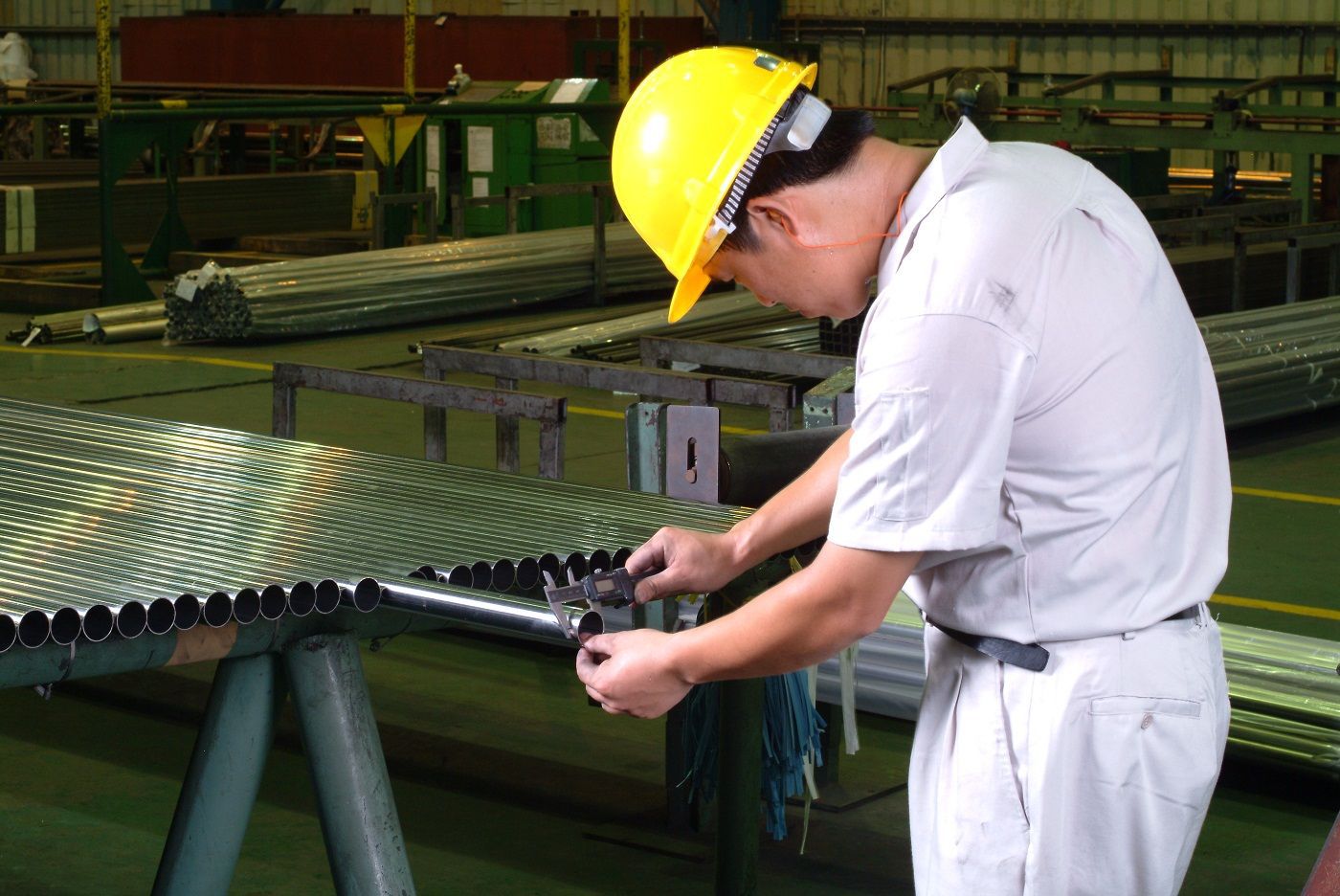
Most Alloy 825 inquiries start because a 316L line failed early. That does not automatically mean 825 is the answer, but it does mean the failure mode needs to be identified first, because 825 solves some of them and not others. The comparison below is the one worth having with your corrosion engineer.
| Criterion | 316L (UNS S31603) | Alloy 825 (UNS N08825) |
|---|---|---|
| Nickel content | 10 – 14% | 38 – 46% |
| Molybdenum | 2.0 – 3.0% | 2.5 – 3.5% |
| Copper | None | 1.5 – 3.0% |
| PREN (typical) | About 25 | About 30 |
| Sulfuric acid, dilute and hot | Poor | നല്ലത് |
| Chloride SCC resistance | Limited above about 60 °C | Substantially higher |
| Sour service listing | Restricted | Listed, environment-specific |
| Relative material cost | Baseline | Roughly 3 – 5× |
| Typical failure mode | Pitting, SCC at welds, acid attack | Crevice attack under deposits if velocity is wrong |
PREN calculated as Cr + 3.3 Mo + 16 N from typical composition. Cost multiples are indicative and move with the nickel and molybdenum markets.
The honest answer is that 316L is the right choice for a large share of the lines where 825 gets specified. If your acid is dilute, cold, chloride-free and flowing, 316L will outlast the project. If you have any two of heat, chlorides, or a reducing acid duty, the lifecycle maths turns and the premium pays back in avoided shutdowns. If you are simply comparing the two grades on a specification sheet, the ASTM A213 TP316L seamless pipe page shows what you are actually buying at the lower price point.
Alloy 825 vs Alloy 625 for Oil and Gas
This comparison comes up constantly on oil and gas projects, and it is usually framed as a cost argument when it should be framed as an envelope argument. Alloy 625 is a nickel-chromium-molybdenum alloy with roughly 58% minimum nickel and 8 to 10% molybdenum, and those numbers buy resistance to environments that will destroy 825 outright. The question is whether your environment is one of them.
| Criterion | Alloy 825 (N08825) | Alloy 625 (N06625) |
|---|---|---|
| Nickel, min | 38% | 58% |
| Molybdenum | 2.5 – 3.5% | 8.0 – 10.0% |
| Niobium | None | 3.15 – 4.15% |
| PREN (typical) | About 30 | About 51 |
| Seawater, chlorinated and stagnant | Marginal | നല്ലത് |
| High chloride plus high temperature | Limited | Strong |
| Sour service, severe envelope | Not sufficient | Widely specified |
| Relative material cost | Lower | Roughly 2 – 3× the 825 price |
| Supply and fabrication | Easier, broader mill availability | Tighter, slower, harder to weld |
Composition per ASTM B423 and B444/B446 respectively. Use PREN as a screening indicator only; chloride SCC and sour service are not predicted by PREN alone.
A useful rule of thumb: choose 825 when the corrosion mechanism is acidic and the chloride level is moderate; choose 625 when chlorides and temperature together create a pitting or SCC risk that 825 cannot hold. If you are moving up from 825, the Inconel 625 pipe range and the note on ASTM B444 UNS N06625 pipe are the two pages to read before you re-quote the line.
Grade selection
Two grades shortlisted and no agreement in the review meeting?
Send us the operating envelope: concentration or partial pressures, chlorides, temperature and velocity. We will tell you which grade the environment actually calls for, including where a cheaper option is defensible.
Compare grades with our engineersNickel Alloy 825 Pipe Sizes, Schedules and Delivery Condition
Alloy 825 pipe is normally ordered in the solution-annealed and pickled condition, in random or fixed lengths, with plain or bevelled ends. Bright annealed and cold-worked conditions exist but are the exception, and you should be explicit about which one you want because the corrosion performance of the finished line depends on it. Our note on why solution annealing matters for stainless pipe explains what the heat treatment actually changes.
For wall thickness, work from schedule against nominal pipe size rather than from a single diameter figure, and confirm the schedule your line class calls for. The pipe schedule chart is a quick reference for the NPS and wall pairings, and the stainless steel seamless pipe range shows how the equivalent sizes are stocked in the standard grades.
| Order item | What to specify | Why it matters |
|---|---|---|
| Alloy and UNS number | Alloy 825, UNS N08825, EN 2.4858 | Removes ambiguity between trade names |
| ASTM specification | B423 (seamless) or B705 (welded) | Determines tests, tolerances and marking |
| അളവ് | NPS and OD, or OD plus wall in mm | Mill availability is size-specific |
| Schedule / wall | SCH 10, 40, 80, 160 or explicit wall | Drives pressure rating and price |
| നീളം | Random 6 m, fixed length, or U-bend | Affects yield and freight |
| End finish | Plain, bevelled, threaded | Fabrication time on site |
| Condition | Solution annealed and pickled | Corrosion performance, not cosmetics |
| Testing | Hydro, eddy current, PMI, G28 if required | Cost and lead time impact |
| Documentation | EN 10204 3.1, heat traceability | Audit and insurance requirement |
The single most common delay in Alloy 825 orders is a size that exists in the standard but is not on the current mill rolling schedule. Confirm availability before you commit a delivery date to your client.
Alloy 825 Service Condition Selector
Use the selector below to check a duty against the grades we actually supply. Open the scenario closest to your line, read the recommendation and the watch-outs, then confirm the corrosion table and the ordering checklist before you write the inquiry. It is built for the moment you have a process description and no alloy decision yet.
Kaixin selection tool
Step 1 · Pick the service condition closest to your line
Six duties that cover most Alloy 825 inquiries. Click a panel to open the recommendation.
1 · Dilute sulfuric acid, up to 20%, below 60 °C, aerated
Recommended: Alloy 825 to ASTM B423.
This is the duty the grade was designed for. Copper handles the reducing mechanism and the nickel content covers the chlorides that usually accompany spent acid.
Watch out: 316L may be adequate at ambient temperature with no chlorides. Do not over-specify on a cold, clean, dilute line.
2 · Concentrated sulfuric acid, 70 – 98%, near ambient
Recommended: Alloy 825 to ASTM B423 for storage and transfer.
Acceptable at low temperature, where the corrosion rate stays in the usable range.
Watch out: water ingress dilutes the acid and moves you onto a different part of the curve. A rain-water pocket in an outdoor line is a real failure mode.
3 · Sulfuric acid with chlorides, spent acid, pickling liquor
Recommended: Alloy 825, with corrosion data requested for the specific mix.
Mixed acid plus chloride is where the molybdenum and nickel earn their cost, and where 316L usually fails first at the weld.
Watch out: treat this as a mixed-acid problem. Ask for coupon or plant data at your actual concentration, temperature and chloride level.
4 · Sour gas: CO2 with chlorides and low to moderate H2S
Recommended: Alloy 825, supplied to NACE MR0175 / ISO 15156 for your stated envelope.
Handles wet CO2 with chlorides at temperatures where duplex grades lose margin, without post-weld heat treatment.
Watch out: get the MR0175 compliance stated against your H2S partial pressure, chloride level and pH, not quoted as a general property.
5 · Phosphoric acid, fertiliser and mixed acid circuits
Recommended: Alloy 825, with a check on fluoride and chloride contamination.
Good general resistance in phosphoric acid process streams, including evaporator duty.
Watch out: fluorides and chlorides in the raw phosphate change the picture. State the contaminant levels, not just the acid strength.
6 · Seawater, brine and cooling circuits
Consider: Alloy 825 for flowing, clean seawater; verify crevice conditions first.
The nickel content gives real SCC margin compared with 316L and 904L.
Watch out: stagnant seawater, deposits and gasket crevices are where 825 struggles. For continuously wetted high-velocity chlorinated seawater, compare super duplex and 6Mo on cost.
Related reading: stainless steel pipe for seawater systems
Step 2 · Check the acid duty against the corrosion table
The table in the sulfuric acid section above gives the suitability bands by concentration and temperature. If your duty sits in a conditional band, the answer is corrosion test data, not a stronger alloy by default.
Step 3 · Before you send the inquiry
- Alloy 825, UNS N08825 and EN 2.4858 stated together on the drawing
- ASTM B423 for seamless, or B705 if you have decided on welded
- NPS and OD, plus schedule or explicit wall thickness in mm
- Length, end finish and total quantity per size
- Operating and design temperature recorded separately
- Chloride and H2S figures from the process data sheet, not from memory
- NACE MR0175 required or not, stated explicitly
- Test package: hydro, eddy current, PMI, G28 if your inspector wants it
- Certificate type: EN 10204 3.1 or 3.2
- Required-on-site date, so mill scheduling can be matched to it
The selector gives engineering guidance for preliminary specification only. Final grade selection and any code or NACE compliance decision must be confirmed by your corrosion engineer against the actual process data, applicable code and project specification.
Ready to specify
Turn the selector result into a real quotation
Send the checklist output and we will return a quote with the ASTM specification, achievable wall thickness, test package and a realistic delivery window from our Wenzhou mill.
Request Alloy 825 pricingInspecting and Accepting an Alloy 825 Order
Nickel alloy is where substitution fraud actually happens, because the price gap between 825 and a 300-series stainless is wide enough to make it worthwhile. Build the verification into the order rather than the receiving inspection. Positive material identification by X-ray fluorescence on every bundle is the minimum, and it should be done against the heat number recorded on the certificate.
The documentation package matters as much as the pipe. Ask for EN 10204 3.1 certificates with heat traceability, hydrostatic test records, eddy current or ultrasonic reports where specified, and dimensional records against the ASTM B423 tolerances. If you want to know exactly what to look for on the paperwork, our guide to reading a stainless steel pipe mill test certificate walks through the fields that catch most discrepancies.
Our production runs under ISO 9001:2015 in Longwan, Wenzhou, and the certification and third-party inspection records are available for review before you place an order. For repeat programmes, the KXINOX product catalogue gives the standard size and specification matrix we hold as routine rather than project stock.
Where Alloy 825 Pipe Earns Its Price
Alloy 825 earns its price in one specific place: mixed corrosive service where 316L fails early and Alloy 625 overpays. Get three things right and the rest follows. Name ASTM B423, or B705 if you have deliberately chosen welded, on the purchase order. Confirm the titanium and copper sit inside the limits on the mill certificate. Match the fittings and flanges to the same UNS number instead of letting them default to stainless. Send your line list with sizes, schedules, quantity and documentation requirements, and you will get a quote you can compare on specification rather than on price alone.
Related Products
- Alloy 825 seamless pipe (UNS N08825) — Product page with sizes, standards and documentation detail.
- Hastelloy C-276 seamless pipe UNS N10276 — When the chloride and H2S envelope moves past 825.
- Inconel 625 stainless steel pipe — The next step up for severe sour and seawater duty.
Standards referenced: ASTM B423, ASTM B705, ASTM B444, ASTM B366, ASTM B564, ASTM G28, NACE MR0175 / ISO 15156, ASME BPVC Section VIII Division 1, EN 10204.
പതിവായി ചോദിക്കുന്ന ചോദ്യങ്ങൾ
Inconel 825 and Incoloy 825 are trade names used by alloy producers; the material itself is defined by its chemistry. In the unified numbering system that chemistry is UNS N08825, in the European system it is 2.4858, and older drawings may show NiCr21Mo. All of these resolve to the same composition, so when a drawing names one of them, confirm the UNS number and the ASTM product specification rather than the trade name.
They are the same document published by two bodies. ASTM B423 is the product specification that defines chemistry, mechanical properties, tolerances and testing for UNS N08825 seamless pipe and tube. ASME SB-423 is that text adopted into the ASME Boiler and Pressure Vessel Code. If your equipment is code-stamped, the certificate and the marking usually need to reference SB-423, so tell your supplier which one your inspector expects before the order is released.
Yes, in most cases. The titanium addition stabilises carbon as titanium carbides, which keeps chromium in solution at the grain boundaries through the weld thermal cycle. That is why B423 and B705 pipe in the annealed condition normally goes into service without PWHT. A full solution anneal is still required after severe cold forming, and completed welds should be cleaned and pickled rather than stress relieved.
Titanium at 0.6 to 1.2 percent ties up carbon so that chromium does not precipitate as carbides at the grain boundaries. Without enough titanium, the heat-affected zone becomes sensitised and loses resistance to intergranular attack in acids, which is exactly the failure you were trying to design out. Titanium is therefore a chemistry acceptance item, and the carbon-to-titanium ratio is worth checking on the product analysis.
It resists chloride SCC far better than 316L or 904L, and it is routinely used in brine and seawater-adjacent service. Resistance is not immunity. Stagnant seawater, sediment and gasket crevices can still produce pitting and crevice attack, so design the line for velocity and avoid dead legs. For continuously wetted, high-velocity chlorinated seawater, super duplex or a 6Mo grade is often the more economical answer.
No. Hydrochloric acid is where Alloy 825 stops. Reducing chloride acids attack this alloy quickly even at moderate concentration and temperature, and the nickel-iron-chromium chemistry in this family does not fix it. For HCl service you are looking at Hastelloy C-276, tantalum, or a non-metallic lined system, and you should not accept 825 as a substitute on price.
ASME Boiler and Pressure Vessel Code Section VIII Division 1 lists UNS N08825 for use up to 538 °C, or 1000 °F. Above that the alloy still resists oxidation in air, but the allowable stress values fall away quickly. For pressure piping the code limit governs, not the oxidation resistance, and you should check the applicable allowable stress table at your design temperature rather than at ambient.
Match the line rather than downgrade it. Wrought fittings are normally specified to ASTM B366 in UNS N08825, and flanges or forgings to ASTM B564. Fitting 316L flanges to an 825 line creates a galvanic couple and a corrosion notch at the joint that is hardest to inspect and most expensive to repair. If the flange specification is fixed by a standard, confirm the facing and gasket materials at the same time.
It is fully austenitic, so in the annealed condition it is essentially non-magnetic. Two practical consequences follow. Magnetic particle inspection is not applicable, so surface examination relies on dye penetrant or eddy current. And a strongly magnetic reading on a bundle described as 825 is a red flag that should be resolved with positive material identification before the delivery is accepted.
Per kilogram, Alloy 825 typically costs several times more than 316L, driven mainly by nickel and molybdenum content, and considerably less than Alloy 625. Lead time depends far more on size and mill schedule than on the alloy: stock sizes of standard schedules move in days, while non-standard walls and heavy schedules are quoted against a production run. Give your size list, quantity and required-on-site date together and the comparison becomes meaningful.
 English
 Afrikaans
 Arabic
 Bengali
 Catalan
 Chinese
 French
 Dutch (Belgium)
 Dutch
 German
 Czech
 Greek
 Hindi
 Japanese
 Italian
 Portuguese
 Spanish (Chile)
 Spanish (Colombia)
 Spanish (Argentina)
 Persian
 Estonian
 Albanian
 Russian
 Spanish (Peru)
 Indonesian
 Thai
 Vietnamese
 Georgian
 Korean
 Nepali
 Polish
 Ukrainian
 Malayalam
 Xhosa