 Wenzhou Kaixin Kaixin Metal Co.,LTD

uns32205 stainless steel round bar
A UNS32205 stainless steel round bar is a practical choice when a project needs strength, corrosion resistance, and dependable machining performance in one material. As a duplex stainless steel, it combines austenitic and ferritic microstructures, giving engineers and buyers a balanced stainless steel alloy for demanding industrial environments. This guide explains what makes the material useful, where it is commonly applied, and what to check before ordering.
What makes this duplex round bar different?
A duplex round bar made from UNS S32205 stands out because it is designed to deliver a stronger mechanical profile than many standard austenitic grades while maintaining strong resistance to corrosion. In simple terms, it is often selected when ordinary Intsimbi engatyiwayo yebar may not provide enough strength or chloride resistance for the service environment. That balance makes the grade especially useful in chemical processing, marine, oil and gas, and structural applications where both durability and reliability matter.
UNS32205 material is commonly associated with 2205 duplex stainless steel. Its chemistry is balanced to support the two-phase structure that gives duplex steel properties their value: higher strength, good toughness, and improved resistance to stress corrosion cracking compared with many conventional stainless options. For manufacturers, this can mean using a bar that performs well under load without immediately moving to more exotic and costly materials.
The material profile behind its performance
The performance of any stainless steel alloy begins with its composition and structure. Duplex stainless steel contains a mix of chromium, nickel, molybdenum, and nitrogen, all working together to improve corrosion resistance and mechanical strength. The ferritic phase contributes strength and chloride stress corrosion cracking resistance, while the austenitic phase supports toughness and fabrication performance.
In round bar form, this material becomes highly versatile. It can be cut, machined, threaded, turned, or used as feedstock for shafts, fasteners, fittings, valve components, pump parts, and custom precision components. Because round bar is supplied in a shape that is easy to process, it gives fabricators flexibility without sacrificing the benefits of the duplex grade.
A UNS32205 stainless steel round bar is also valued because it helps simplify material selection for harsh environments. Instead of choosing a basic stainless steel bar and compensating with coatings, oversized sections, or frequent replacement schedules, designers can start with a stronger and more corrosion-resistant base material.
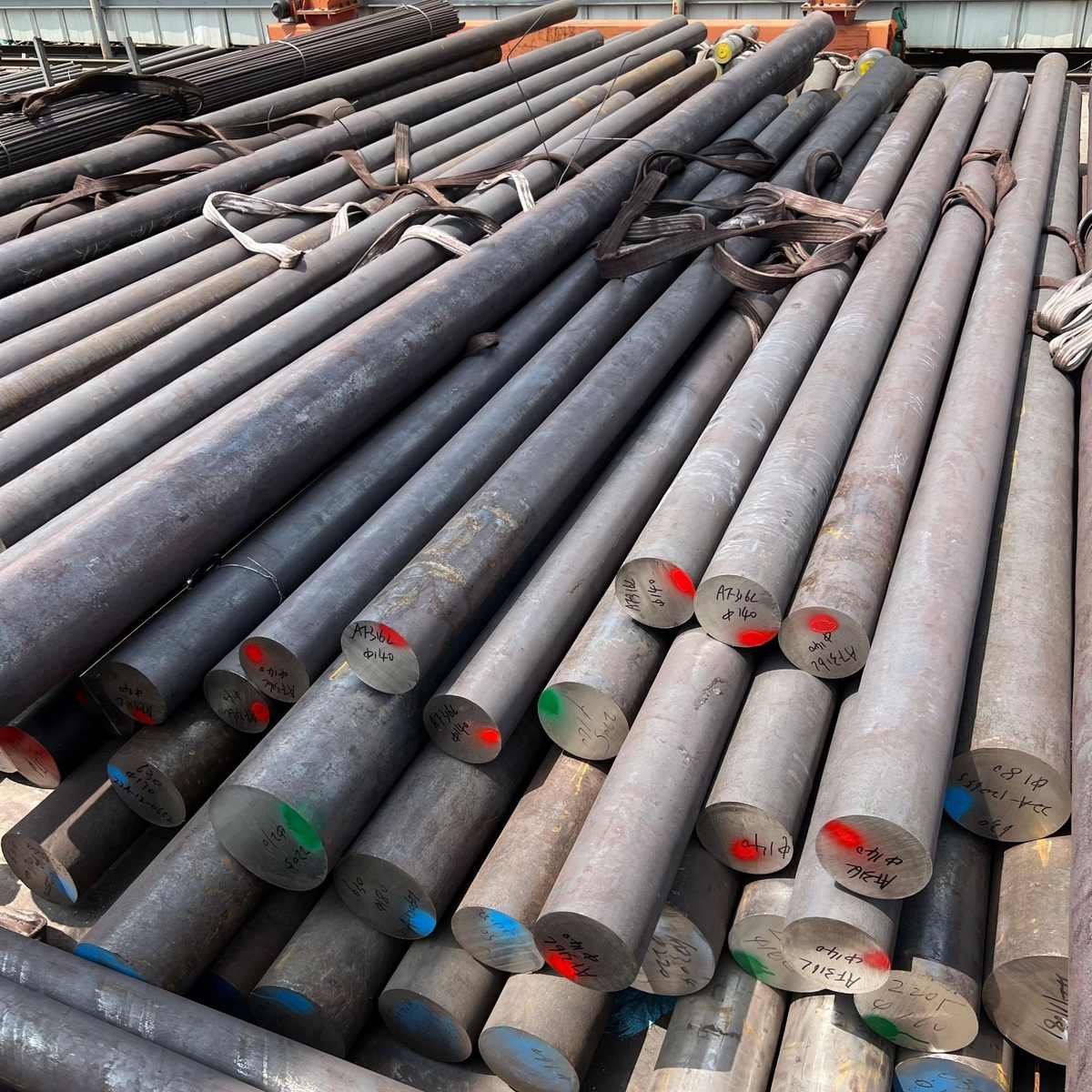
duplex stainless steel round bars stacked in warehouse
Key duplex steel properties to consider
When comparing stainless grades, it helps to focus on how the material behaves in real service conditions rather than chemistry alone. The most important duplex steel properties include strength, corrosion resistance, toughness, and fabrication response.
Iimpawu eziphambili ziquka:
- High strength: Duplex stainless steel typically offers greater yield strength than common austenitic stainless grades, allowing designers to consider lighter or more compact components where appropriate.
- Ukumelana nomhlwa The alloy is well suited for environments where chlorides, moisture, chemicals, or process fluids may attack less resistant materials.
- Stress corrosion cracking resistance: This is one of the main reasons duplex grades are considered for marine and process applications.
- Good machinability with proper tooling: It can be machined successfully, but shops should use suitable speeds, feeds, coolant, and rigid setups.
- Useful weldability: Duplex materials can be welded, but heat input, filler selection, and post-weld practices should be controlled to preserve the desired phase balance.
These properties make the material attractive, but they also require correct handling. A high-performance stainless steel alloy should be specified, processed, and inspected with care so the final part delivers the expected service life.
Where is UNS32205 material commonly used?
UNS32205 material is commonly used in industries where corrosion, pressure, mechanical stress, or exposure to aggressive fluids can shorten component life. It is not limited to one market; its appeal comes from the way it bridges the gap between standard stainless steels and more specialized alloys.
Typical uses include:
- Marine and coastal equipment where salt exposure increases corrosion risk.
- Chemical processing components such as fittings, shafts, valves, and mixing equipment.
- Oil and gas applications where strength and corrosion resistance are both important.
- Pulp and paper equipment exposed to demanding process conditions.
- Pump and valve parts that require dimensional stability and resistance to wear-related corrosion.
- Fasteners and machined components where a strong duplex round bar can be converted into custom parts.
For buyers, the key is not just identifying the grade but matching the bar condition, diameter, tolerance, and certification requirements to the application. A part used in a critical pressure system may need more documentation and testing than a general-purpose machined component.
Choosing the right stainless steel bar for your project
Selecting the right stainless steel bar starts with understanding the operating environment. If the component will face chlorides, chemicals, cyclic loading, or outdoor exposure, the grade decision becomes more important than simply choosing a familiar stainless option. UNS S32205 may be suitable when the project needs a duplex balance of strength and corrosion resistance.
Before ordering, review these practical points:
- Diameter and length: Confirm finished-part dimensions and machining allowance before choosing stock size.
- Surface condition: Consider whether a hot finished, cold finished, peeled, or polished bar is best for the next manufacturing step.
- Specification requirements: Ask whether the job requires a recognized material standard, mill test report, or traceability.
- Mechanical expectations: Confirm whether strength, hardness, impact performance, or other values matter for the end use.
- Corrosion environment: Share exposure details with your supplier or engineering team, especially if chlorides, acids, or elevated temperatures are involved.
- Indlela yokwenziwa: Machining, welding, forming, and heat exposure can affect how the material should be handled.
This checklist helps avoid a common purchasing mistake: choosing only by grade name. A UNS32205 stainless steel round bar can be an excellent fit, but the best result comes from specifying the complete product condition and documentation package.
Fabrication and machining notes
Duplex stainless steel is strong, which is an advantage in service but a factor during machining. Shops should expect higher cutting forces than with many standard stainless grades. Rigid tooling, sharp inserts, controlled cutting parameters, and effective coolant can help maintain finish quality and tool life.
Welding also requires attention. The goal is to protect the alloy’s duplex structure and avoid conditions that reduce corrosion resistance or toughness. Qualified welding procedures, suitable filler metals, and proper heat control are important, especially for parts used in critical or corrosive service.
For finished components, inspection should match risk. Basic dimensional checks may be enough for simple parts, while demanding applications may require material certification, hardness checks, nondestructive testing, or additional quality documentation.
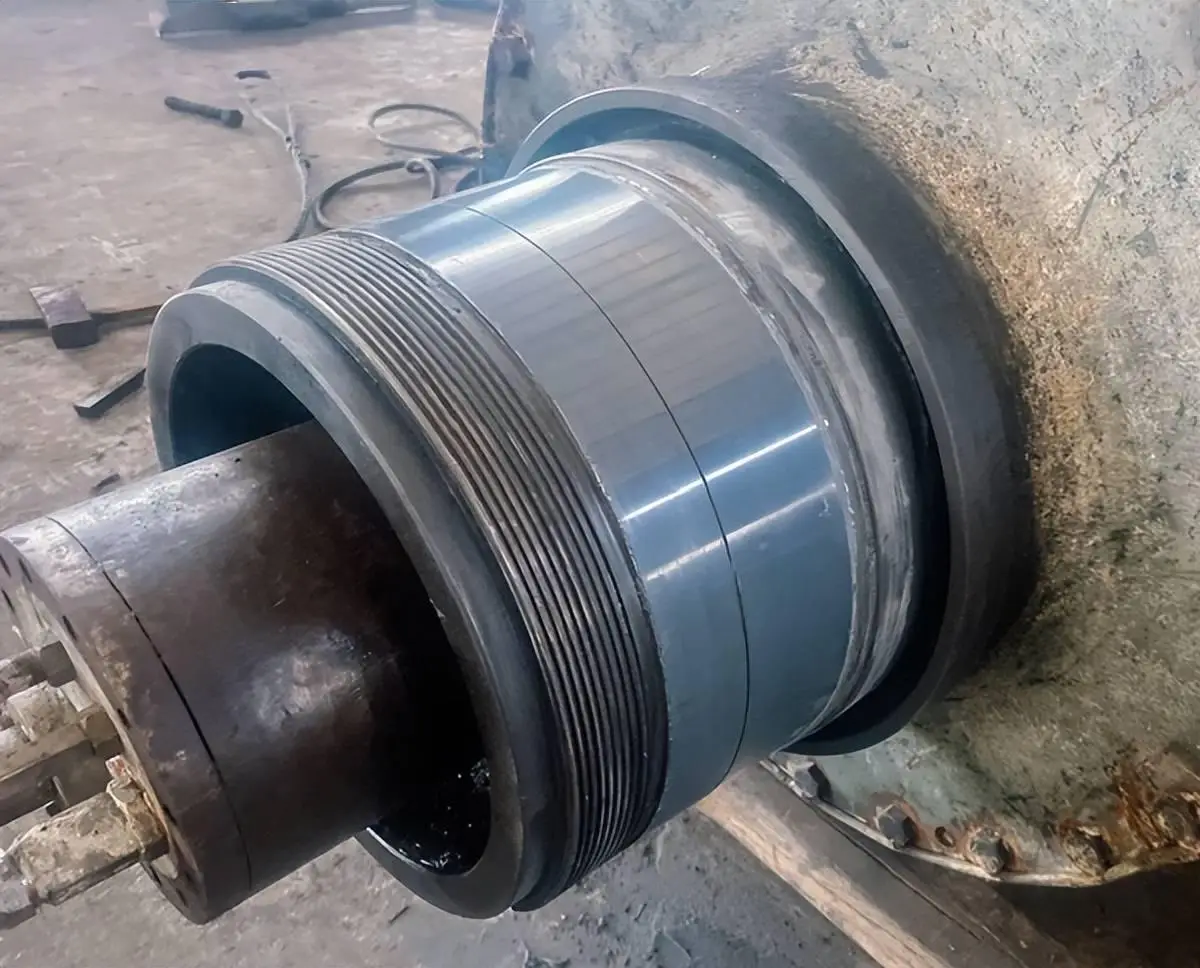
machining a Intsimbi engatyiwayo engqukuva on a lathe
Why material documentation matters
Documentation is often treated as paperwork, but with duplex stainless steel it can be a core part of quality control. A mill test report helps confirm the supplied stainless steel alloy matches the required grade and provides traceability back to the heat or batch. This is especially important when the bar will become parts for pressure equipment, corrosive systems, rotating assemblies, or customer-specified builds.
Good documentation also supports consistency. If a prototype performs well, accurate records make it easier to reorder the same grade, condition, and size for future production. That reduces confusion between similar stainless grades and helps purchasing, engineering, and production teams stay aligned.
A practical takeaway for buyers and engineers
A UNS32205 stainless steel round bar is a strong, corrosion-resistant option for projects that need more performance than a standard stainless steel bar can comfortably provide. Its duplex structure gives it a useful combination of mechanical strength, chloride resistance, and fabrication potential, making it suitable for many industrial components.
The smartest approach is to evaluate the environment, finished part requirements, processing method, and documentation needs before placing an order. When those details are clear, UNS32205 material can offer dependable value as a durable duplex round bar for demanding applications.
 English
 Afrikaans
 Arabic
 Bengali
 Catalan
 Chinese
 French
 Dutch (Belgium)
 Dutch
Dutch German
 Czech
Czech Greek
Greek Hindi
Hindi Japanese
 Italian
 Portuguese
 Spanish (Chile)
 Spanish (Colombia)
 Spanish (Argentina)
 Persian
 Estonian
 Albanian
 Russian
 Spanish (Peru)
 Indonesian
 Thai
Thai Vietnamese
 Georgian
 Korean
 Nepali
 Polish
 Ukrainian
 Malayalam
 Xhosa
Xhosa