 บริษัท เหวินโจว ไคซิน เมทัล จำกัด

บทนำ
Many believe stainless steel is invincible, but will เหล็กinox 304 rust in your pipeline? Understanding the corrosion resistance of 304 stainless steel is vital for your business to avoid costly leaks and downtime. This guide reveals what causes stainless steel to rust and how to protect your industrial piping investment.
Does 304 Stainless Steel Rust
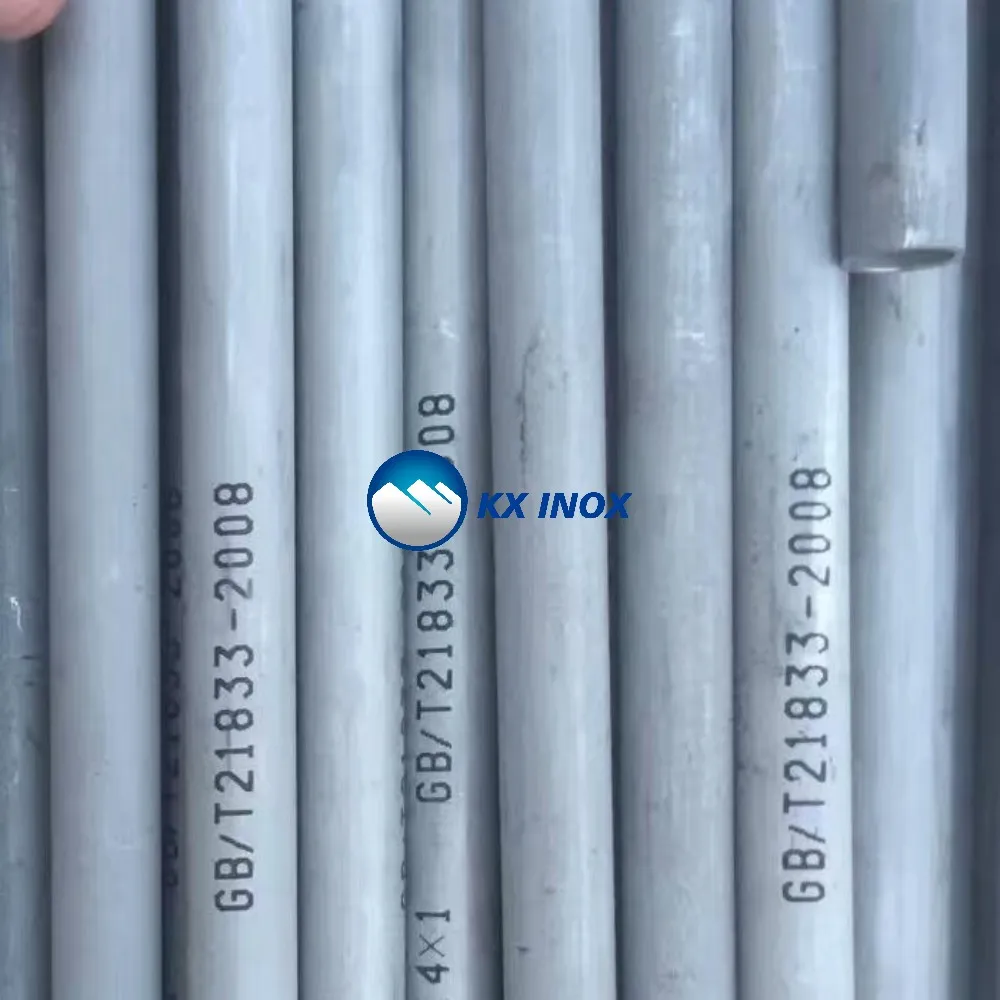
If you’ve ever walked through a factory and seen brown spots on your stainless steel tubing, you’ve probably asked: does 304 stainless steel rust? The hard truth is yes. In the piping world, “stainless” is a performance grade, not a magic spell.
The “Self-Healing” Skin: Imagine 304 stainless steel as a hero with a self-healing suit of armor. This armor is an invisible, microscopic layer of chromium oxide. It forms instantly when the chromium in the steel meets oxygen. As long as this layer is there, the steel is safe.
The Oxygen Trap: The shield needs oxygen to breathe. If you bury a 304 pipe in wet, oxygen-poor mud, or cover it with a tight plastic wrap that traps moisture, the shield can’t repair itself. Once that happens, stainless steel rusting starts to take hold.
Surface Staining vs. Real Damage: Often, the first sign of trouble is a light brown tint called “tea staining.” While it looks like dirt, it’s actually a chemical breakdown. For a high-pressure astm a312 stainless steel pipe, ignoring these stains is a recipe for a future burst.
What Causes Stainless Steel to Rust in Industrial Pipe Systems
Why does one pipeline stay clean for decades while another starts spotting in months? Understanding why does 304 stainless steel rust usually comes down to three main villains: salt, chemicals, and “dirty” installation.
Salt: Salt is the number one enemy of 304. It contains chlorides, which are like tiny, high-speed drills. They find microscopic weak spots in the protective layer and dig in. This creates “pitting corrosion,” where the metal looks fine on the surface but is actually hollowed out inside.
The Bleach Blunder: Many cleaning crews make the mistake of using bleach on stainless steel to “sanitize” it. This is a nightmare scenario. Bleach (Sodium Hypochlorite) is incredibly aggressive toward ss 304 corrosion resistance. It eats through the protective film faster than the metal can grow it back.
Tool Contamination: This happens on the shop floor. If a worker uses a grinding wheel or a wire brush that was previously used on regular carbon steel, tiny iron particles get embedded in the stainless steel. Those iron particles will rust immediately, and that rust acts like a virus, spreading into the 304.
304 vs 304L Stainless Steel: Which is Better for Your Pipeline
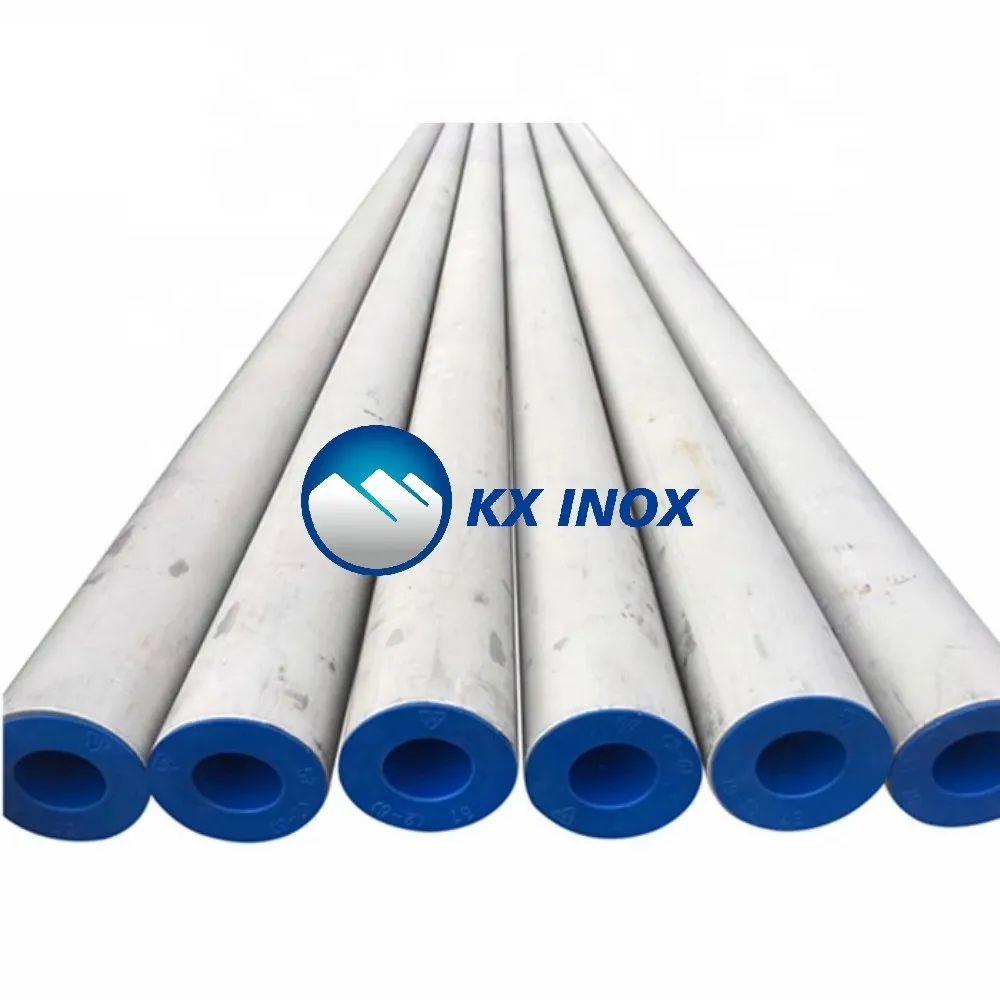
When you’re looking at quotes or technical specs, you’ll see “304L” listed. Is it just a marketing gimmick? Not at all. The “L” stands for Low Carbon, and it’s a game-changer if your project involves a lot of welding.
The “Sensitization” Problem: When you weld standard 304, the metal gets incredibly hot. In that high-heat zone, the carbon inside the steel starts to “rob” the chromium. It forms chromium carbides, which leaves the area around the weld defenseless.
The 304L Insurance Policy: By keeping the carbon content ultra-low (below 0.03%), 304L prevents those “dead zones” from forming. If you are building a pressurized pipeline or a tank that needs to be welded, choosing 304L is the best way to maintain ss 304 corrosion resistance at the joints.
Cost vs. Benefit: 304L is usually slightly more expensive or sometimes even the standard in the market now. For your business, the few extra cents are worth the thousands of dollars you’ll save on future repairs caused by “weld decay.”
Quick Comparison Between 304 and 304L Stainless Steel Pipes
| คุณสมบัติ | เหล็กinox 304 | 304L (Low Carbon) |
| Carbon Content | Max 0.08% | Max 0.03% |
| การต้านทานการกัดกร่อน | Excellent (Standard) | Superior after welding |
| ความสามารถในการเชื่อม | Good (Risk of sensitization) | Excellent (No weld decay) |
| Best Application | General piping & decoration | Heavy-duty welding & pressure lines |
| Price Point | มาตรฐาน | Slightly Higher |
5 Common Reasons Why 304 Stainless Steel ท่อ Rust in Coastal Areas
Coastal environments are a “stress test” for any metal. If your project is within a few miles of the sea or a heavy industrial zone, your stainless steel tubing is under constant attack. Here are the top five traps:
Stagnant Salt Buildup: Salt air doesn’t just pass by; it settles. If you don’t rinse your equipment, that salt sits there for days, slowly chewing through the surface. It’s the “soak time” that kills the metal.
Crevice Corrosion: This happens in the tight spots—under bolts, in gaskets, or where two pipes overlap. Water gets trapped there, loses its oxygen, and becomes a concentrated pool of acid that eats the steel from the inside out.
High Humidity + Heat: Tropical coastal areas are the worst. The heat speeds up the chemical reaction of rust, and the humidity provides the “electrolyte” needed for the corrosion to travel across the surface.
Galvanic Reactions: If you use a galvanized steel bolt on a 304 หน้าแปลนเหล็กสแตนเลส, you’ve basically built a battery. The electrical difference between the two metals will cause one of them (usually the bolt) to disintegrate, often staining the stainless steel in the process.
Improper Surface Finish: A rough, “brushed” finish might look cool, but it has thousands of tiny valleys. Those valleys trap salt and moisture. A smoother, polished finish is much harder for rust to “grip.”
How to Improve the SS 304 Corrosion Resistance for Your Pipeline
You don’t have to just sit back and watch your investment turn brown. There are active, professional steps you can take to boost the 304 stainless steel corrosion resistance.
Passivation (The Chemical Reset): Think of this as a chemical spa day for your steel. You soak the metal in a bath of nitric or citric acid. This removes any iron contaminants and forces the chromium oxide “shield” to grow back thicker and more uniform than it would naturally.
Electropolishing (The Mirror Shield): This is the gold standard. Instead of just rubbing the surface, electropolishing uses electricity and chemicals to strip away the “peaks” of the metal. You’re left with a surface that is so smooth, even microscopic salt particles find it hard to stick.
The Power of a Fresh Water Rinse: Sometimes, the best tech is a garden hose. Regularly washing down your stainless steel tubing with fresh water (especially in coastal or industrial zones) removes the chloride buildup before it has a chance to start drilling holes.
Pickling Pastes: For weld spots, you can apply a specialized paste that removes the “heat tint.” That rainbow-colored scale you see after welding is actually a weak spot; removing it restores the corrosion resistance of 304 stainless steel.
Choosing the Right Finish: Why it Matters for Your Business
The finish you choose is more than just about “looks.” It plays a massive role in what causes stainless steel to rust.
2B Finish (Cold Rolled, Dull): This is the standard for industrial pipes. It’s smooth enough for most jobs and offers decent resistance because it doesn’t have deep grooves.
No. 4 Finish (Brushed/Satin): Very popular for kitchen appliances. However, those “brush strokes” are actually tiny canyons. In a salty environment, those canyons trap salt, making it rust faster than a smoother finish.
No. 8 Finish (Mirror Polished): The most expensive but the most resistant. Because there are almost no surface “cracks” or “valleys,” contaminants simply slide off.
Why Strategic Sourcing is Your Best Defense Against Pipe Rust
When you are hunting for the best ss 304 corrosion resistance, you have to look past the shiny surface and check the source. In the piping industry, not all 304 is created equal. A cheap pipe today often leads to a rusty, leaking nightmare tomorrow. Here is how picking the right stainless steel tube suppliers china keeps your business safe:
Avoiding “Black Heart” Steel: Some low-end mills use poorly cleaned recycled scrap to save costs. This leaves “tramp elements” (like copper or tin) trapped inside the steel walls. These impurities cause the pipe to rust from the inside out, creating “invisible” weak spots that no amount of surface cleaning can fix. Strategic sourcing ensures your stainless steel tubing is made from high-purity raw materials.
Cross-Contamination Control: A professional stainless steel facility looks different from a regular steel mill. Expert suppliers know that even a single spark from a nearby carbon steel grinder can “infect” a stainless pipe with iron particles. Leading suppliers use dedicated storage racks, separate forklifts, and even specialized nylon slings to ensure your 304 pipes never touch “dirty” iron before they reach your site.
คำถามที่พบบ่อย
Will 304 stainless steel pipes rust if used outdoors?
Yes, they can. If you have salt air, acid rain, or don’t clean them, they will eventually spot.
Does 304 stainless steel pipes rust more easily than 316?
Yes. 316 has molybdenum, which acts like extra armor against salt and chemicals that 304 lacks.
What causes stainless steel to rust after welding?
Heat depletes chromium at the joints. Using 304L (Low Carbon) helps the weld stay rust-free.
Is rusted 304 stainless steel still strong?
Surface rust is mostly ugly, but deep “pitting” can cause leaks or structural cracks over time.
สรุป
While 304 stainless steel rust is a real risk for your pipeline, it’s one you can manage with the right grade and care. High-quality ss 304 corrosion resistance starts with picking the right supplier who understands these technical details. Ready to upgrade your pipe system? ติดต่อ Kaixin today for a technical quote and expert advice on your next project!
 English
 Afrikaans
 Arabic
 Bengali
 Catalan
 Chinese
 French
 Dutch (Belgium)
 Dutch
Dutch German
 Czech
Czech Greek
Greek Hindi
Hindi Japanese
 Italian
 Portuguese
 Spanish (Chile)
 Spanish (Colombia)
 Spanish (Argentina)
 Persian
 Estonian
 Albanian
 Russian
 Spanish (Peru)
 Indonesian
 Thai
Thai Vietnamese
 Georgian
 Korean
 Nepali
 Polish
 Ukrainian
 Malayalam
 Xhosa
Xhosa