 Вэньчжоу Кайсинь Кайсинь Металл ЛТД

Различные типы трубных фитингов: что нужно знать
Pipe fittings are the small but essential parts that help a piping system change direction, split flow, connect different materials, or seal an endpoint. Whether you are planning a home plumbing repair, specifying industrial fittings, or simply trying to identify the right pipe connectors at a supply counter, understanding the main fitting types makes the job safer and more efficient. This guide explains common pipe fittings, how they work, and what to consider before choosing plumbing fittings for water, gas, drainage, or process piping applications.
What do pipe fittings actually do?
Трубная арматура connect, redirect, adapt, extend, or terminate sections of pipe so a system can function as intended. In practical terms, they let a straight pipe run turn a corner, branch into multiple lines, transition between pipe sizes, join two pipe materials, or create a serviceable access point. Without the right pipe joints and plumbing connectors, even a simple piping layout would be difficult to install, maintain, or repair.
A fitting is not just a connector. It also affects pressure, flow, serviceability, corrosion resistance, installation time, and long-term reliability. Choosing the wrong fitting can cause leaks, poor drainage, flow restriction, premature wear, or compatibility issues between metals, plastics, sealants, and operating conditions.
Именно поэтому pipe fittings are usually selected by looking at several factors together: pipe size, pipe material, system type, temperature, pressure, code requirements, and the type of connection needed. A fitting that works well for a low-pressure drain line may be completely unsuitable for a pressurized water line or gas piping system.
The basic categories of pipe fittings
Most pipe accessories fall into a few broad categories based on what they do in the system. Once you understand these categories, it becomes much easier to identify the part you need and communicate clearly with a plumber, engineer, contractor, or supplier.
Direction-changing fittings
Elbows and bends are used when a pipe run needs to change direction. They are common in nearly every plumbing, mechanical, and industrial piping system. The most familiar angles are 90 degrees and 45 degrees, though other bend angles may be used depending on the layout.
A 90-degree elbow creates a sharp turn and is useful where space is limited. A 45-degree elbow creates a gentler change in direction and may support better flow in certain layouts. In drainage systems, the shape and sweep of the bend matter because solids and wastewater need a smooth path to move without creating frequent clogs.
Branching fittings
Tees, wyes, and crosses allow one pipe run to divide into two or more directions. A tee usually creates a straight-through path with a branch at a right angle. A wye creates a branch at a more gradual angle, which is often useful in drainage applications because it encourages smoother flow.
Cross fittings have four openings and can connect lines from multiple directions. They are less common in everyday residential plumbing than tees, but they may appear in specialized layouts. When using branching pipe connectors, it is important to consider flow direction, access for maintenance, and whether the fitting creates a point where debris, pressure loss, or turbulence could become a problem.
Size-changing fittings
Reducers and bushings are used to connect pipes or fittings of different sizes. A reducer typically transitions from a larger pipe to a smaller pipe in a straight run. A bushing fits inside another fitting to reduce the connection size.
These fittings are especially useful when adapting existing piping to new equipment or when a system design requires different flow rates in different sections. However, reducing размер трубы can change pressure and flow behavior. In some systems, that is desirable; in others, it can create noise, restriction, or performance issues if done without planning.
Joining and repair fittings
Pipe couplings, unions, nipples, adapters, and sleeves are used to connect straight sections of pipe or create a serviceable joint. A coupling joins two pipe ends. A union also joins two pipe ends, but it is designed so the connection can be taken apart more easily without cutting or rotating long pipe sections.
Repair couplings and transition couplings are especially helpful when replacing a damaged section or connecting different pipe materials. These fittings are often chosen for practical reasons: the pipe is already installed, access is limited, and the repair needs to be clean, secure, and code appropriate.
End-closing and access fittings
Caps and plugs close off unused pipe openings. A cap usually fits over the outside of a pipe end, while a plug fits into a fitting opening. Cleanouts provide access to drainage lines so blockages can be cleared without dismantling the system.
These parts may look simple, but they matter. An improperly selected cap, plug, or cleanout can leak, become difficult to remove later, or fail under pressure. For any system that may need future inspection or cleaning, access fittings should be placed where they can actually be reached.
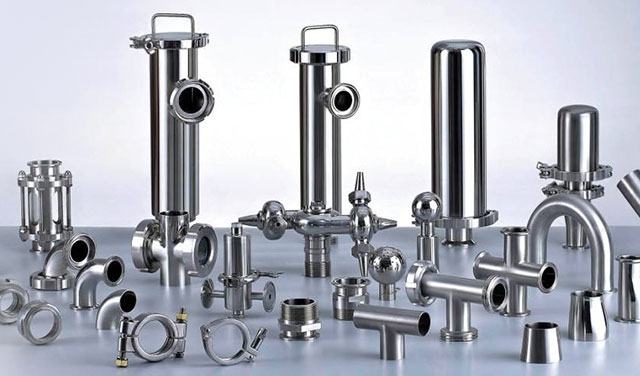
Assorted metal and ss pipe fittings arranged by type
Common connection methods and where they fit
The shape of a fitting is only part of the decision. The connection method is equally important because it determines how the fitting attaches to the pipe and how the joint seals.
Threaded fittings
Threaded fittings screw onto matching threaded pipe or components. They are widely used with metal pipe fittings, especially in systems where disassembly may be needed. The threads create mechanical engagement, while an approved thread sealant or tape helps seal the joint.
These fittings are practical, familiar, and available in many configurations. However, they must be tightened correctly. Under-tightening can leak, while over-tightening can crack fittings, damage threads, or make future service difficult. Thread compatibility is also essential because different thread standards are not always interchangeable.
Solvent-weld fittings
Solvent-weld fittings are commonly associated with certain plastic piping systems. The pipe and fitting are cleaned, primed where required, and joined using a solvent cement that chemically bonds the surfaces. When done correctly, the result is a strong, permanent joint.
This method is common because it is efficient and does not require complex tools. The tradeoff is that the joint is not easily disassembled. Proper preparation, full insertion, cure time, and ventilation are important for a reliable installation.
Compression fittings
Compression fittings seal by compressing a ring or ferrule around the pipe as the nut is tightened. They are often used where a solder-free or adhesive-free connection is preferred, especially on smaller water lines or fixture connections.
Their main advantage is convenience. They can often be installed with basic tools and removed later if needed. Still, they depend on clean pipe surfaces, correct alignment, and proper tightening. If the pipe is scratched, out of round, or poorly supported, the joint may not seal consistently.
Push-to-connect fittings
Push-to-connect fittings use internal gripping and sealing components to connect to compatible pipe quickly. They are popular in repair and remodeling work because they can simplify installation in tight spaces.
These plumbing connectors can be very useful, but they must be matched to approved pipe types and installed according to the manufacturer’s instructions. The pipe end usually needs to be cut square, deburred, cleaned, and inserted to the proper depth. Skipping those steps can turn a convenient fitting into a future leak point.
Flanged and grooved fittings
Flanged fittings use bolted flanges and gaskets to create a strong, serviceable connection. Grooved fittings use a gasket and mechanical coupling around grooved pipe ends. Both are common in larger commercial, mechanical, fire protection, and industrial systems.
These connection styles are valued because they support assembly, disassembly, and maintenance without cutting pipe. They also work well in systems where alignment, vibration, pipe movement, or large diameters must be managed carefully.
How are plumbing fittings different from industrial fittings?
Plumbing fittings are typically selected for potable water, wastewater, venting, fixture connections, and building service applications, while industrial fittings may be chosen for process fluids, steam, compressed air, chemicals, fuel, or demanding mechanical systems. The difference is not just size or strength; it is also about materials, pressure ratings, standards, environmental exposure, and the consequences of failure.
In a home or light commercial plumbing system, the main concerns often include leak prevention, sanitation, code compliance, ease of installation, and long service life. In an industrial setting, the fitting may also need to handle vibration, temperature swings, corrosive media, high pressure, frequent operation, or strict maintenance procedures.
This is why similar-looking pipe fittings are not automatically interchangeable. A coupling intended for a drain line should not be assumed suitable for compressed air. A fitting used for water may not be compatible with oil, gas, chemicals, or elevated temperatures. The safest choice is always based on the system requirements, not appearance alone.
Materials used for pipe fittings
Pipe fittings are made from many materials, and each one has strengths and limits. Material selection should match the pipe, the fluid or gas being carried, and the environment around the system.
Brass, copper, and bronze
Brass, copper, and bronze fittings are widely used in plumbing and mechanical applications. They are valued for durability, corrosion resistance in many water applications, and broad availability. Copper fittings are commonly used with copper tubing, while brass and bronze may appear in valves, adapters, and specialty components.
Compatibility matters when mixing metals. Some combinations can increase the risk of galvanic corrosion in the presence of an electrolyte such as water. When transitioning between dissimilar metals, installers may use approved dielectric fittings or other methods recommended for the system.
Steel, stainless steel, and black iron
Steel fittings are chosen where strength and durability are priorities. Stainless steel is commonly selected when corrosion resistance or cleanliness is important. Black pipe fittings, often associated with black steel or black iron piping, are frequently used in gas distribution and other applications where the material is approved for the service.
Black pipe fittings should not be chosen casually just because they are strong. Their suitability depends on the system, local code, coating, corrosion exposure, and the medium being transported. For any fuel gas work, qualified installation and inspection are essential.
Cast iron and hubless systems
Cast iron remains common in many drain, waste, and vent systems because it is strong, durable, and naturally quiet compared with some lighter materials. Hubless soil pipe and fittings use no-hub couplings to join pipe and fitting ends without traditional bell-and-spigot hubs.
Hubless systems are especially common in commercial drainage work, though they may also appear in multifamily and institutional buildings. The coupling, shield, gasket, and torque requirements all matter. A hubless joint that looks aligned but is not tightened correctly can still leak or separate under stress.
Plastic fittings
Plastic fittings are common in modern plumbing, irrigation, drainage, and specialty piping systems. Materials may include PVC, CPVC, ABS, PEX-related fittings, polypropylene, polyethylene, and others. Each plastic has its own temperature limits, pressure capabilities, joining methods, and approved applications.
Plastic plumbing fittings are lightweight and often easy to install, but they are not all the same. A fitting for drainage may not be rated for pressure. A fitting for cold water may not be suitable for hot water. UV exposure, chemical compatibility, and support spacing can also affect performance.
Key fitting types every buyer should recognize
If you are looking at a shelf, catalog, or parts diagram, the number of options can feel overwhelming. Start by identifying the function of the fitting first, then narrow the choice by size, material, and connection type.
Common pipe fittings include:
- Elbows: Change direction, usually at 90 degrees or 45 degrees.
- Tees: Create a branch from a main line.
- Wyes: Create a smoother angled branch, often useful in drainage.
- Couplings: Join two pipe ends in a straight line.
- Unions: Join pipe sections while allowing easier future disassembly.
- Reducers: Transition from one pipe size to another.
- Bushings: Reduce the size of a fitting opening.
- Adapters: Connect different end types, materials, or thread styles.
- Caps: Close the outside end of a pipe.
- Plugs: Close an opening from the inside of a fitting.
- Nipples: Short pipe sections, often threaded on both ends, used between fittings.
- Flanges: Create bolted connections for larger or serviceable systems.
- Cleanouts: Provide access for clearing drain lines.
This simple function-first approach prevents a common mistake: choosing a fitting because it “looks close.” In piping, close is not enough. The correct fitting must match both the layout and the operating conditions.
Pipe joints and sealing choices
A pipe joint is the point where two parts of the system meet. The fitting creates the connection, but the seal depends on the joint design, installation method, and materials used.
Threaded pipe joints may require approved tape, paste, or sealant. Solvent-weld joints require proper cleaning and cementing. Gasketed joints depend on the right gasket material, compression, and alignment. Mechanical couplings require proper positioning and tightening.
A good joint does three things at once:
- It aligns the pipe correctly. Misalignment can stress the fitting and shorten service life.
- It seals under expected conditions. Pressure, temperature, vibration, and movement all matter.
- It remains maintainable where needed. Some systems benefit from unions, flanges, cleanouts, or removable couplings.
Leaks often start where installation details were rushed. Burrs, dirty surfaces, cross-threading, poor support, wrong sealant, or uneven tightening can all undermine an otherwise correct fitting.
Choosing fittings for water, gas, drainage, and specialty systems
Different systems place different demands on pipe accessories. Before buying fittings, identify what the system carries and how it operates.
For potable water, fittings must be approved for drinking water use and compatible with the pipe material. Temperature and pressure ratings are especially important for hot water lines. Corrosion resistance and code compliance should guide the choice.
For drain, waste, and vent systems, flow direction, slope, access, and fitting geometry are critical. Drainage fittings are designed to move wastewater and air, not necessarily to hold pressure. Cleanouts, wyes, long sweeps, and proper transitions can make maintenance much easier.
For fuel gas, fittings must be approved for the gas type and installed according to applicable codes. Threaded metal pipe fittings and black pipe fittings are common in many gas applications, but this work should be handled by qualified professionals because leaks can be dangerous.
For industrial systems, the selection process is more demanding. Industrial fittings may need documentation for pressure rating, material grade, chemical compatibility, temperature range, end connection, and applicable standards. In these settings, a fitting is part of a larger safety and reliability plan.
What should you check before selecting pipe connectors?
Before selecting pipe connectors, confirm the pipe size, material, system type, connection method, pressure and temperature requirements, and any code or manufacturer limitations. A fitting should be chosen because it is rated and appropriate for the job, not because it happens to fit physically. This checklist can help reduce mistakes before installation begins.
Use this practical pre-purchase checklist:
- Confirm nominal pipe size or tubing size. Pipe and tubing are measured differently, so do not rely on appearance alone.
- Match the material. Verify compatibility between the fitting, pipe, fluid, and surrounding environment.
- Check the connection type. Threaded, solvent-weld, compression, push-to-connect, flanged, grooved, and gasketed systems are not interchangeable.
- Review pressure and temperature ratings. Ratings should meet or exceed the system’s expected operating conditions.
- Consider flow direction. Tees, wyes, check-related fittings, and drainage fittings may need a specific orientation.
- Plan for access. Add unions, cleanouts, or serviceable pipe couplings where future maintenance is likely.
- Use approved sealants and gaskets. The wrong sealant can damage materials or fail in service.
- Account for movement and support. Thermal expansion, vibration, and pipe weight can stress fittings.
- Follow local code. Plumbing, gas, fire protection, and industrial systems may have specific requirements.
- When unsure, ask a qualified professional. Guessing can cost more than getting the right answer early.
This checklist is especially useful during repairs, where the existing system may include older materials or unusual transitions. Taking a few extra minutes to identify what is already installed can prevent mismatched parts and repeat leaks.
Installation details that affect performance
Even the best pipe fittings can fail if they are installed poorly. Most fitting problems come from small details: a pipe end that was not cut square, a thread that was cross-started, a gasket that shifted, or a fitting that was forced into alignment.
Good installation starts with clean preparation. Pipe ends should be cut correctly, deburred when needed, and checked for cracks, corrosion, or deformation. Threads should be inspected before assembly. Gaskets and sealing surfaces should be clean and seated properly.
Support is another overlooked detail. Pipes should not hang from fittings or use the fitting as a structural brace. Proper hangers, clamps, and anchors reduce stress on pipe joints and help prevent movement from loosening connections over time.
Tightening technique also matters. More force is not always better. Threaded fittings can split, compression fittings can deform, and couplings can be damaged if overtightened. Follow the fitting manufacturer’s instructions and any applicable torque requirements, especially for mechanical and hubless couplings.
Common mistakes to avoid
Many fitting problems are preventable. They usually happen when the installer rushes identification, assumes compatibility, or treats different piping systems as if they follow the same rules.
Избегайте следующих распространённых ошибок:
- Mixing incompatible materials without a proper transition. This can encourage corrosion or create unreliable joints.
- Using drainage fittings in pressure applications. Drain fittings are not automatically rated for pressurized service.
- Confusing pipe size with outside diameter. Nominal pipe size can be misleading if you do not know the system.
- Overusing adapters. Too many transitions can create weak points, clutter, and flow restrictions.
- Ignoring access. A system that cannot be serviced easily may be expensive to maintain later.
- Choosing by price alone. The cheapest fitting may not be suitable for the application.
- Reusing damaged fittings. Threads, sealing surfaces, gaskets, and ferrules can wear or deform.
- Skipping instructions. Push-to-connect, mechanical, and specialty fittings often have specific preparation steps.
The best way to avoid these issues is to slow down before the purchase. Identify the system, confirm the requirements, and choose fittings that are designed for that exact use.
Smart fitting selection starts with the system
Pipe fittings may be small components, but they shape how a piping system performs, how easy it is to maintain, and how long it can operate without trouble. Elbows, tees, reducers, pipe couplings, threaded fittings, hubless soil pipe and fittings, black pipe fittings, and other metal pipe fittings all serve specific purposes, and each one should be chosen with the full system in mind.
For everyday plumbing, the right plumbing connectors help prevent leaks, support reliable flow, and make future repairs easier. For commercial and industrial work, correct fitting selection becomes even more important because operating conditions can be more demanding and the cost of failure can be higher.
If you remember one rule, make it this: choose pipe fittings by function, material, rating, and connection method before anything else. When those pieces line up, the finished system is cleaner, safer, and easier to trust.
 English
 Afrikaans
 Arabic
 Bengali
 Catalan
 Chinese
 French
 Dutch (Belgium)
 Dutch
Dutch German
 Czech
Czech Greek
Greek Hindi
Hindi Japanese
 Italian
 Portuguese
 Spanish (Chile)
 Spanish (Colombia)
 Spanish (Argentina)
 Persian
 Estonian
 Albanian
 Russian
 Spanish (Peru)
 Indonesian
 Thai
Thai Vietnamese
 Georgian
 Korean
 Nepali
 Polish
 Ukrainian
 Malayalam
 Xhosa
Xhosa