 Wenzhou Kaixin Metaal Co, LTD

Inleiding
In extreme industriële omgevingen schiet standaardstaal vaak tekort. Juist dan zijn buizen van roestvrij staal met een nikkellegering onmisbaar voor de veiligheid van uw bedrijf. In deze gids wordt uitgelegd waarom nikkel het geheime ingrediënt is in hoogwaardige systemen en hoe u de juiste buis van een nikkellegering kiest voor uw infrastructuurbehoeften op de lange termijn.
Wordt nikkel gebruikt in roestvrij staal?
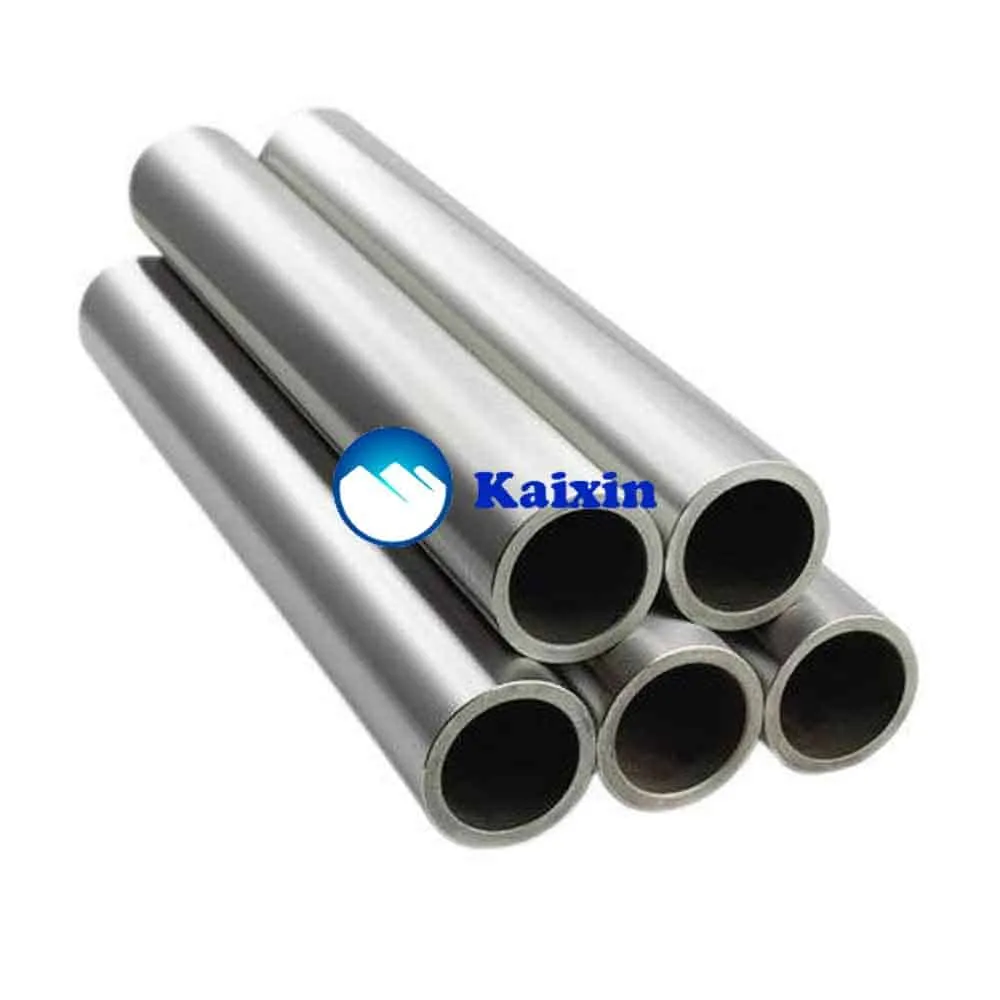
Als je je ooit hebt afgevraagd waarom sommige metalen in zware omstandigheden glanzend en sterk blijven, terwijl andere verroesten en afbrokkelen, dan is het antwoord meestal nikkel. Het is de stille held achter de schermen.
Het onzichtbare schild
Nikkel doet op microscopisch niveau iets magisch. Het stabiliseert de structuur van het staal, waardoor het niet-magnetisch wordt en ongelooflijk hittebestendig. Zonder nikkel zouden je buizen broos zijn en onder thermische belasting snel barsten.
Nikkelgehalte versus prestaties
In de meest gangbare roestvrijstalen nikkel-legeringen ligt het nikkelgehalte tussen 8% en 14%. Naarmate dat percentage stijgt, neemt ook het vermogen van het metaal om oxidatie tegen te gaan toe. Dat is het verschil tussen een buis die twee jaar meegaat en een die twintig jaar meegaat.
De drempel naar “superlegeringen”
Zodra het nikkelgehalte de 50%-grens overschrijdt, komt het materiaal in een geheel nieuwe klasse terecht. Dit zijn niet langer zomaar standaardbuizen; het zijn hoogwaardige buisproducten van roestvrij nikkelstaal, ontworpen voor de meest agressieve chemische omstandigheden op aarde.
Wat zijn de belangrijkste soorten roestvrijstalen buizen die in de industrie worden gebruikt?
Als je een bouwplaats betreedt, zie je misschien honderden buizen die er allemaal hetzelfde uitzien. Maar onder de oppervlakte lopen de soorten roestvrijstalen buizen enorm uiteen, afhankelijk van hun “samenstelling”. De prestaties van deze buisproducten van roestvrijstalen nikkellegeringen worden vrijwel volledig bepaald door de hoeveelheid nikkel die aan het mengsel wordt toegevoegd.
Om uw bedrijf te helpen wegwijs te worden in het technische jargon, volgt hier een overzicht van de meest gangbare buizen van roestvrijstalen nikkellegeringen, ingedeeld naar hun metallurgische “familie” en specifieke kwaliteiten:
| Categorie leidingen | Veelvoorkomende cijfers | Nikkelgehalte (%) | Het meest geschikt voor… |
| Austenitisch | 304/304L, 316/316L | 8% – 14% | Algemene corrosiebestendigheid; productielijnen voor voedingsmiddelen, dranken en farmaceutische producten. |
| Super-austenitisch | 904L, legering 20 | 23% – 35% | Omgevingen met een hoog zuurgehalte; verwerking van zwavelzuur en fosforzuur. |
| Duplex | 2205, 2507 | 4.5% – 8% | Offshore-leidingen onder hoge druk; zeewaterontziltingsinstallaties. |
| Ferritisch / Martensitisch | 409, 430, 410 | < 2% | Uitlaatsystemen en mechanische onderdelen die aan sterke slijtage onderhevig zijn; magnetisch. |
| Legeringen op nikkelbasis | Inconel 625, Monel 400 | 50% – 72% | Extreme hitte en diepzeeomgevingen; vrijwel roestvrij. |
Austenitische buizen: de werkpaarden met een hoog nikkelgehalte
Kwaliteiten zoals SS 304 en 316 domineren de markt omdat dit in feite de meest betrouwbare roestvrijstalen buizen van een nikkellegering zijn voor dagelijks gebruik. Met een nikkelgehalte variërend van 8% tot 14% zijn ze gemakkelijk te lassen, breukbestendig en bestand tegen een breed temperatuurbereik. Als uw bedrijf water, voedsel of milde chemicaliën vervoert, zijn dit uw beste vrienden.
Duplex en Super Duplex: de hybride sterkte
Deze buizen hebben een gemengde “duplex”-structuur van austeniet en ferriet. Door het nikkelgehalte zo af te stemmen, bieden ze een dubbele sterkte ten opzichte van standaard austenitische buizen. Deze hoogwaardige buisproducten van roestvrij nikkelgelegeerd staal worden doorgaans toegepast in hogedrukleidingen op zee, waar zowel het gewicht als de sterkte van cruciaal belang zijn.
Ferritisch en martensitisch: specialisten in nikkelarme legeringen
In tegenstelling tot de nikkelrijke 300-serie hebben deze een lager nikkelgehalte en zijn ze vaak magnetisch. Hoewel ze niet zo roestbestendig zijn als roestvrij staal van een hogere kwaliteit met een nikkellegering, zijn ze uitermate geschikt voor toepassingen met hoge slijtage of wanneer uw project specifieke magnetische eigenschappen vereist.
Super-austenitische buizen: het summum van nikkellegeringen
Wanneer standaardbuizen het begeven, kiest de industrie voor geavanceerde buizen van roestvrijstalen nikkellegeringen, zoals 904L. Deze bevatten tot wel 25% nikkel en extra koper, waardoor ze bestand zijn tegen omgevingen waarin andere materialen gewoonweg zouden oplossen.
Waarom zou je kiezen voor een buis van nikkellegering in plaats van een standaard buis van gelegeerd staal?
Many procurement managers look at a quote for an alloy steel pipe and a nickel alloy pipe and wonder why the price gap exists. It comes down to survival.
Chemische bestendigheid versus mechanische taaiheid
A standard alloy steel pipe is incredibly strong and great for structural support. But drop it in a tank of sulfuric acid, and it will dissolve. A nickel-rich pipe, however, creates a passive layer on its surface that laughs off chemical attacks.
De hittefactor
Standard steel gets “tired” when it gets hot. It loses its shape and strength. Nickel keeps the metal’s “backbone” straight even at temperatures that would make other alloys glow and sag.
Investeren in gemoedsrust
Choosing a nickel alloy pipe is essentially an insurance policy. You are paying more upfront to avoid the catastrophic cost of a pipe burst, a chemical leak, or a total factory shutdown.
Hoe beïnvloedt nikkel de productie van roestvrijstalen buizen?
The way a pipe behaves in the shop is just as important as how it behaves in the field. Nickel changes the game during manufacturing.
Schonere, sterkere lasnaden
During the metal tube fabrication process, nickel helps the molten metal flow more smoothly. This leads to deeper penetration and fewer air bubbles in the weld pool. For your business, this means a joint that won’t fail when the pressure rises.
Flexibiliteit zonder scheuren
Nickel adds “ductility.” This is a fancy way of saying the pipe can bend and flare without snapping like a dry twig. This makes installation much faster and safer for your team on-site.
Gladde oppervlakteafwerkingen
If you work in the pharmaceutical or food industry, you know that “smooth” is a safety requirement. Nickel helps achieve a mirror-like finish that prevents bacteria from hiding in tiny microscopic cracks.
5 cruciale toepassingen voor buisproducten van roestvrijstalen nikkellegeringen
Where do these high-end stainless nickel alloy piping products actually go to work? Usually, they are in the places where humans can’t safely stand.
Oil & Gas (Downhole): Handling “sour gas” that is filled with hydrogen sulfide. Regular pipes would turn into Swiss cheese in weeks; nickel alloys hold firm.
Chemische verwerking: Moving aggressive reducing acids. In these plants, nickel is the only thing standing between a productive day and a hazardous spill.
Stroomopwekking: Managing high-pressure steam lines. The thermal stress in a power plant is brutal, requiring the stability that only nickel provides.
Marine Engineering: Fighting off the constant attack of salt-water pitting. For desalination plants, 904L or high-nickel pipes are the industry standard.
Aerospace: Providing lightweight, high-strength fuel lines that can survive the extreme vibration and temperature shifts of flight.
Hoe u hoogwaardige leidingen van roestvrij staal en nikkellegeringen uit China kunt inkopen
Sourcing nickel alloy stainless steel from a leverancier van roestvrijstalen buizen uit China is a smart way to manage your project budget, provided you follow the “Golden Rules” of technical procurement. Because stainless nickel alloy pipes are high-value assets, you cannot afford to take shortcuts during the auditing phase.
Demand the MTR (Mill Test Report): Never take a supplier’s word for it. The MTR is the birth certificate of your stainless nickel alloy piping products. It should list the exact percentage of nickel, chromium, and molybdenum. For high-performance lines, a 1% deviation in nickel can be the difference between success and a catastrophic leak.
Verify International Standards: Ensure the pipes meet global benchmarks like ASTM or ASME. Professional suppliers who specialize in nickel alloy stainless steel will be happy to show you their ISO certifications and third-party inspection reports. If they hesitate to provide documentation, they aren’t the right partner for your business.
The Spectrometer Test: When sourcing stainless nickel alloy pipes from overseas, ask for a “Live” PMI (Positive Material Identification) test. A pro supplier will use a handheld device to prove the chemical composition right on the factory floor before the goods are packed.
Watch the Packaging and Logistics: High-value nickel alloy pipe should never be thrown loose into a shipping container. Demand reinforced wooden crates and plastic end-caps. If a premium pipe arrives with deep scratches, the protective “passive layer” is compromised before it even enters service.
Veelgestelde vragen
What makes nickel alloy pipes different from regular stainless steel?
Nickel alloys contain much higher nickel percentages (often >50%), offering superior heat and acid resistance over standard stainless.
Does more nickel always mean better corrosion resistance?
Generally, yes. Higher nickel content significantly improves resistance to stress corrosion cracking and high-temperature oxidation.
Can I weld nickel alloy pipe to standard alloy steel pipe?
Yes, but you must use specialized filler metals to ensure the joint doesn’t become brittle or rust.
Is nickel used in stainless steel 304?
Yes, 304 typically contains about 8% to 10.5% nickel to maintain its rust-proof properties.
Why are nickel alloy piping products more expensive?
Nickel is a precious commodity with a volatile market price, and the alloying process is technically complex.
Is nickel-alloy pipe magnetic?
Most high-nickel austenitic pipes are non-magnetic, which is a key requirement for certain electronics and naval applications.
Can 304 stainless steel pipes rust?
Yes, 304 kan roesten if exposed to high salt or chloride levels without proper maintenance.
Conclusie
Investing in stainless nickel alloy piping products is the smartest way to ensure your facility survives the toughest industrial conditions. Whether you need a standard nickel alloy pipe or a custom high-temp solution, quality starts with the right materials. Neem contact op met Kaixin today to get an expert quote on your high-performance piping needs!
 English
 Afrikaans
 Arabic
 Bengali
 Catalan
 Chinese
 French
 Dutch (Belgium)
 Dutch
Dutch German
 Czech
Czech Greek
Greek Hindi
Hindi Japanese
 Italian
 Portuguese
 Spanish (Chile)
 Spanish (Colombia)
 Spanish (Argentina)
 Persian
 Estonian
 Albanian
 Russian
 Spanish (Peru)
 Indonesian
 Thai
Thai Vietnamese
 Georgian
 Korean
 Nepali
 Polish
 Ukrainian
 Malayalam
 Xhosa
Xhosa