 온주 카이신 카이신 금속 유한공사

서론
Safety and reliability are non-negotiable when managing water infrastructure. Many project managers ask: is stainless steel pipe safe for drinking water? The answer is a resounding yes. Using stainless steel pipe for drinking water ensures a lead-free, long-lasting system that protects both public health and your investment in high-quality piping.
Why is Stainless Steel Pipe Safe for Drinking Water
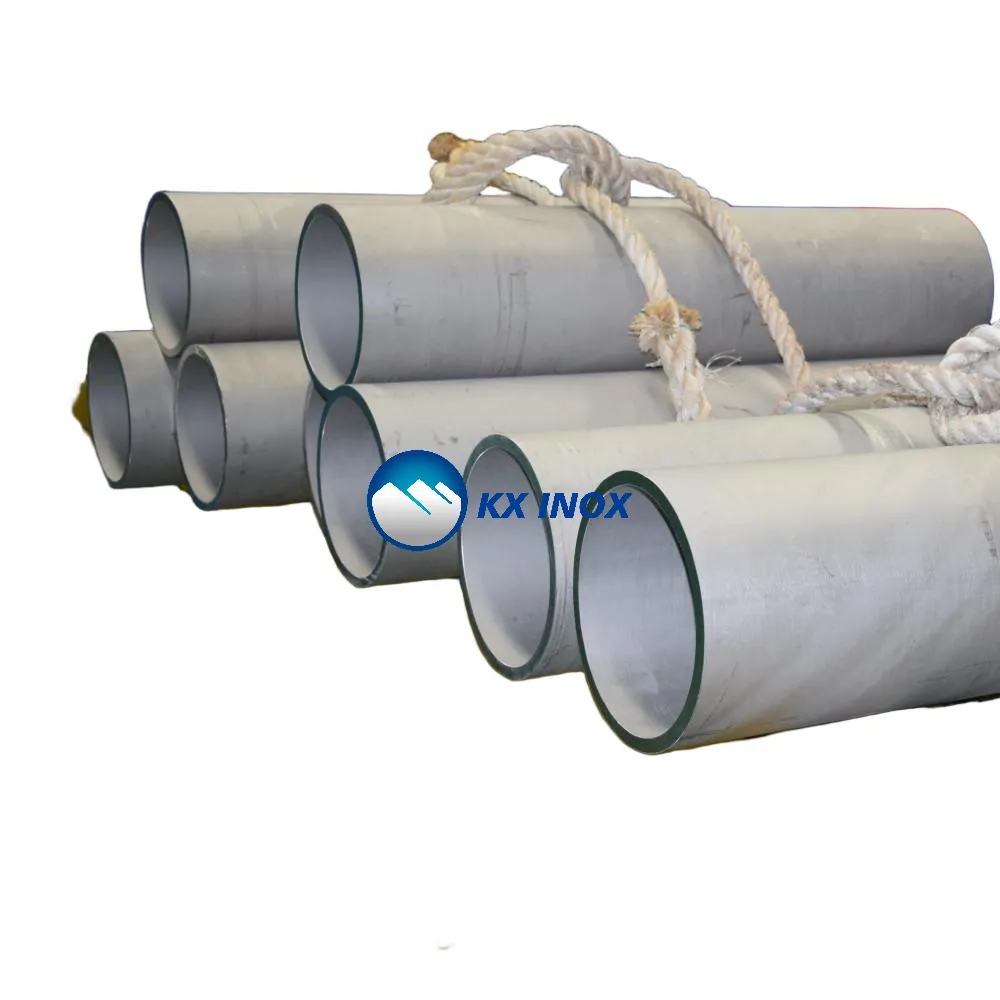
When you build a system for human consumption, you need materials that won’t change the water’s chemistry. Potable water pipes made of stainless steel are the gold standard for several reasons:
The Power of an Inert Surface
Stainless steel is a “passive” metal. It doesn’t react with the water flowing through it. Imagine a glass of water—it’s clean because glass doesn’t “give” anything to the liquid. Stainless steel works the same way. This means the taste and smell of your water stay exactly as they were at the source, without any metallic or plastic chemical notes.
Bacteria Resistance: Why Smoothness Matters
Microscopic slime and bacteria (biofilm) love to hide in the cracks of rough pipes. If you look at old galvanized or plastic pipes under a microscope, they look like a mountain range—full of valleys for germs to grow. A stainless steel plumbing pipe has an incredibly smooth internal finish. It’s like a high-speed slide for water; bacteria have nowhere to anchor and grow.
No Toxic Coatings Required
Unlike older carbon steel pipes that need chemical linings or epoxy coatings to prevent rust, stainless steel is protected by its own internal chemistry—a thin, self-healing chromium oxide layer. You never have to worry about a liner flaking off into someone’s glass or chemicals from the coating leaching out during heat spikes.
Does Stainless Steel Leach into Water?
This is a common concern for engineers and procurement officers. Does stainless steel leach into water? Under normal conditions, it simply does not, and here is the technical breakdown:
Unbreakable Chemical Stability
The chromium and nickel inside the steel are locked in a tight molecular bond. Think of it like a reinforced vault. Even with high-velocity water flow or moderate pressure changes, these elements stay put. In fact, many professional kitchens and surgical tools use the same material for this exact reason: total purity.
Lead-Free by Design
One of the biggest risks in older plumbing systems is lead poisoning. Even modern brass fittings can contain trace amounts of lead. Stainless steel is naturally 100% lead-free. By installing potable water pipes made of steel, you are effectively “future-proofing” your project against stricter health regulations that are appearing globally.
Disinfectant Resistance
Modern water treatment uses chlorine and chloramines to kill germs. These chemicals are aggressive and can cause other metals to corrode and release metallic ions. Because these are corrosion resistant pipes, they don’t break down, ensuring that the only thing in your water is water.
3 Types of Stainless Steel Pipes for Drinking Water
Not all steel is the same. For water projects, the “recipe” matters. You need to balance budget with the specific chemistry of your local water supply.
| Pipe Grade | 내식성 | Best Application | Nickel Content |
| 304/304L | High | Standard municipal water, indoor plumbing. | 8% – 10.5% |
| 316/316L | 훌륭합니다 | Coastal areas, high-chlorine water, desalination. | 10% – 14% |
| Duplex 2205 | 우수 | Extreme high-pressure lines and large treatment plants. | 4.5% – 6.5% |
304 스테인리스강: This is the workhorse of the industry. It provides excellent protection for most municipal water. However, you should check if your water source is high in salt, as 304 can rust in salty or heavy chloride environments.
316 스테인리스강: If your project is within 5 miles of the ocean or handles very aggressive “soft” water, 316 is the safer bet. It contains Molybdenum, an extra ingredient that adds a layer of defense against “pitting”—those tiny, needle-like holes that can ruin a pipe.
5 Key Benefits of Using Stainless Steel for the Water Treatment Industry
Municipalities and private firms are moving toward stainless steel for the water treatment industry because the long-term ROI is unbeatable.
50-Year (Plus) Lifespan: While plastic might last 15-20 years before it gets brittle, a high performance stainless pipe can easily serve for half a century. It’s a “set it and forget it” solution.
Higher Flow Rates & Energy Savings: Because the inside is so smooth, there is less friction. Water moves faster with less effort. Over a year, this can save a treatment plant thousands of dollars in electricity used for pumping.
Earth-Friendly & 100% Recyclable: Green building is no longer a trend; it’s a requirement. Stainless steel is one of the most recycled materials on the planet. When the project is eventually decommissioned decades from now, the metal is still valuable and won’t end up in a landfill.
Strength Under Pressure: Urban environments are tough. Ground shifts, heavy traffic vibrations, and pressure spikes can snap plastic pipes. Stainless steel has the “backbone” to handle mechanical stress without cracking.
Fire Resistance: In the event of a fire, plastic pipes can melt and even release toxic fumes. Stainless steel maintains its integrity, keeping water flowing to sprinkler systems when it’s needed most.
How Does Stainless Steel Plumbing Pipe Compare to Copper and PEX
If you are debating between materials at a procurement meeting, here is how they stack up in the real world:
Against Copper: No More Pinhole Leaks
Copper was the king for years, but it is a “soft” metal. High-velocity water or acidic water can physically wear away the copper walls. This leads to the dreaded “pinhole leak” inside walls. Stainless steel is much harder and is immune to the “erosion-corrosion” that kills copper systems.
Against PEX/Plastic: Purity First
Plastic PEX is cheap and fast to install, but there are growing concerns about microplastics and chemical “off-gassing” into the water, especially in hot water lines. Stainless steel provides a “pure” path for water without any plasticizers, glues, or chemical odors.
The Investment Reality
Yes, the initial price for high performance stainless pipe is higher than plastic. But think about the cost of one major leak in a high-rise building—the water damage alone would pay for the stainless steel system ten times over.
How to Choose the Right Grade for Potable Water Pipes
적절한 것을 선택하기 스테인리스강 등급 is about knowing your “Enemy” (the environment).
Test Your Water First: Is it high in chlorides? Does it have a low pH? If the water is aggressive, don’t cut corners—move to 316L over 304.
Seamless vs. Welded: For standard drinking water in buildings, high-quality welded pipes are perfect and cost-effective. For high-pressure main lines, seamless might be required.
The “Passivation” Check: Ensure your supplier has passivated the pipes. This is a chemical bath that removes any surface iron and strengthens that “invisible shield” we talked about. Without it, even good steel can show surface rust.
자주 묻는 질문
Is stainless steel safe for drinking water?
Yes, it is non-toxic, lead-free, and does not leach chemicals into your water.
Will stainless steel pipes rust?
In standard water conditions, no. Grades like 304 and 316 remain rust-proof for decades.
Can I use 304 stainless steel for plumbing?
Absolutely. It is the most common grade used for residential and commercial water delivery.
Does stainless steel affect the taste of water?
No. It is inert and does not add any metallic flavor or odor to water.
What is the lifespan of stainless potable water pipes?
Most systems are designed to last 50 to 100 years with minimal maintenance.
Is stainless steel pipe used in water treatment plants?
Yes, it is the preferred material for filtration, aeration, and chemical dosing tanks.
결론
Investing in stainless steel pipe for drinking water is a commitment to health and infrastructure durability. By choosing corrosion resistant pipes, you eliminate leaching risks and save on long-term repairs. Make the switch to a cleaner future today. Contact Kaixin now to find the perfect stainless steel solutions for your next water project!
 English
 Afrikaans
 Arabic
 Bengali
 Catalan
 Chinese
 French
 Dutch (Belgium)
 Dutch
Dutch German
 Czech
Czech Greek
Greek Hindi
Hindi Japanese
 Italian
 Portuguese
 Spanish (Chile)
 Spanish (Colombia)
 Spanish (Argentina)
 Persian
 Estonian
 Albanian
 Russian
 Spanish (Peru)
 Indonesian
 Thai
Thai Vietnamese
 Georgian
 Korean
 Nepali
 Polish
 Ukrainian
 Malayalam
 Xhosa
Xhosa