 Wenzhou Kaixin Kaixin Metal Co. LTD

AI workloads have turned the data center from a building full of servers into a thermal engineering problem. As you plan capacity, specify materials, or source components for the next facility, one consequence is easy to underestimate: the rise of AI data centers is creating a structural, long-term surge in demand for stainless steel cooling pipes. This article maps that demand chain end to end—from GPU racks to the pipe spools in your mechanical room—so you can make better sourcing and specification decisions.
The demand chain: from GPUs to gallons
When you follow the money and the heat, the chain is surprisingly linear. A single AI training rack can pull 40–130+ kW, versus roughly 8–15 kW for a conventional enterprise rack. That heat has to leave the building, and air alone cannot move it efficiently at those densities. The result is a cascade:
- Chip-level power growth → higher rack density → thermal design shifts from air to liquid.
- Liquid cooling adoption (direct-to-chip, rear-door, and immersion) → every rack now needs a supply and return loop.
- Loop material selection → stainless steel wins on corrosion, pressure, and cleanliness.
- Procurement volume → more facilities × more loops per facility = multiplying pipe demand.
In short, you are not looking at a temporary spike. You are looking at a re-baselining of how much corrosion-resistant, pressure-rated tubular material the world builds every year. For specifiers and procurement leads, that changes how you should think about lead times, grade selection, and supplier qualification.
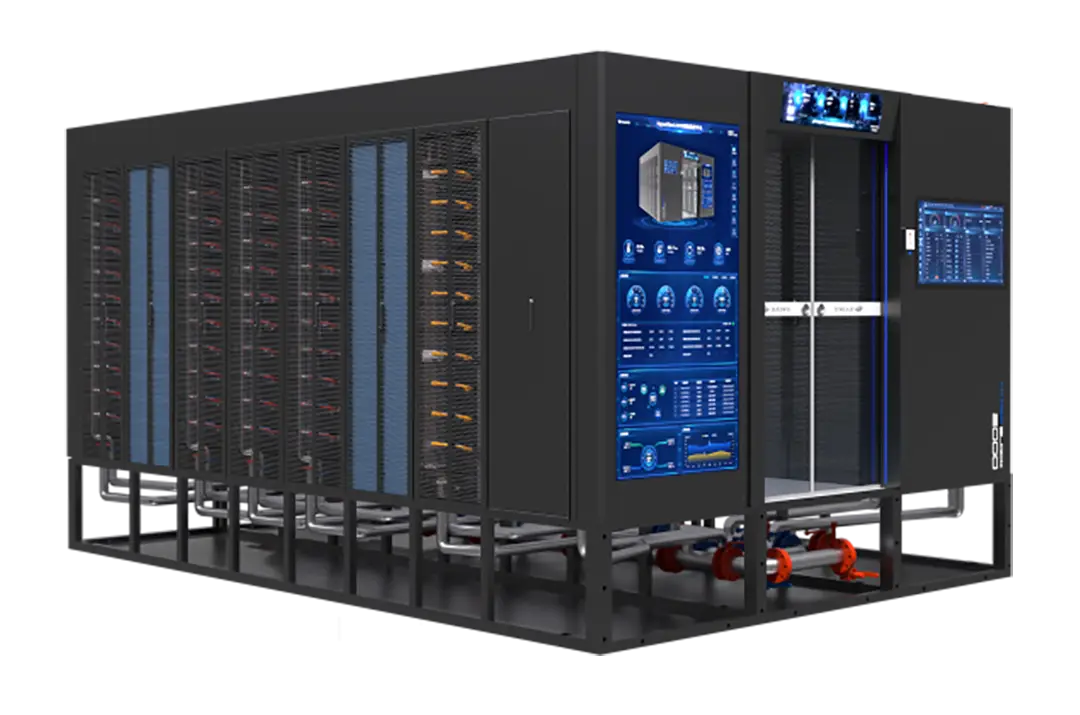
Why stainless steel wins the cooling loop
You have options for a cooling loop—copper, plastics (PE/PP), and carbon steel among them. Stainless steel earns the specification for four practical reasons that matter to your total cost of ownership:
- Résistance à la corrosion — treated cooling water, biocides, and glycol blends attack carbon steel and degrade polymers. 304L/316L stainless resists pitting and crevice corrosion, protecting uptime.
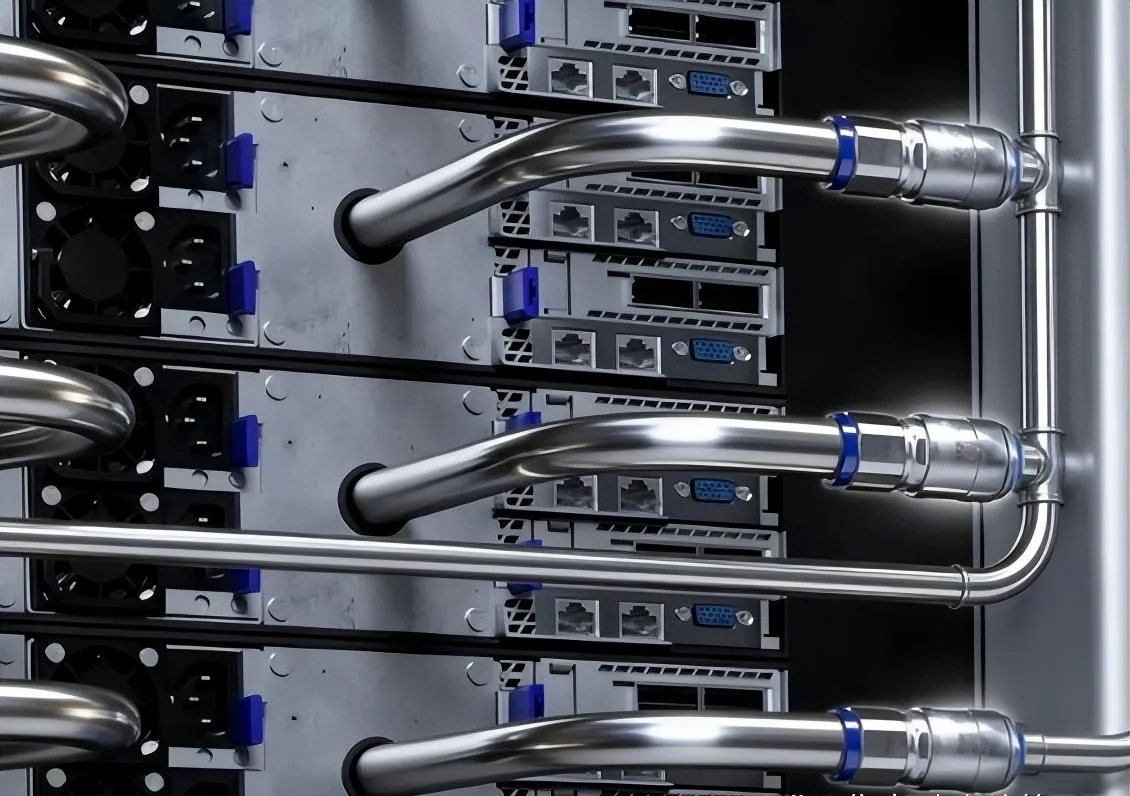
- Pressure and temperature rating — direct-to-chip loops run at higher pressures than legacy chilled-water systems; seamless stainless holds rating without wall thinning.
- Cleanliness and flow — a smooth, low-roughness bore reduces fouling and maintains design flow, which protects PUE.
- Service life — 20+ year design life matches the building, avoiding mid-life re-piping.
For these reasons, many operators standardize on tube en acier inoxydable sans soudure for primary loops and tube en acier inoxydable sans soudure for manifolds and distribution where tighter tolerances and a hygienic bore matter.
Quick reference: rack density vs. pipe requirement
Use this table as a first-pass planning aid when you scope a build. Exact sizes depend on loop topology, fluid, and ΔT—but the direction of travel is consistent.
| AI rack density | Dominant cooling approach | Stainless steel pipe role |
|---|---|---|
| 8–15 kW (legacy) | Air + spot liquid | Supplement lines only |
| 30–50 kW | Direct-to-chip liquid | Primary supply/return manifolds (tube) |
| 50–100+ kW | Immersion / rear-door + liquid | Full stainless loop, higher pressure ratings |
What this means for you as a specifier or buyer
If you are on the buying side, the demand surge creates two risks: volatile lead times and grade confusion. Our team sees many RFQs that ask simply for “stainless pipe” and then stall in qualification. The practical move is to specify the grade and standard up front—for example, an ASTM A213 TP316 stainless steel seamless pipe for loops exposed to treated water, or 304L where chloride risk is low. Pairing the callout with the right ASTM standard (A213/A269 for tube, A312 for pipe) keeps mills and inspectors aligned.
You can go deeper on material choice in our companion guide on the 304L vs 316L grade decision for data center cooling, and on the bigger picture in why stainless steel pipes are essential for AI data center liquid cooling.
Supply chain and capacity outlook
Demand is scaling faster than greenfield mill capacity in some regions, which is why early engagement with a qualified supplier matters. When you lock specifications and forecast volumes ahead of build, you convert a scarce commodity into a planned line item. For hygienic and instrument-grade runs, an ASTM A270 stainless steel seamless tube is a common specification because it meets the surface-finish and cleanliness expectations of sensitive loops.
How to qualify a stainless steel pipe supplier
As demand tightens, you will see more vendors and more variance in quality. Protect the project with a short qualification checklist:
- Mill traceability — EN 10204 / MTC 3.1 and heat numbers on every length.
- Standard compliance — ASTM A213/A269/A270/A312 as applicable, plus any regional pressure-equipment marks.
- Dimensional and surface checks — OD, wall, roughness, and passivation verification.
- Track record — references from similar cooling or process-piping projects.
Wenzhou Kaixin Metal Co., Ltd. (WZ INOX / KAIXIN) supplies stainless steel pipe, tube, fittings, and flanges to B2B buyers worldwide, with full mill test documentation and grade flexibility across 304L, 316L, 2205, and nickel alloys. That depth is what lets us support both prototype loops and multi-megawatt rollouts from one source.
Frequently asked questions
What materials compete with stainless steel in data center liquid cooling?
Copper offers high thermal conductivity but is costlier and can react with certain coolants; plastics (PE/PP) are cheap but limited in pressure, temperature, and service life; carbon steel is strong but corrodes in treated water. Stainless steel lands in the sweet spot of corrosion resistance, pressure rating, and life-cycle cost for permanent loops.
How do you size stainless steel cooling pipes for a given rack density?
Start from total heat load (kW) and your chosen ΔT, compute volumetric flow (Q = P ÷ (ρ·c·ΔT)), then size the pipe for an acceptable velocity (commonly 1–3 m/s) using the continuity equation. Higher rack density raises flow, which pushes you toward larger bore or higher-pressure-rated seamless pipe.
Which standards and certifications should B2B buyers require?
At minimum, align to ASTM A213/A269 (tube) or A312 (pipe), request MTC 3.1 / EN 10204 traceability, and confirm any regional pressure-equipment marks (e.g., PED/CE where applicable). For hygienic loops, A270 surface-finish requirements are common.
What lead time and MOQ should I expect from a manufacturer?
Common grades in stock often ship in 1–3 weeks; made-to-order sizes, special finishes, or alloys can run 4–8 weeks. MOQs vary by mill—prototype lots are sometimes available, while contract volumes are planned quarterly. Early forecast is the lever that shortens both.
How does stainless steel pipe cost compare to total cooling CAPEX?
The pipe and tube are a small share of total cooling CAPEX—often single-digit percent—but they are critical-path for uptime. Specifying the right grade up front is inexpensive insurance against leaks, corrosion, and mid-life re-piping that cost far more.
Is stainless steel compatible with two-phase (immersion) cooling?
Yes for the secondary loop and infrastructure. Primary immersion often uses the dielectric fluid in sealed tanks, while stainless steel handles the facility-side supply/return, condensate, and process water. Grade choice depends on the exact fluid chemistry and temperatures involved.
Related resources
- Why Stainless Steel Pipes Are Essential for AI Data Center Liquid Cooling — the material case in depth.
- 304L vs 316L Stainless Steel Pipe for Data Center Liquid Cooling — grade selection guide.
- Stainless Steel Seamless Pipe (Product Category) — full grade and size catalog.
- Comprendre les avantages des raccords de tuyauterie en acier inoxydable — complete the loop with the right fittings.
 English
 Afrikaans
 Arabic
 Bengali
 Catalan
 Chinese
 French
 Dutch (Belgium)
 Dutch
Dutch German
 Czech
Czech Greek
Greek Hindi
Hindi Japanese
 Italian
 Portuguese
 Spanish (Chile)
 Spanish (Colombia)
 Spanish (Argentina)
 Persian
 Estonian
 Albanian
 Russian
 Spanish (Peru)
 Indonesian
 Thai
Thai Vietnamese
 Georgian
 Bhojpuri
 Moroccan Arabic
 Korean
 Nepali
 Polish
 Ukrainian
 Malayalam
 Xhosa
Xhosa