 वेन्झोउ काइक्सिन काइक्सिन मेटल कंपनी लिमिटेड

एप स्टेनलेस स्टील ट्यूब
AP stainless steel tubing is a practical choice for industrial systems that need dependable strength, corrosion resistance, and traceable material quality without paying for a polished or ultra-clean internal finish. “AP” means annealed and pickled: the tube is heat-treated to relieve stress, then chemically cleaned to remove oxide scale. For engineers, buyers, and project teams, that process makes AP tubing a sensible middle ground for many piping, process, and structural applications.
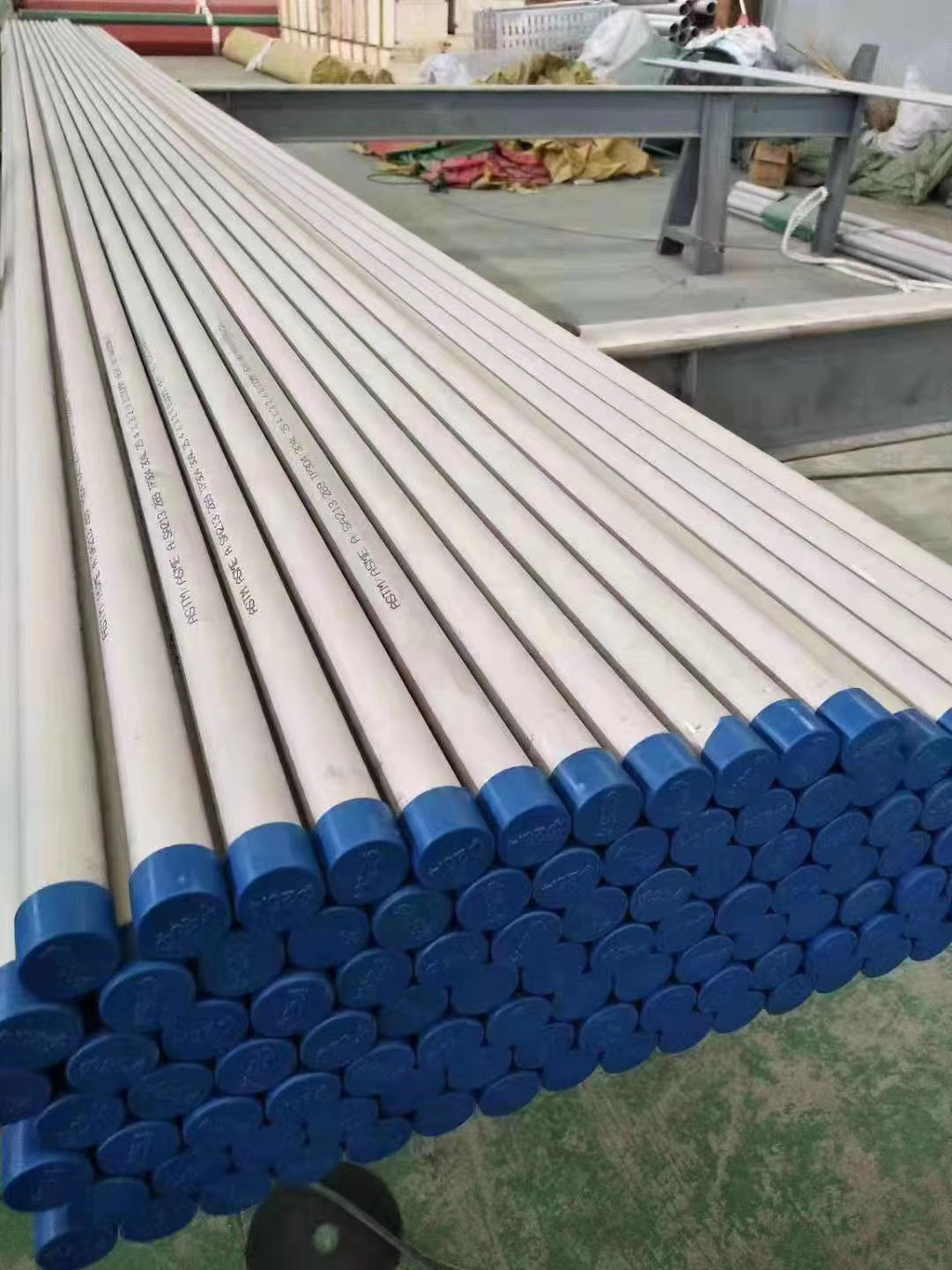
matte gray AP stainless steel tubes stacked in an industrial warehouse
What is an AP stainless steel tube?
An AP stainless steel tube is stainless steel tubing that has gone through annealing and pickling after forming. Annealing uses controlled heat treatment to soften the material, improve ductility, and reduce internal stress from manufacturing. Pickling then uses an acid solution to remove heat tint, scale, and surface contamination, leaving a clean but non-polished matte gray finish.
This finish is one of the easiest ways to distinguish an ap stainless steel tube from brighter alternatives. It is not designed to look decorative, and it is not intended for ultra-pure service where microscopic smoothness is critical. Instead, it offers a reliable surface for general industrial use, especially where mechanical performance, weldability, and cost matter more than appearance.
AP tubing may be supplied as a seamless steel tube or in other forms depending on the project specification. Seamless tubing is often preferred for demanding pressure, temperature, or fatigue conditions because it has no welded seam. That makes it useful in systems where consistent wall integrity and predictable performance are important.
The annealed and pickled process in plain terms
The manufacturing process matters because stainless steel is not only judged by its alloy grade. Its final condition affects how it performs during bending, welding, installation, inspection, and long-term service.
During annealing, the tube is heated and cooled under controlled conditions. This helps restore ductility after cold working and makes the stainless tube easier to fabricate. For installers, that can mean cleaner forming and fewer issues when tubes must be cut, fitted, or welded into a larger स्टेनलेस स्टील के पाइप system.
Pickling follows the heat treatment step. The acid treatment removes surface scale and helps expose the stainless steel’s corrosion-resistant chromium-rich layer. The result is a functional, industrial finish: clean enough for many process environments, but rougher and duller than bright annealed or electropolished tubing.
Key practical effects include:
- Better workability than heavily cold-worked tube
- A clean, scale-free surface suitable for many industrial applications
- Matte appearance rather than a reflective finish
- Moderate surface roughness, which may not suit hygienic or ultra-clean service
- Good value when polished aesthetics are not required
AP, BA, and EP tubing serve different priorities
AP, BA, and EP stainless steel tubing are often compared because they can appear in similar material grades but serve different needs. AP tubing is the cost-conscious industrial option. BA tubing, or bright annealed tubing, has a smoother and brighter surface because it is annealed in a controlled atmosphere. EP tubing, or electropolished tubing, has an even smoother surface created by removing a fine layer of metal electrochemically.
For many buyers, the best choice is not the most expensive finish. It is the finish that matches the fluid, inspection requirements, cleanliness standard, and budget.
AP tubing is commonly selected when:
- The system carries industrial fluids, gases, steam, or chemicals where ultra-clean surfaces are unnecessary
- Strength, संक्षारण प्रतिरोध, and traceability are more important than appearance
- The project needs dependable metal tubing in larger quantities
- Shorter lead times and budget control are important
BA tubing is usually a better fit when:
- A cleaner, brighter internal and external finish is useful
- The system has moderate cleanliness expectations
- Appearance or reduced surface roughness matters, but electropolishing is not justified
EP tubing is generally reserved for:
- Semiconductor, pharmaceutical, biotech, or high-purity gas systems
- Processes where contamination control is critical
- Applications requiring very smooth internal surfaces
- Projects where documentation, cleanliness, and surface finish requirements outweigh cost
In short, AP is not a lower-quality product by default. It is simply optimized for different priorities. Choosing EP tubing for a rugged utility line may waste money, while choosing AP tubing for an ultra-pure line may create unacceptable contamination risk.
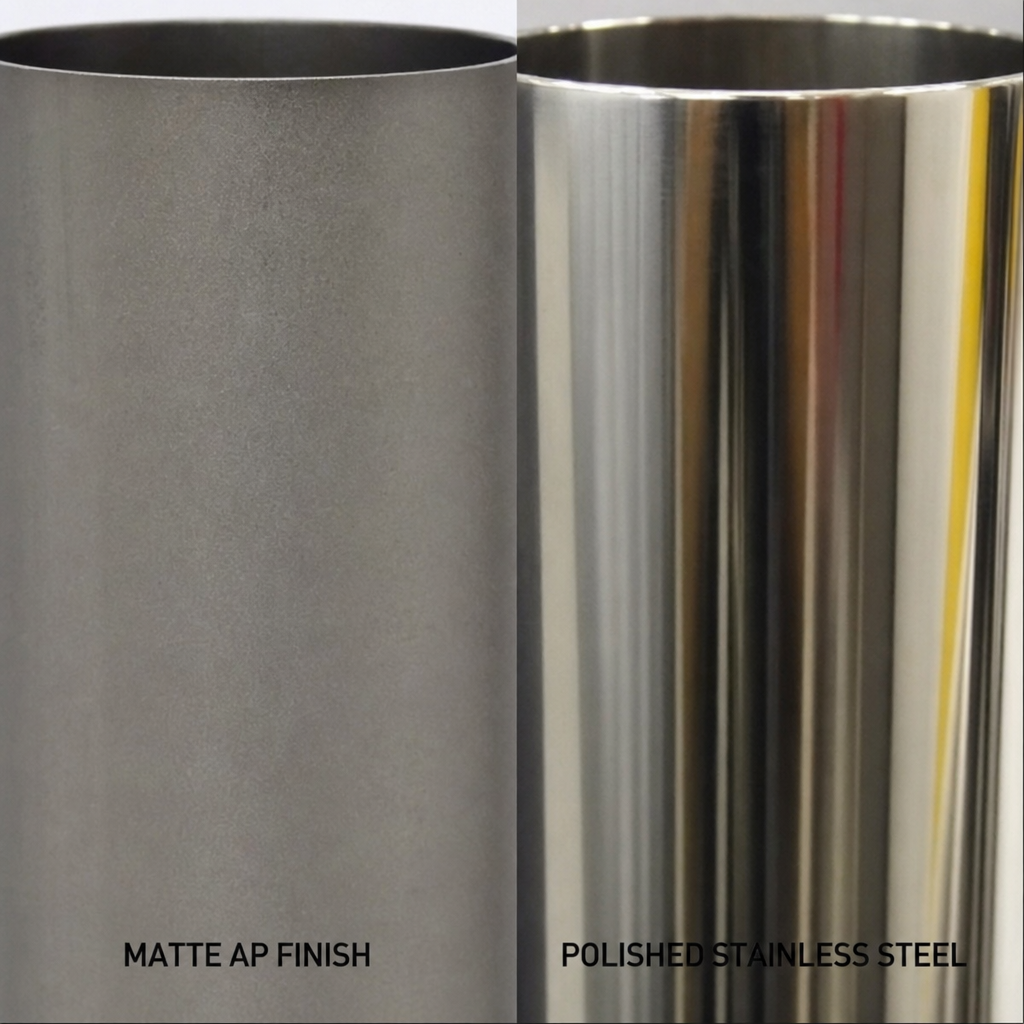
close-up comparison of matte AP tube and polished stainless steel tube finishes
Common grades and standards for AP tubing
Material grade is one of the first decisions when specifying an ap stainless steel tube. The right grade depends on corrosion exposure, temperature, pressure, fabrication method, and industry requirements.
Common stainless grades शामिल करीं:
- 304 and 304L: Widely used for general corrosion resistance, fabrication, and industrial service.
- 316 and 316L: Often selected for more corrosive environments, especially where chlorides may be present.
- 321: Stabilized for certain high-temperature applications where resistance to carbide precipitation is important.
The “L” versions, such as 304L and 316L, have lower carbon content, which can help during welding. For corrosive or chloride-exposed environments, TP316L is often preferred because it offers stronger resistance than standard 304 grades in many service conditions.
Specifications also matter. Buyers may see AP stainless tube referenced with standards such as ASTM A213, ASTM A269, or ASTM A312, depending on whether the product is intended for heat exchangers, general seamless and welded tubing, or pipe service. A stainless steel pipe specification may not be interchangeable with a tubing specification, so the purchase order should be clear about dimensions, tolerance, testing, and intended use.
A full material test report, often called an MTR, is important for traceability. It helps confirm grade, heat number, chemical composition, mechanical properties, and applicable standard. For regulated or audited projects, missing documentation can delay installation even when the physical steel pipe has arrived on site.
How should buyers choose AP stainless steel tubing?
Buyers should choose AP stainless steel tubing by matching the tube’s grade, size, wall thickness, standard, finish, and documentation to the actual service conditions. Start with the operating environment rather than the price list. Pressure, temperature, fluid chemistry, cleaning process, and inspection requirements should guide the decision.
एक व्यावहारिक चयन चेकलिस्ट में शामिल बा:
- Define the application. Is the tube for chemical processing, oil and gas, power generation, utility piping, heat exchange, livestock feed systems, or structural support?
- Confirm the required form. Decide whether the job needs a seamless steel tube, welded tube, or stainless steel pipe based on pressure, fatigue, and code requirements.
- Select the alloy grade. Use 304 or 304L for general duty, 316 or 316L for more corrosive service, and specialized grades when temperature or chemistry demands it.
- Check wall thickness and tolerance. Standard tolerances may not be enough for every pressure or fit-up condition, so review the project specification carefully.
- Specify end preparation. Plain ends, cut lengths, beveling, flange connections, and coupler compatibility can affect installation time.
- Require documentation. Ask for MTRs, heat traceability, and any testing records required by the project.
- Match the finish to the process. Do not use AP tubing where a bright, hygienic, or electropolished surface is mandatory.
This approach helps prevent a common purchasing mistake: treating all स्टेनलेस स्टील के ट्यूबिंग as interchangeable. Two tubes can share the same alloy grade but behave differently in service because of manufacturing method, finish, tolerance, or documentation quality.
Where AP stainless steel tubing works best
AP tubing is well suited to environments where durability and value need to work together. In chemical processing, it can be used for transfer lines, utility systems, and equipment connections when the process does not require a polished internal surface. In power plants and industrial facilities, it may be used for high-temperature or high-pressure service when specified correctly.
Oil and gas projects may use AP stainless steel tubing where corrosion resistance and mechanical reliability are needed in non-cosmetic installations. General manufacturing plants may use it for process lines, supports, and mechanical systems. In agricultural or livestock feed systems, stainless steel can offer a durable alternative where hygiene, corrosion, and wear are concerns, though the exact finish should still match cleaning requirements.
AP tubing is less suitable for pharmaceutical, semiconductor, and ultra-high-purity applications unless the specification explicitly allows it. Those industries often require smoother finishes, tighter cleanliness controls, and more demanding inspection packages. In those cases, BA or EP tubing may be the safer choice despite the higher cost.
Working with the right supplier
Choosing between stainless steel ap tube manufacturers is not only about unit price. Reliable suppliers help prevent delays by providing clear specifications, consistent surface condition, accurate cutting, protective packaging, and complete paperwork. They should also understand the difference between tube and pipe terminology, especially when a project includes both stainless steel pipe and precision tubing.
Before ordering, ask whether the supplier can confirm grade, standard, outside diameter, wall thickness, length tolerance, surface condition, testing, and MTR availability. If the tube must connect to existing equipment, confirm end finish and fitting compatibility early. Small details such as bevel angle, cut length, or packaging can become expensive problems once installation crews are waiting.
Final takeaway
AP stainless steel tubing is a dependable industrial option when you need corrosion resistance, mechanical strength, and practical cost control without a polished or ultra-clean finish. It is especially useful for general process piping, heat-related service, chemical handling, utilities, and structural industrial systems. The best results come from specifying the right grade, standard, wall thickness, finish, and documentation before the order is placed.
 English
 Afrikaans
 Arabic
 Bengali
 Catalan
 Chinese
 French
 Dutch (Belgium)
 Dutch
Dutch German
 Czech
Czech Greek
Greek Hindi
Hindi Japanese
 Italian
 Portuguese
 Spanish (Chile)
 Spanish (Colombia)
 Spanish (Argentina)
 Persian
 Estonian
 Albanian
 Russian
 Spanish (Peru)
 Indonesian
 Thai
Thai Vietnamese
 Georgian
 Bhojpuri
 Moroccan Arabic
 Korean
 Nepali
 Polish
 Ukrainian
 Malayalam
 Xhosa
Xhosa