 شركة ونزو كايشين كايشين كايشين للمعادن المحدودة

When your operation depends on moving fluids or gases under extreme pressure, the pipe you choose can make or break your entire system’s reliability. If you are sourcing high pressure stainless steel pipe for a new project, upgrading aging infrastructure, or vetting a new supplier, you need more than a spec sheet — you need a partner who understands pressure rating for stainless steel pipe inside and out. At KXINOX, we manufacture منتجات خطوط أنابيب الفولاذ المقاوم للصدأ engineered to perform in the harshest industrial environments, and this guide walks your business through everything you need to know before placing your next order.
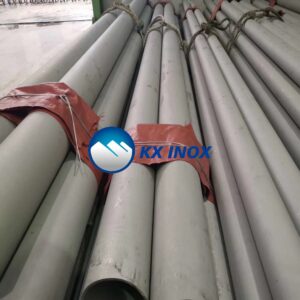
What Is High Pressure Stainless Steel Pipe?
High pressure stainless steel pipe is designed and manufactured to safely contain fluids or gases at pressures far above what standard piping can handle — often exceeding 1,500 to 6,000+ PSI depending on grade and wall thickness. Unlike general-purpose stainless steel piping, these pipes go through tighter tolerance controls, stricter non-destructive testing, and thicker wall sections to prevent failure under stress. If your business operates in oil & gas, chemical processing, or power generation, you already know that a single pipe failure can shut down production for days. This is why choosing the right high pressure stainless steel tubing or pipe from day one is not optional — it is a core part of your risk management strategy.
Understanding Pressure Rating for Stainless Steel Pipe
The pressure rating for stainless steel pipe is not a single fixed number — it depends on several interacting factors that your engineering team needs to evaluate for every project:
- Outside diameter (OD) and wall thickness — thicker walls and smaller diameters generally allow higher pressures.
- Material grade — 316/316L stainless offers different allowable stress values than 304 or duplex grades.
- Operating temperature — allowable stress drops as temperature rises, which directly lowers the safe stainless steel pipe working pressure.
- Manufacturing method — seamless pipe typically tolerates higher pressure than welded pipe of the same dimensions.
Engineers commonly reference Barlow’s Formula to calculate theoretical burst and working pressure, then apply a safety factor.
| Factor Influencing Pressure | Impact on Performance | Engineering Consideration |
|---|---|---|
| سُمك الجدار | Increased thickness directly raises pressure capacity. | Check schedule (e.g., Sch 40 vs Sch 80). |
| Material Grade | Higher alloy content (e.g., Duplex) offers superior yield strength. | Match grade to pressure-temperature requirements. |
| Operating Temperature | Allowable stress decreases as temperature rises. | Refer to ASME derating factors. |
| Manufacturing Method | Seamless pipe provides consistent strength without weld seams. | Recommended for critical high-pressure lines. |
Key Grades and Standards Behind High Performance Stainless Pipe
Not every stainless grade is built for high pressure service. For demanding environments, your business should be looking at high performance stainless pipe grades such as 316/316L (excellent corrosion resistance in chlorides), 316H and TP316H (better high-temperature strength), and duplex grades for extreme pressure-corrosion combinations. Understanding which standard applies to your project also matters — many buyers get confused between AISI and ASTM classifications. We’ve written a full breakdown here: AISI vs ASTM standards for stainless steel pipes. One product our B2B clients frequently choose for high-pressure, high-temperature service is our ASTM A312 TP316H seamless stainless steel pipe, engineered specifically for elevated pressure and temperature applications.
Stainless Piping Systems: More Than Just the Pipe
A pressure-rated pipe is only as reliable as the system around it. Robust stainless piping systems also depend on matched fittings, flanges, valves, and gaskets rated to the same or higher pressure class. When your business sources stainless steel piping components from multiple vendors, mismatched pressure ratings become a hidden risk. Working with a single manufacturer that understands the full pipeline — not just the pipe itself — helps you avoid compatibility issues and simplifies your procurement process.
Applications That Use High Pressure Piping
High pressure piping is used across nearly every heavy industry. Common applications that use high pressure piping include:
- Oil & gas extraction, transport, and refining
- Chemical and petrochemical processing plants
- Power generation, including boiler feedwater and steam lines
- Pharmaceutical and biotech production systems
- Food & beverage high-pressure processing lines
- Marine and offshore platforms
- Water treatment and desalination systems
- Hydraulic and high-pressure fluid power systems
If your business operates in any of these sectors, the pipe you choose needs to meet not just pressure requirements, but also corrosion resistance and industry-specific compliance standards.
High Pressure Stainless Steel Tubing vs Pipe: What’s the Difference?
Buyers often ask whether they need pipe or tubing. High pressure tubing stainless products are typically measured by exact outside diameter and wall thickness, offering tighter tolerances — ideal for instrumentation, hydraulic lines, and precision assemblies. Pipe, on the other hand, is sized by nominal pipe size (NPS) and schedule, and is generally used for larger-volume fluid transport in process piping systems. Your application’s flow volume, connection type, and precision requirements will determine which is the better fit for your business.
How Long Can You Expect High Pressure Stainless Steel Pipe to Last?
Service life depends on grade, environment, and pressure cycling, but properly specified stainless pipe can perform reliably for decades under high-pressure conditions. We’ve covered the key factors that affect longevity in detail — including corrosion exposure, temperature cycling, and maintenance practices — in our guide on how long stainless steel pipe typically lasts. Understanding these factors upfront helps your business plan realistic maintenance and replacement budgets.
Why Your Business Should Choose KXINOX for Stainless Steel Pipeline Products
At KXINOX, we specialize in manufacturing منتجات خطوط أنابيب الفولاذ المقاوم للصدأ built for demanding B2B applications — not one-off retail orders. Whether your business needs custom-diameter seamless pipe, high-temperature TP316H sections, or a full pipeline system matched to your project specifications, our engineering and quality teams work directly with your procurement or technical staff from quote to delivery. We support bulk orders, custom manufacturing, and full documentation packages for regulated industries.
Request a Quote for Your Project
الأسئلة الشائعة
1. What pressure can stainless steel pipe handle?
Pressure capacity depends on the pipe’s grade, diameter, and wall thickness. While specifications vary by project, high-pressure stainless steel pipes are typically engineered to safely withstand operating pressures ranging from 1,500 to over 6,000 PSI. Always verify exact ratings against your specific wall schedule and safety requirements.
2. What is the difference between pipe schedule and pressure rating?
Schedule refers to the wall thickness classification (e.g., Sch 40, Sch 80), while pressure rating is the actual calculated safe working pressure based on that thickness, material grade, and temperature.
3. Is 316 stainless steel good for high pressure applications?
Yes. 316 and 316L are widely used for high pressure stainless steel tubing and piping due to their strong corrosion resistance combined with good mechanical strength.
4. How do I calculate the stainless steel pipe working pressure?
Engineers typically use Barlow’s Formula, factoring in outside diameter, wall thickness, allowable stress of the material, and a safety factor.
5. What industries need high performance stainless pipe?
Oil & gas, chemical processing, power generation, pharmaceuticals, and marine industries are the most common users of high performance stainless pipe.
6. Is seamless or welded pipe better for high pressure?
Seamless pipe generally offers higher pressure tolerance and better structural integrity, making it the preferred choice for critical high-pressure applications.
7. What’s the difference between AISI and ASTM standards?
AISI focuses on chemical composition classification, while ASTM specifies manufacturing, testing, and performance standards.
8. What temperature range can stainless piping systems handle?
Depending on grade, stainless piping systems can typically operate from cryogenic temperatures up to over 800℃ for high-temperature grades like TP316H.
الخاتمة
Selecting the right high-pressure stainless steel pipe is a critical decision that impacts your operational safety, uptime, and long-term maintenance costs. Don’t compromise on quality when your operations are under pressure.
Contact KXINOX today to discuss your upcoming project specifications, request a technical quote, or get expert guidance on matching your piping system components.
 English
 Afrikaans
 Arabic
 Bengali
 Catalan
 Chinese
 French
 Dutch (Belgium)
 Dutch
Dutch German
 Czech
Czech Greek
Greek Hindi
Hindi Japanese
 Italian
 Portuguese
 Spanish (Chile)
 Spanish (Colombia)
 Spanish (Argentina)
 Persian
 Estonian
 Albanian
 Russian
 Spanish (Peru)
 Indonesian
 Thai
Thai Vietnamese
 Georgian
 Korean
 Nepali
 Polish
 Ukrainian
 Malayalam
 Xhosa
Xhosa