 شركة ونزو كايشين كايشين كايشين للمعادن المحدودة

When your project calls for a cylindrical steel section that can carry load, shrug off corrosion, and still machine cleanly, a stainless steel round bar (sometimes called a stainless steel rod at smaller diameters) is often the component everything else is built around. This guide walks you through the grades you will specify most often, the sizes typically held as stock, the industries that depend on them, and the practical checks worth running before you release a purchase order.
What a Stainless Steel Round Bar Brings to Your Project
At its core, the material earns its place through a thin, self-healing chromium oxide layer that forms on the surface the moment it meets oxygen. That passive film is what lets the bar sit in damp, chemical, or coastal environments without the progressive rusting you see in plain carbon steel. You also get a predictable combination of tensile strength, weldability, and machinability that makes it straightforward to turn, drill, and fabricate into finished parts.
For buyers, the appeal is consistency: a certified bar arrives with documented chemistry and mechanical properties, so your engineering team can specify it with confidence rather than hoping the next batch behaves the same as the last.
The Grades You Will Actually Specify
Most specifications funnel down to a short list of austenitic, martensitic, and duplex grades. Each trades one property for another, and the right pick depends on where the bar will live and what it has to survive. You can review our full range of stainless steel round bar grades before narrowing down.
304 and 304L — the general-purpose workhorses
With roughly 18% chromium and 8% nickel, 304 is the default for good reason: it machines and welds well, polishes to a clean finish, and resists most indoor and mildly corrosive atmospheres. The 304L variant drops the carbon content, which matters when you are welding thicker sections and want to avoid sensitization. For general fabrication, architectural trim, and food-contact parts, it is hard to beat on value. See our قضيب دائري من الفولاذ المقاوم للصدأ 304 with full MTC 3.1 traceability.
316 and 316L — when chlorides enter the picture
Add roughly 2% molybdenum and you get 316, a grade built for chloride-bearing environments such as seawater, de-icing salts, and many chemical process streams. The low-carbon 316L keeps weld zones corrosion-resistant. If your parts face marine exposure or aggressive cleaning regimes, this is usually the safer call. Explore our 316L stainless steel round bar options.
303 — when machinability leads the brief
303 is the free-machining cousin of 304, modified with sulfur to improve chip breaking and tool life. You pay for that with slightly lower corrosion resistance and weldability, so it is best reserved for high-volume turned components where speed on the lathe drives your unit cost.
410 — when hardness and wear resistance matter
Moving to martensitic 410 gives you a grade you can harden and temper, trading some corrosion resistance for strength, wear resistance, and a polished, magnetic character. It suits valve components, shafts, and wear surfaces more than coastal structures.
Duplex 2205 and Super Duplex 2507 — strength where weight and corrosion both matter
Duplex grades such as 2205 roughly double the yield strength of 304 while keeping excellent chloride resistance, which lets you specify a smaller section and still hit the load case. Super duplex 2507 pushes corrosion resistance and strength further for the most demanding offshore and process duties. Both are worth a look when life-cycle cost matters more than first price. See our 2205 duplex stainless steel round bar و 2507 super duplex stainless steel round bar.
| الصف | Key Composition | Where It Performs Best | What to Watch |
|---|---|---|---|
| 304 / 304L | 18% كروم، 8% نيكل | Indoor structures, food equipment, general fabrication | Limited in chloride environments |
| 316 / 316L | 16% Cr, 10% Ni, 2% Mo | Marine, chemical, pharmaceutical | Higher cost than 304 |
| 303 | 18% Cr, 8% Ni, S (free-machining) | High-volume turned parts | Lower corrosion resistance; poor weldability |
| 410 | 11.5–13% Cr (martensitic) | Wear parts, shafts, valves | Needs hardening; moderate corrosion resistance |
| 2205 Duplex | 22% Cr, 5% Ni, 3% Mo, N | Offshore, structural, process | Needs care when welding |
| 2507 Super Duplex | 25% Cr, 7% Ni, 4% Mo, N | Aggressive offshore / chemical | Premium price; specialized welding |
Standard Sizes, Stock Lengths, and Tolerances
Round bar is commonly supplied in diameters from about 3 mm up to 300 mm or more, and when you review stainless steel bar stock the most requested sizes sit between 10 mm and 100 mm. Stock lengths are typically 3 to 6 metres, and most suppliers — including our own warehouse — will cut to your specified length so you receive material closer to your bill of materials and reduce offcut waste.
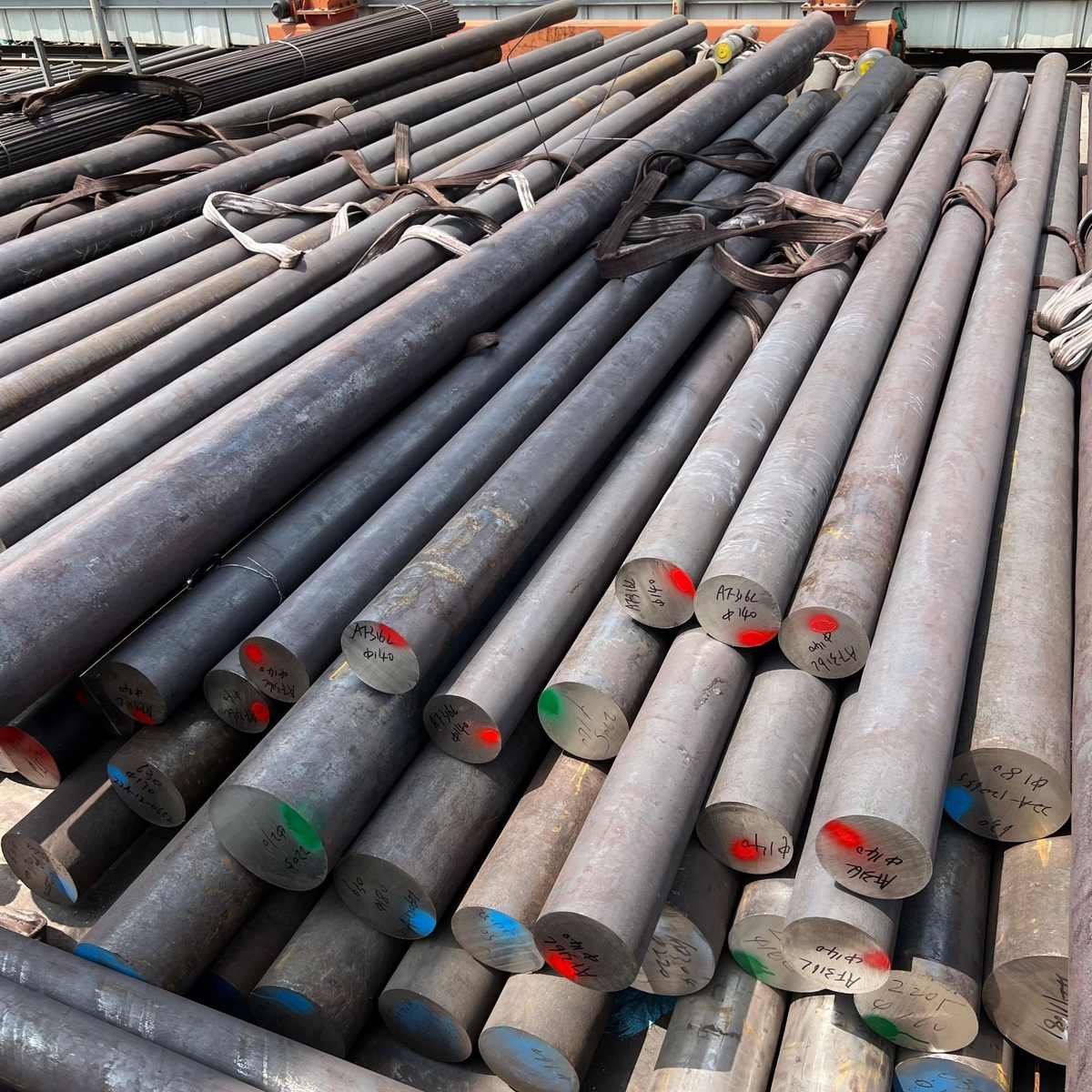
Tolerance matters as much as the grade. Depending on whether the bar is cold-drawn or peeled and ground, you can expect diameter tolerances in the h9 to h11 range, with tighter bands available on request for precision components. If your design calls for bending, note that forming round bar in a press brake is practical for many grades, but cold work introduces springback and work-hardening, so plan the bend radius and consider a post-form stress-relief for the more alloyed grades.
Where Round Bar Goes to Work
The steady expansion of coastal and urban infrastructure has pulled more corrosion-resistant sections into bridges, railings, and support structures where maintenance access is difficult. Offshore wind and shipbuilding similarly reward materials that survive salt-laden air without constant repainting. In the food, beverage, and pharmaceutical sectors, tightening hygiene standards keep stainless the default wherever a surface must stay cleanable. Automotive electrification and lightweight structures add another stream of demand for high-strength, formable sections. And across chemical and energy processing, the move toward longer service intervals keeps corrosion-resistant alloys in steady rotation on the shop floor.
None of this is about a single must-have material — it is about matching the environment to the grade so your parts last as long as the system around them.
How to Choose the Right Bar for Your Job
Start with the environment: if chlorides or chemicals are present, lean toward 316L or a duplex grade. Then weigh mechanical load against machinability — high-volume turned parts favor 303, while structural load paths favor 304 or duplex. Confirm the diameter, tolerance, and length against your drawing, and decide early whether you need a specific finish such as pickled, polished, or passivated. Finally, ask for certification that matches your industry, because documented chemistry is what lets your quality team sign off without guesswork.
Not sure which grade fits your application?
Send us your drawing or duty description and our mill engineers will recommend a grade, size, and certification package — typically within one working day.
Finishing and Fabrication Notes
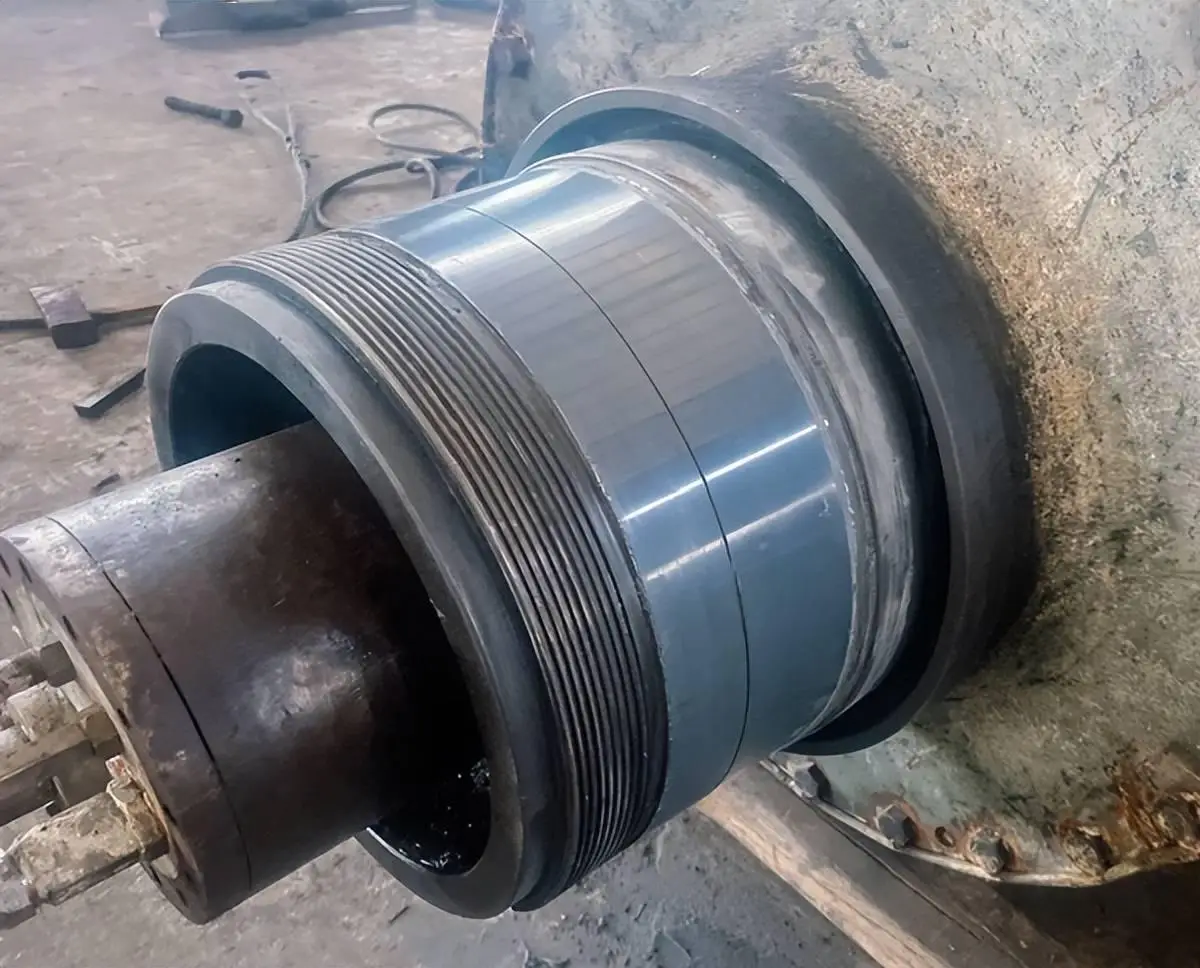
Most bars ship in a hot-rolled or cold-drawn condition, then move through pickling, passivation, or polishing depending on the end use. If you are machining, 303 and 304L are the friendly options; if you are welding, low-carbon variants (304L, 316L) reduce the risk of intergranular attack at the weld. For bending in a press brake, allow for springback and avoid sharp radii on the harder martensitic grades.
Why Buyers Work With KXINOX
Wenzhou Kaixin Metal — trading as KXINOX — is a mill-direct stainless steel manufacturer based in China eastern coastal industrial belt, with production and testing equipment covering forming, drawing, and inspection under an ISO 9001 quality system. Our materials ship to buyers in more than 130 countries, and every order can be supplied with EN 10204 MTC 3.1 traceability so your documentation keeps pace with your quality requirements. Because we control the process from mill to shipment, you get consistent chemistry, competitive lead times, and a single point of accountability.
Ready to price your stainless steel round bar?
Tell us the grade, diameter, length, quantity, and certification you need, and we will return a quoted offer with lead time. Fast global delivery is part of the standard package.
الأسئلة الشائعة
How do you cut stainless steel round bar without harming its corrosion resistance?
Cutting itself does not strip the passive layer everywhere, but the heat and fresh exposed surface at the cut can invite local corrosion if contaminants are present. Use a clean, stainless-dedicated setup (band saw, cold saw, or an abrasive wheel reserved for stainless), then remove any heat tint with pickling or passivation so the chromium oxide film is restored across the cut face.
What diameter tolerances can you expect on round bar — h9, h11, or something else?
Cold-drawn and ground bars commonly ship to h9 or h10, peeled bars to h11, and hot-rolled stock to broader bands. If the component is machined from the bar, a tighter h9 band reduces stock removal and cycle time; for non-critical structural use, h11 is usually acceptable and cheaper.
Can you weld stainless round bar, and do you need pre- or post-weld heat treatment?
Most austenitic grades weld readily, and low-carbon variants such as 304L and 316L avoid sensitization without post-weld treatment. Martensitic 410 usually needs pre-heat and a post-weld temper to avoid cracking and restore toughness. Duplex grades require controlled heat input and often a qualified procedure to keep the phase balance.
How should you store round bar stock to avoid cross-contamination and rust?
Keep stainless separated from carbon steel during storage and handling to prevent iron-particle contamination that seeds rust. Store off the ground on timber or racks in a dry area, and if the bar will sit for a long time in humid conditions, consider a protective wrap or a light oil film.
What is an MTC 3.1 certificate, and why should you ask for it with every order?
An MTC 3.1 under EN 10204 is a mill certificate confirming the actual chemical and mechanical test results for your specific material, issued by the manufacturer independent inspection function. It lets your quality team verify grade and properties against the specification rather than trusting a generic claim — which is why many industrial buyers make it a standing requirement.
Hot-rolled or cold-drawn round bar — which should you specify?
Hot-rolled bar is economical and suits structural or further-machined use where surface finish and tight tolerance are not critical. Cold-drawn bar gives a smoother surface, tighter diameter tolerance, and often higher yield strength, which pays off for machined or precision components even at a higher unit cost.
Is 303 a better choice than 304 when the part will be heavily machined?
In high-volume turning, yes — 303 sulfur addition improves chip control and tool life, lowering your per-part machining cost. The trade-off is reduced corrosion resistance and poor weldability, so reserve 303 for machined parts that will not be welded or exposed to aggressive environments, and stay with 304 where corrosion resistance leads.
الموارد ذات الصلة
If you are comparing stainless grades or specifying companion products, these guides are a useful next step:
 English
 Afrikaans
 Arabic
 Bengali
 Catalan
 Chinese
 French
 Dutch (Belgium)
 Dutch
Dutch German
 Czech
Czech Greek
Greek Hindi
Hindi Japanese
 Italian
 Portuguese
 Spanish (Chile)
 Spanish (Colombia)
 Spanish (Argentina)
 Persian
 Estonian
 Albanian
 Russian
 Spanish (Peru)
 Indonesian
 Thai
Thai Vietnamese
 Georgian
 Korean
 Nepali
 Polish
 Ukrainian
 Malayalam
 Xhosa
Xhosa