 Вэньчжоу Кайсинь Кайсинь Металл ЛТД

Ba Stainless Steel Pipe
BA stainless steel pipe is a bright annealed stainless steel pipe made for clean, corrosion-resistant, and visually bright fluid or gas systems. It is widely used where ordinary industrial tubing may be too rough or contaminated, but full electropolished tubing may be more than the project requires. For buyers, engineers, and fabricators, the key is understanding how BA finishing affects surface quality, grade selection, cleaning, welding, inspection, and long-term system performance.
What is BA stainless steel pipe?
BA stainless steel pipe is stainless steel tubing that has been annealed in a controlled furnace atmosphere so the surface stays bright, smooth, and largely oxide-free. Unlike conventional annealing followed by pickling, bright annealing limits oxidation during heat treatment, which helps preserve a clean metallic surface. The result is a reflective finish with better cleanliness than standard annealed and pickled tubing, making it useful for hygienic, high-purity, and precision systems.
In stainless steel manufacturing, annealing relieves stress, improves ductility, and stabilizes the material after forming or cold working. With BA processing, the furnace atmosphere is typically controlled with hydrogen or a hydrogen-nitrogen blend, reducing surface oxidation during heat treatment. Because the surface does not need aggressive pickling afterward, the finished pipe can retain a smoother, brighter appearance.
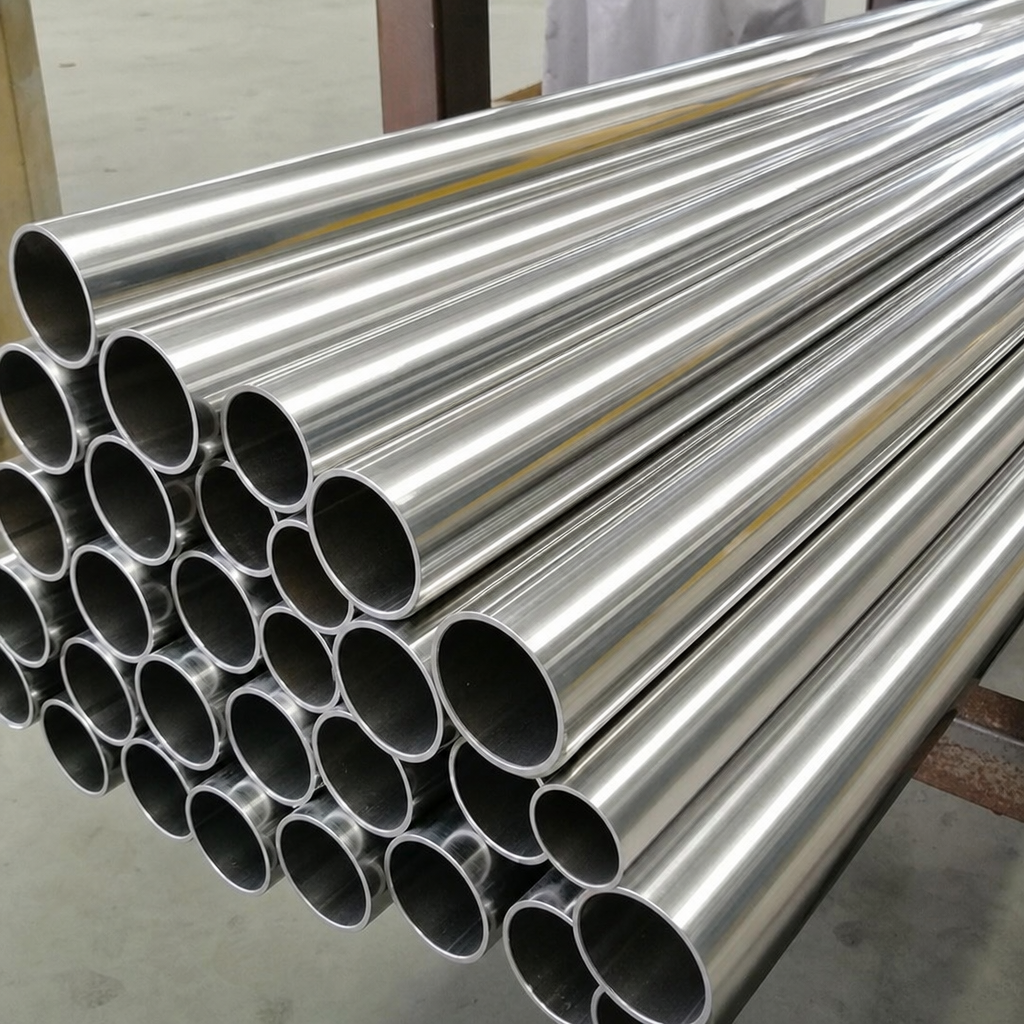
bright annealed stainless steel pipes with reflective finish
The bright annealing process and why it matters
The value of a ba stainless steel pipe starts with process control. Tubes are formed or drawn, cleaned, bright annealed, straightened, inspected, and protected before shipment. Each step influences whether the finished stainless steel products can perform in cleanrooms, ultrapure water loops, gas delivery lines, or hygienic process systems.
Bright annealing matters because surface condition directly affects contamination risk. A smoother, oxide-free inner surface gives particles, residues, and microorganisms fewer places to cling. It also supports easier cleaning and helps reduce corrosion initiation points, especially in systems that handle purified water, process gases, food ingredients, or pharmaceutical fluids.
A typical BA production flow includes:
- Tube forming or drawing to reach the required outside diameter, wall thickness, and dimensional accuracy.
- Pre-cleaning and degreasing to remove lubricants, oils, and forming residues before heat treatment.
- Controlled-atmosphere annealing to restore ductility while preserving a bright surface.
- Sizing, straightening, and cutting to meet project tolerances and installation requirements.
- Inspection and testing such as visual checks, dimensional measurement, pressure testing, or eddy current testing.
- Final cleaning and packaging with protective caps, bags, or other measures to keep the bore clean during transport.
For critical service, the finishing work after annealing is just as important as the furnace itself. Poor handling, open pipe ends, or inadequate cleaning can compromise an otherwise high-quality BA surface.
Common stainless steel grades for BA pipe
Most BA stainless steel pipe is supplied in austenitic stainless steel grades, especially 304 and 316L. These grades balance corrosion resistance, formability, weldability, and availability, which is why they appear so often in sanitary, instrumentation, and high-purity tubing specifications.
304 stainless steel BA pipe is a practical choice for many clean and moderately corrosive environments. It is commonly used in food processing, beverage systems, general clean fluid transfer, instrumentation, and architectural or equipment applications where a bright finish is valuable. Grade 304 offers good corrosion resistance in many indoor and neutral-fluid environments, but it is not always the best choice for chloride exposure.
316L stainless steel BA pipe is often chosen when stronger corrosion resistance is needed. The molybdenum content in 316L improves resistance to pitting and crevice corrosion in many chloride-containing environments. The low-carbon composition also helps reduce sensitization risk during welding, which is one reason 316L is widely specified for pharmaceutical, semiconductor, marine-adjacent, ultrapure water, and high-purity gas systems.
When comparing stainless steel grades, the application should guide the decision rather than appearance alone. If the line will carry purified water, corrosive chemicals, high-purity gases, or cleaning chemicals, 316L stainless steel BA pipe may offer a stronger safety margin. If the environment is less aggressive and cost control matters, 304 stainless steel BA pipe may be sufficient.
BA, AP, and EP finishes are not interchangeable
Finish selection affects cleanliness, corrosion behavior, inspection expectations, and cost. BA tubing sits between basic industrial tubing and the highest-purity electropolished option.
- AP tubing, or annealed and pickled tubing: This finish is heat-treated and then chemically pickled to remove oxide scale. It typically has a matte appearance and is suitable for many general industrial uses. It is usually less clean and less smooth than BA tubing, but it can be more economical.
- BA tubing, or bright annealed tubing: This finish is annealed in a controlled atmosphere to maintain a bright, smooth surface. It offers better visual brightness and cleanliness than AP tubing and is often used where clean handling matters, but where electropolishing is not required.
- EP tubing, or electropolished tubing: This starts with a high-quality base tube, often BA, and receives an electrochemical polishing treatment. EP tubing can achieve a very smooth, mirror-like surface and is often used for ultra-high-purity semiconductor, biopharmaceutical, and specialty medical or laboratory systems.
As a general guide, AP is suitable for utility and industrial lines, BA is suitable for clean and high-quality process lines, and EP is preferred for the most contamination-sensitive systems. BA often provides the best balance when the project needs cleanliness and corrosion resistance but does not require the extra processing and cost of EP tubing.
How smooth is BA stainless steel tubing?
BA трубы из нержавеющей стали is commonly specified with a smooth internal and external surface, often around Ra 0.4 µm or better depending on the supplier, size, and specification. That is generally smoother than a typical AP matte finish, though not as smooth as high-end EP tubing, which may target much lower roughness values such as around Ra 0.15 µm in demanding applications. The practical benefit is easier cleaning, lower residue retention, and improved suitability for sensitive fluid or gas transport.
Surface roughness should be confirmed in the purchase specification, not assumed from the label “BA” alone. Two tubes can both be bright annealed and still differ in roughness, cleaning level, packaging, and inspection documentation. If surface finish is critical, the buyer should request roughness limits, measurement method, inspection records, and any cleaning or passivation requirements.
Useful specification details to define include:
- Outside diameter and wall thickness, including metric or imperial dimensions.
- Seamless or welded construction.
- Stainless steel grade, such as 304, 304L, 316, or 316L.
- Internal surface roughness target.
- Applicable standard, such as ASTM A269, ASTM A270, or ASME BPE where relevant.
- Cleaning level and packaging method.
- Test requirements, such as pressure testing, eddy current testing, or material certificates.
- End finish, cut length, bending, spooling, or fabrication requirements.
A clear specification helps prevent a common purchasing mistake: ordering a bright tube that looks acceptable from the outside but does not meet the internal cleanliness or documentation needs of the system.
Standards, tolerances, and quality expectations
BA stainless steel pipe may be supplied to different standards depending on its purpose. ASTM A269 is commonly associated with general corrosion-resistant and low- or high-temperature service tubing. ASTM A270 is commonly referenced for sanitary tubing. ASME BPE is often used in bioprocessing and high-purity systems where surface finish, dimensions, materials, and documentation are tightly controlled.
Dimensional accuracy matters because clean systems often rely on orbital welding, sanitary fittings, compression fittings, or precision assemblies. BA tubing is often chosen when tighter control is needed for outside diameter, wall thickness, straightness, and roundness. Some precision applications may require very tight tolerances, but the exact value should always be confirmed with the manufacturer and the governing standard.
Quality expectations should also cover traceability. For high-value or regulated systems, buyers often request material test reports, heat numbers, grade verification, roughness reports, and inspection documentation. These records make it easier to verify that the stainless steel pipe matches the design requirement before fabrication begins.
Seamless and welded BA pipe serve different needs
Seamless stainless steel BA pipe is produced without a longitudinal weld seam. It is often preferred for high-pressure service, critical instrumentation, and applications where uniform wall structure is especially important. Seamless tubing can also be useful when bending, flaring, or demanding mechanical performance is part of the design.
Welded BA tubing is made from strip that is formed and welded, then processed to achieve the desired dimensions and finish. For many sanitary and high-purity systems, high-quality welded tubing can be an efficient and reliable choice when it is properly manufactured, annealed, inspected, and documented. It may also provide strong dimensional consistency and good availability in common sizes.
The right choice depends on pressure, cleanliness, budget, size, and fabrication method. Seamless is not automatically better for every project, and welded is not automatically lower quality. The real question is whether the product meets the required standard, surface finish, testing level, and service conditions.
Cleaning, welding, and packaging protect the BA finish
A bright annealed surface can lose its advantages if it is mishandled during fabrication or installation. Oils, dust, weld discoloration, grinding residue, and open-end storage can all introduce contamination. For that reason, cleaning and packaging are part of the performance of BA stainless steel products, not just cosmetic extras.
For demanding systems, suppliers may use ultrasonic cleaning, degreasing, filtered drying, end caps, polyethylene sleeves, or sealed bags. Some applications may also call for nitrogen purging or special cleanroom packaging. The goal is simple: keep the internal bore as close as possible to its delivered condition until installation.
Welding needs equal care. TIG welding or orbital welding is commonly used for clean stainless systems because it provides controlled, repeatable welds. After welding, heat tint and disturbed passive film may need to be addressed through proper cleaning, passivation, or electropolishing, depending on the service. In high-purity work, weld quality can determine whether the entire system stays clean and corrosion resistant.
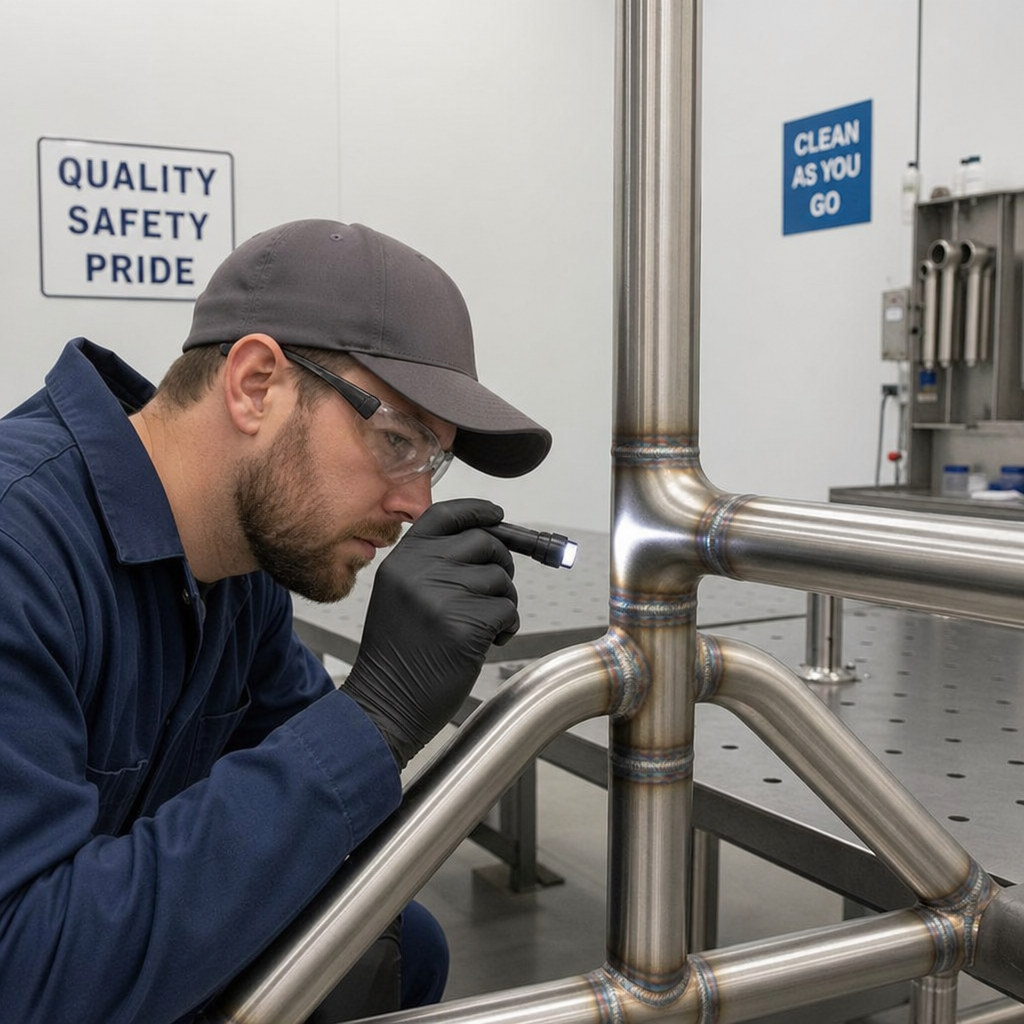
technician inspecting stainless steel tubing welds in a clean fabrication area
Where BA stainless steel pipe is used
BA tubing is selected when surface quality, corrosion resistance, and cleanliness are more important than they are in ordinary utility piping. It is not limited to one industry; instead, it appears wherever the pipe surface can affect product purity, process reliability, or maintenance effort.
К числу распространенных способов использования относятся:
- Pharmaceutical purified water and clean steam support systems.
- Semiconductor process gas and ultrapure water lines.
- Food and beverage processing equipment.
- Laboratory and analytical instrument lines.
- High-purity chemical transfer.
- Precision pneumatic and hydraulic control lines.
- Cosmetic, dairy, and hygienic process equipment.
- Equipment frames or visible assemblies where a bright stainless finish is desired.
For procurement teams, the main advantage is flexibility. BA pipe can support clean service without immediately moving to the highest-cost finish. For engineers, it offers a practical middle ground between industrial durability and high-purity performance.
A practical selection checklist
Before ordering BA stainless steel pipe, define the operating environment and the documentation level needed. A small difference in grade, finish, or packaging can make a large difference once the pipe is welded into a production system.
Use this checklist when preparing a purchase request:
- Choose 304 stainless steel BA pipe for less aggressive clean service when corrosion conditions are moderate.
- Choose 316L stainless steel BA pipe for higher-purity, chloride-exposed, pharmaceutical, semiconductor, or more corrosion-sensitive systems.
- Select seamless stainless steel BA pipe when pressure, forming, or critical mechanical performance makes seamless construction valuable.
- Consider welded BA tubing when dimensional consistency, sanitary service, and cost efficiency are priorities.
- Specify surface roughness, not just the BA finish name.
- Identify the relevant standard and inspection documents.
- Confirm cleaning, end protection, and packaging before shipment.
- Plan welding, passivation, and installation practices before fabrication begins.
The best choice is the tube that matches the process risk. If the line carries noncritical utility fluid, AP may be adequate. If the line carries ultra-high-purity gas or sterile product contact media, EP may be justified. For many clean industrial and hygienic systems, BA provides the balanced option.
The takeaway
BA stainless steel pipe is valued because bright annealing creates a clean, smooth, corrosion-resistant surface without relying on heavy post-pickling. In the right grade and specification, it can serve demanding applications in food, pharmaceutical, semiconductor, laboratory, and precision manufacturing environments.
The most important purchasing lesson is to look beyond the bright appearance. Confirm the stainless steel grades, standard, surface roughness, seamless or welded construction, testing, cleaning, and packaging. When those details are aligned with the application, BA трубы из нержавеющей стали becomes a reliable, practical choice for clean and high-performance piping systems.
 English
 Afrikaans
 Arabic
 Bengali
 Catalan
 Chinese
 French
 Dutch (Belgium)
 Dutch
Dutch German
 Czech
Czech Greek
Greek Hindi
Hindi Japanese
 Italian
 Portuguese
 Spanish (Chile)
 Spanish (Colombia)
 Spanish (Argentina)
 Persian
 Estonian
 Albanian
 Russian
 Spanish (Peru)
 Indonesian
 Thai
Thai Vietnamese
 Georgian
 Bhojpuri
 Moroccan Arabic
 Korean
 Nepali
 Polish
 Ukrainian
 Malayalam
 Xhosa
Xhosa