 Wenzhou Kaixin Metaal Co, LTD

Tubing Sizing: Best Practices for Efficiency
Tubing sizing is the process of choosing the right tube diameter and related pipe dimensions so a system can move fluid, gas, or refrigerant efficiently without unnecessary pressure loss, noise, wear, or wasted material. Good sizing balances flow demand, installation limits, material type, and future service access. This guide explains how to think through pipe sizing in practical terms, including how to use a copper tubing sizing chart or pipe sizing chart without treating it as a substitute for engineering judgment.
What does proper tubing sizing actually mean?
Proper tubing sizing means selecting tubing that can carry the required flow under expected operating conditions while keeping pressure drop, velocity, and system stress within acceptable limits. A tube that is too small can restrict flow, increase pump or compressor workload, and create noise or vibration. A tube that is too large may cost more, take up unnecessary space, reduce control responsiveness, or make installation harder than it needs to be.
The best size is not always the largest available size. Efficient sizing starts with the job the tubing has to do: how much volume must move, how far it must travel, what pressure is available, what temperature range is expected, and what fittings, valves, bends, or branches will be part of the run. Those details shape the practical choice more than a single dimension on a label.
In many systems, the phrase “pipe dimensions” can be confusing because nominal size, outside diameter, inside diameter, and wall thickness may not describe the same thing. Before ordering materials or comparing charts, confirm which dimension the chart or product listing is using.
Core factors that affect tube diameter
Tube diameter is one of the most visible sizing decisions, but it works together with several other variables. A well-sized line is the result of understanding the entire path, not just the straight sections.
Key factors include:
- Required flow rate: Higher flow usually needs more internal area, but the ideal size still depends on pressure and allowable velocity.
- Pressure drop: Every foot of tubing, bend, valve, and fitting adds resistance. Long runs often need more careful calculation than short, direct runs.
- Fluid or gas type: Water, oil, air, fuel gas, refrigerant, and process fluids behave differently. Viscosity, density, and compressibility matter.
- Temperatuur: Temperature can affect fluid behavior, tubing expansion, insulation needs, and material suitability.
- Tubing material: Copper, plastic, steel, and specialty tubing have different wall thicknesses, joining methods, and allowable uses.
- Installation layout: A compact layout with many elbows can create more restriction than a longer but smoother route.
- Code and manufacturer requirements: Many applications are governed by local codes, equipment manuals, or industry standards that should take priority over generic guidance.
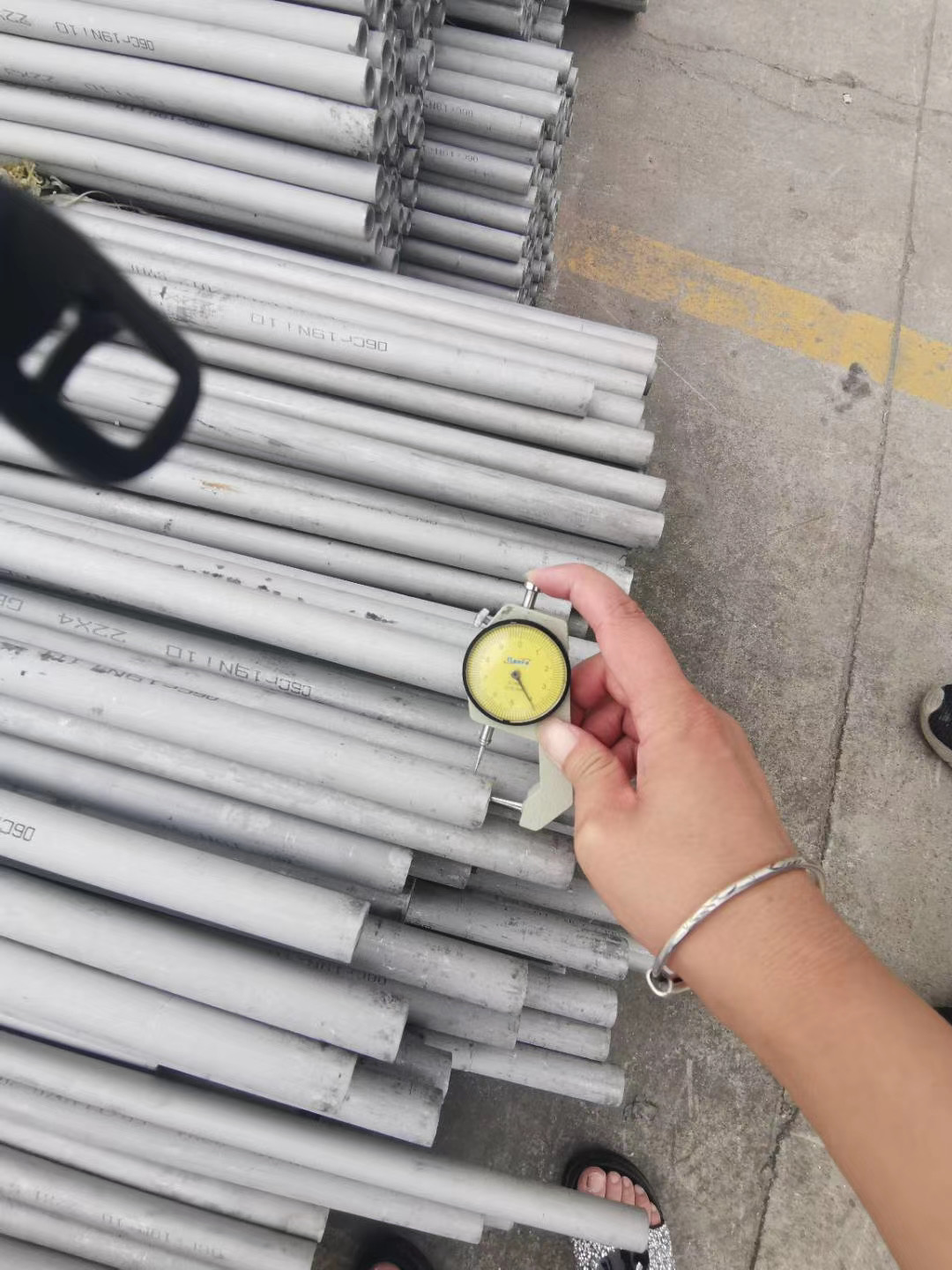
technician measuring tube diameter with calipers
Copper tubing sizing in practical applications
Copper tubing sizing deserves special attention because copper is widely used in plumbing, HVAC, refrigeration, and specialty mechanical systems. It is durable, workable, and available in different types and wall thicknesses, but the correct size depends on the application. A copper line used for domestic water distribution is not sized the same way as a refrigerant line or a hydronic heating loop.
When reviewing copper tubing, pay close attention to whether the listed size refers to nominal size or actual outside diameter. Copper tube sizes are commonly discussed in ways that can sound familiar while still being application-specific. For example, two copper tubes may appear similar but differ in wall thickness, pressure rating, or intended use.
A copper tubing sizing chart can help narrow the range of acceptable sizes, especially when it includes flow rate, velocity, friction loss, and pressure drop information. However, a chart should be used with the system context in mind. If the run includes many fittings, elevation changes, or equipment with strict connection requirements, the chart is only one part of the decision.
How should you use a pipe sizing chart?
A pipe sizing chart should be used as a decision aid, not as a one-step answer. Start by identifying the medium, required flow, available pressure, total developed length, and acceptable pressure loss, then use the chart to compare likely sizes. The goal is to find the smallest practical size that performs reliably without creating excessive velocity, restriction, or maintenance problems.
A useful chart review usually follows this sequence:
- Confirm the application. Do not use a water pipe sizing chart for gas, steam, compressed air, or refrigerant unless it is specifically designed for that use.
- Match the correct dimension. Check whether the chart uses nominal size, inside diameter, outside diameter, or another reference.
- Estimate total developed length. Include straight runs plus equivalent length for elbows, tees, valves, and other restrictions where applicable.
- Compare flow and pressure loss. Look for a size that supports the required flow without pushing the system beyond reasonable limits.
- Check connection requirements. Equipment ports, fixture demands, and code rules may set minimum or maximum sizes.
- Review installability. The selected tubing must fit the space, bend radius, supports, insulation, and service access.
Charts are especially helpful for early planning and material takeoffs. For final decisions on regulated, high-pressure, medical, fuel, or life-safety systems, a qualified professional should verify the sizing.
Common sizing mistakes that reduce efficiency
Many efficiency problems begin with assumptions made before installation. Oversizing and undersizing can both create long-term issues, even when the system appears to operate at first.
Common mistakes include:
- Sizing only by connection size: Equipment connection size is important, but it does not automatically define the whole run.
- Ignoring fittings and bends: A line with many elbows can behave like a much longer line.
- Choosing size by habit: “This is what we always use” may not fit a longer run, higher demand, or new equipment.
- Mixing chart types: Pipe sizing and tubing sizing charts are not always interchangeable.
- Overlooking wall thickness: The same outside diameter can have a different inside diameter, changing flow performance.
- Failing to plan for expansion: Future branches, added fixtures, or equipment upgrades may change demand.
These mistakes can lead to higher energy use, uneven delivery, noise, premature component wear, or callbacks. A little extra sizing work at the planning stage is usually easier than correcting a restricted or poorly balanced system after walls, ceilings, or equipment are in place.
Best practices for efficient tubing layout
Sizing is only one part of an efficient system. The layout should support smooth movement and predictable performance.
Practical layout guidelines include:
- Keep runs as direct as the building or equipment layout allows.
- Use long-radius bends where appropriate to reduce turbulence.
- Avoid unnecessary fittings, sharp changes in direction, and abrupt reductions.
- Support tubing properly to limit vibration, sagging, and joint stress.
- Allow access to valves, unions, filters, strainers, and service points.
- Protect tubing from corrosion, abrasion, freezing, heat exposure, or physical damage.
- Label or document critical lines so future maintenance does not become guesswork.
Efficient layout also means thinking about maintainability. A perfectly sized line that cannot be reached, isolated, drained, or repaired can still create operational problems. Good pipe sizing decisions should make the system easier to use, not just easier to calculate.
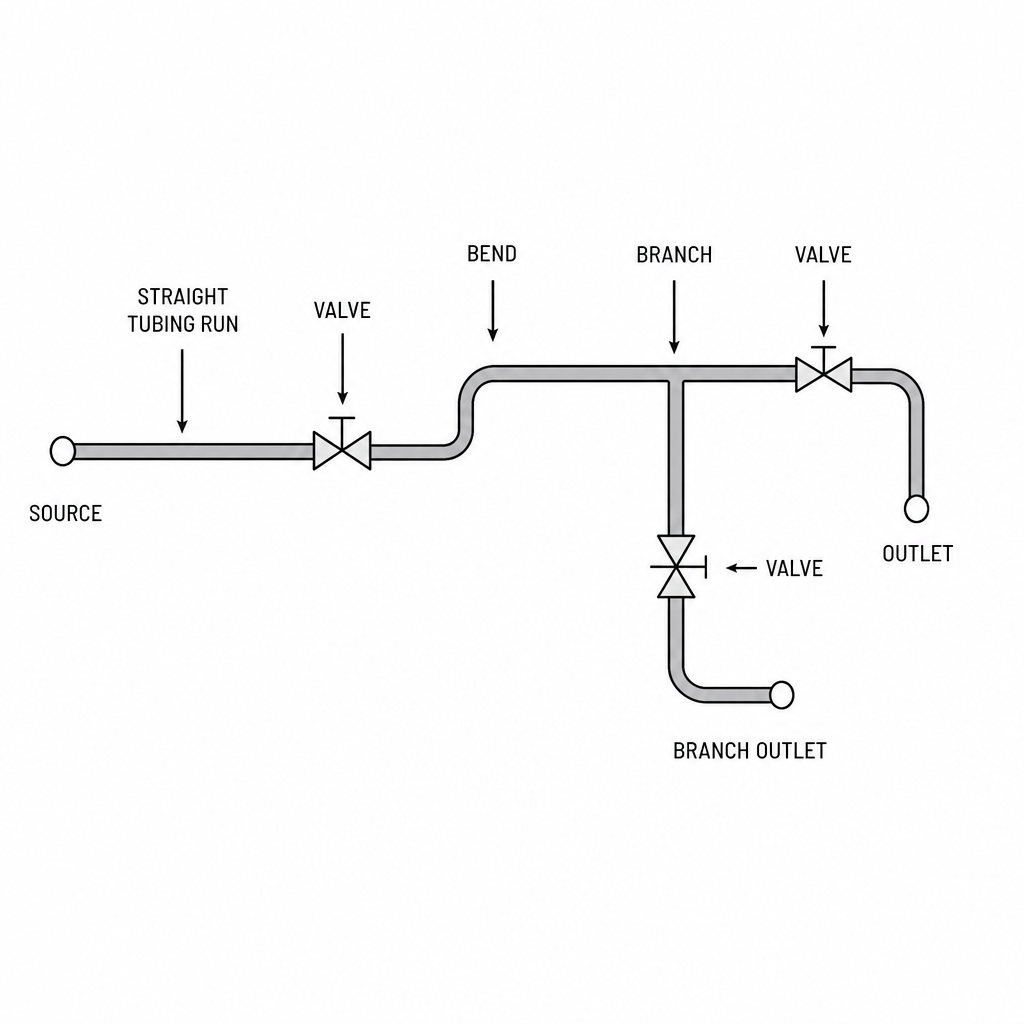
simple diagram showing straight tubing run with bends valves and branches
When should a professional verify the sizing?
A professional should verify tubing sizing when the system is regulated, safety-critical, unusually long, high-pressure, high-temperature, chemically sensitive, or connected to expensive equipment. Professional review is also wise when the installation must meet a local code, equipment warranty, inspection requirement, or engineered specification. In those cases, generic pipe dimensions and online charts are not enough.
For everyday planning, you can still prepare useful information before asking for help. Gather the medium being carried, expected flow demand, available pressure, total run length, number of fittings, elevation changes, material preference, and equipment model requirements. Clear information helps a contractor, engineer, or supplier confirm the right size more efficiently.
A practical checklist before selecting tubing
Before committing to a tubing size, review these points:
- The application and medium are clearly identified.
- The required flow rate is known or reasonably estimated.
- The available pressure and acceptable pressure drop are understood.
- Total developed length includes fittings and layout restrictions.
- The chosen chart matches the material and application.
- Tube diameter, wall thickness, and internal flow area are not being confused.
- Local code, manufacturer instructions, and inspection requirements have been checked.
- Installation space, supports, insulation, and service access are practical.
- Future demand or expansion has been considered where relevant.
Strong tubing sizing is a blend of calculation, product knowledge, and practical installation thinking. Whether you are comparing copper tubing sizing options, reading a copper tubing sizing chart, or using a general pipe sizing chart, the goal is the same: choose dimensions that support efficient flow, reliable operation, and long-term serviceability.
 English
 Afrikaans
 Arabic
 Bengali
 Catalan
 Chinese
 French
 Dutch (Belgium)
 Dutch
Dutch German
 Czech
Czech Greek
Greek Hindi
Hindi Japanese
 Italian
 Portuguese
 Spanish (Chile)
 Spanish (Colombia)
 Spanish (Argentina)
 Persian
 Estonian
 Albanian
 Russian
 Spanish (Peru)
 Indonesian
 Thai
Thai Vietnamese
 Georgian
 Bhojpuri
 Moroccan Arabic
 Korean
 Nepali
 Polish
 Ukrainian
 Malayalam
 Xhosa
Xhosa