 വെൻഷോ കൈക്സിൻ കൈക്സിൻ മെറ്റൽ കോ., ലിമിറ്റഡ്

stainless steel tube for ai cooling
AI infrastructure is changing how engineers think about heat, reliability, and material selection. As data centers push more power through dense racks, the tubing that carries coolant becomes more than a supporting component; it becomes part of the system’s long-term performance strategy. A stainless steel tube for ai cooling can help support durable, clean, and corrosion-resistant coolant pathways in demanding thermal environments.
Why does tubing matter in AI cooling systems?
Tubing matters in AI cooling systems because it connects the heat source, coolant, pumps, manifolds, and heat exchangers into one dependable thermal loop. If the tube material cannot handle the fluid, pressure, temperature swings, or installation conditions, the entire cooling design can become harder to maintain. Stainless steel offers a practical balance of strength, cleanliness, corrosion resistance, and manufacturability, making it a strong candidate for many stainless steel cooling applications.
Modern AI workloads create concentrated heat around GPUs, accelerators, networking hardware, and power components. Air cooling still has its place, but liquid-based designs are increasingly used where higher heat transfer and tighter thermal control are needed. In those systems, the tube is not just a pipe; it is a controlled pathway that must protect the coolant, resist degradation, and fit into compact mechanical layouts.
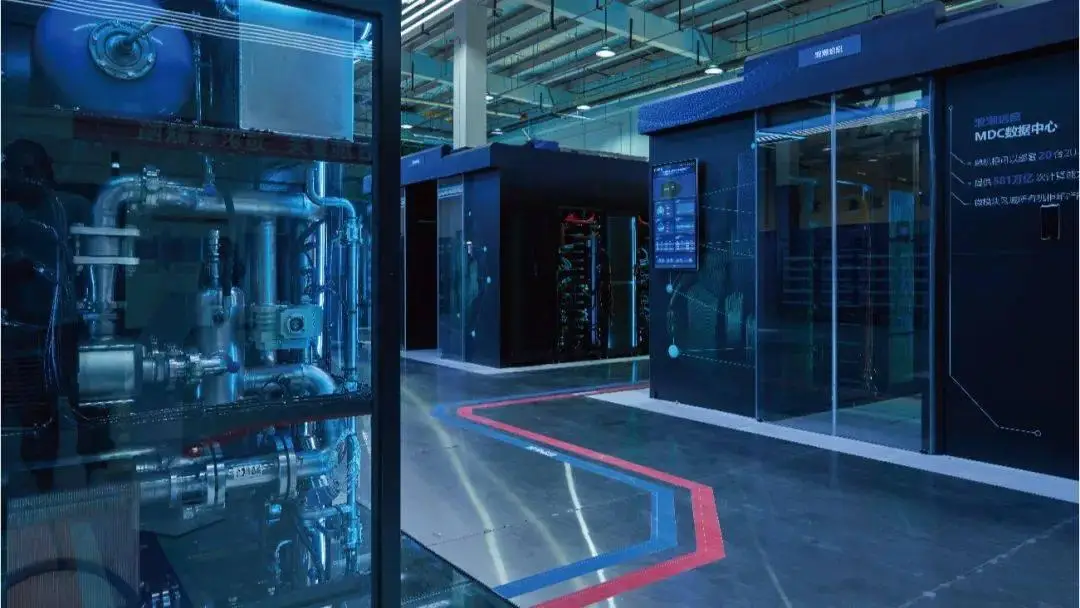
stainless steel tubes routed through a liquid cooling manifold
The role of stainless steel in thermal reliability
Stainless steel is valued in cooling environments because it combines mechanical stability with resistance to many forms of corrosion. In an AI data center or high-performance computing installation, this matters because cooling loops may operate for long periods with limited tolerance for contamination, leaks, or unexpected downtime. A tube that remains dimensionally stable and chemically compatible helps the cooling system perform more predictably over time.
The phrase stainless steel heat can describe several practical realities: heat exposure, heat transfer, and heat-related stress. Stainless steel is not chosen only because it can tolerate warmth. It is often selected because it holds up under repeated thermal cycling, resists oxidation in many environments, and can be fabricated into precise tube forms for controlled flow.
Of course, material selection should always consider the full design. Engineers still need to evaluate coolant chemistry, pressure, bend radius, joining method, cleanliness requirements, and interaction with other metals in the loop. Stainless steel is highly useful, but it performs best when specified as part of a complete thermal and fluid-management strategy.
Where stainless steel tube for AI cooling fits best
A സ്റ്റെയിൻലെസ്സ് സ്റ്റീൽ ട്യൂബ് for ai cooling is especially relevant in areas where durability, cleanliness, and routing precision are important. These may include coolant distribution units, rear-door heat exchangers, direct-to-chip cooling loops, immersion cooling support systems, and facility-level liquid cooling infrastructure. In each case, the tube helps move heat away from sensitive electronics and toward a heat rejection system.
In compact AI server environments, tubing must often fit around boards, connectors, manifolds, and service access points. Stainless steel can be formed into straight lengths, coils, or custom bent sections depending on the design. This flexibility supports organized routing, which can make installation and maintenance easier when compared with improvised or poorly planned fluid paths.
Common use cases include:
- Direct-to-chip liquid cooling: Stainless tubing can support precise coolant delivery to cold plates near high-heat processors.
- Manifold connections: Tubes can help distribute coolant evenly across multiple branches of a cooling loop.
- Heat exchanger circuits: Stainless steel can be used where fluid is routed through or around heat exchange equipment.
- Test benches and lab systems: Durable tubing is useful when cooling layouts are adjusted, measured, or validated over time.
- Facility coolant distribution: Larger stainless steel applications may include supply and return lines serving rows, racks, or modular cooling equipment.
The best fit depends on the operating environment. For example, a lab prototype may prioritize easy reconfiguration, while a production data center may prioritize long service life, leak prevention, and consistent maintenance procedures.
What makes stainless steel cooling practical?
Stainless steel cooling is practical because it supports both performance and maintainability. It can withstand demanding mechanical conditions, helps preserve coolant cleanliness, and can be integrated into systems that need dependable routing. When properly selected and installed, stainless steel tubing can reduce material-related uncertainty in a cooling loop.
Several characteristics make it useful in AI cooling designs:
- തേയ്മാന പ്രതിരോധം: Stainless steel can resist many cooling fluids and environmental conditions, especially when the grade is matched to the application.
- Strength under pressure: Tubing must handle internal pressure, vibration, and installation stress without deformation or failure.
- Clean internal surfaces: Smooth, clean tubing can help reduce sites where contaminants may accumulate.
- Thermal stability: Stainless steel can handle changing temperatures without becoming fragile under normal specified conditions.
- Fabrication options: It can be cut, bent, welded, flared, or joined with compatible fittings depending on system requirements.
- Long-term serviceability: Durable tubing can support cooling layouts designed for inspection, replacement, and controlled maintenance.
These benefits are especially valuable in AI cooling systems because thermal issues are rarely isolated. A flow restriction, fitting problem, or material incompatibility can affect multiple devices in a rack or cluster. Choosing a dependable tube material helps reduce one category of risk in an already complex environment.
Design factors that should guide tube selection
Selecting സ്റ്റെയിൻലെസ്സ് സ്റ്റീൽ ട്യൂബിംഗ് starts with the cooling system’s actual operating conditions. A tube that works well in one AI cooling setup may not be ideal in another if the coolant, pressure, or mechanical layout is different. Practical specification should be based on engineering requirements rather than a generic assumption that one material or size fits all.
Important factors include:
- Coolant compatibility The tube material must be suitable for the coolant, additives, and cleaning procedures used in the loop. Water-based coolants, dielectric fluids, glycol blends, and treated water systems may each call for different compatibility reviews.
- Pressure and temperature range Tubing should be rated for expected operating pressure, pressure spikes, and temperature changes. This includes both normal operation and unusual conditions such as startup, shutdown, maintenance, or pump cycling.
- Tube size and wall thickness Diameter affects flow rate and pressure drop, while wall thickness affects strength, bendability, and weight. The right balance depends on the required coolant volume and available installation space.
- Bend radius and routing Tight bends can restrict flow or create stress. Planning the routing early helps avoid unnecessary elbows, cramped service zones, and difficult assembly steps.
- Joining method Welded, compression, flared, or threaded connections each have different installation and inspection needs. The joining method should match the environment, technician skill level, and maintenance strategy.
- Galvanic considerations Mixed metals in a coolant loop can create compatibility concerns. Stainless steel may need to be evaluated alongside copper, aluminum, brass, or plated components to reduce corrosion risk.
- Cleanliness and finish Internal surface quality can influence contamination control. In sensitive systems, cleaning, passivation, and handling procedures may be just as important as the tube material itself.
A thoughtful specification process turns tubing from a simple component into a controlled part of the thermal design.
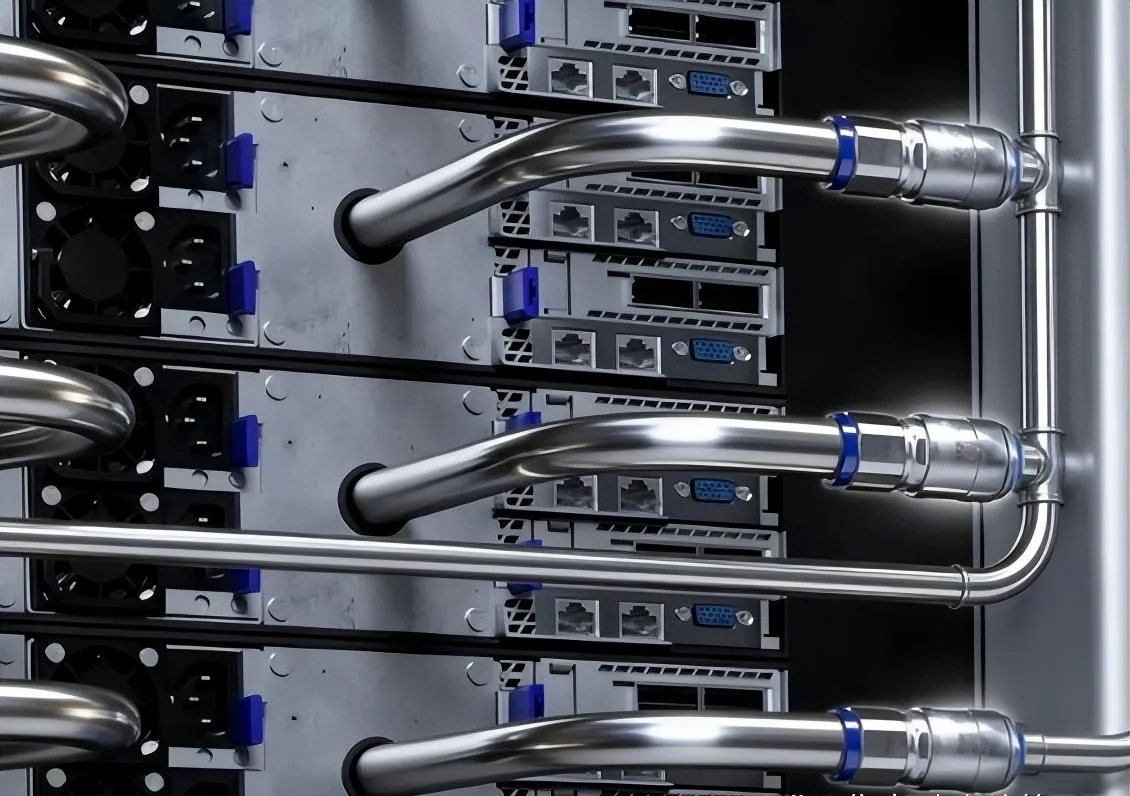
engineer inspecting stainless steel cooling tubes in a server environment
Stainless steel applications beyond the rack
Stainless steel applications in AI cooling extend beyond the server itself. The same material advantages can be useful in coolant distribution units, pump skids, heat exchanger assemblies, facility piping transitions, and monitoring stations. This broader role matters because heat does not disappear at the chip; it moves through several stages before it is rejected from the building or reused elsewhere.
For example, a direct-to-chip cold plate may capture heat at the processor, but the coolant still needs a reliable path through hoses, tubes, valves, sensors, and heat exchangers. Stainless tubing can support sections of that path where rigidity, cleanliness, or pressure resistance is preferred. It may also be used in hybrid systems where flexible hose is used for service access and stainless tube is used for fixed routing.
This is why material consistency matters. If every segment of the coolant path is selected in isolation, the final system may have weak points at transitions, fittings, or mixed-material interfaces. A more integrated view helps teams reduce unnecessary complexity and improve service planning.
Balancing performance, cost, and maintenance
Stainless steel is often selected for performance and durability, but it should still be evaluated against cost, installation time, and maintenance expectations. In some areas, flexible hose or polymer tubing may be appropriate. In others, stainless steel may provide a more robust solution because the environment demands greater mechanical strength or chemical resistance.
A practical decision process should ask:
- Where is rigid tubing beneficial, and where is flexibility required?
- Which sections of the loop are most difficult to access after installation?
- What failure modes would create the greatest operational risk?
- How will technicians inspect, drain, flush, or replace the tubing?
- Are fittings and seals compatible with the selected tube and coolant?
- Does the layout allow clean assembly without forcing tubes into position?
These questions keep the focus on total system value rather than material preference alone. The right choice is not always the most expensive or the most familiar material. It is the material that supports the required cooling performance while making the system easier to build, operate, and maintain.
Practical tips for specifying stainless steel cooling tubes
A good specification makes manufacturing, installation, and maintenance easier. It also reduces ambiguity between design teams, suppliers, and technicians. When specifying tubing for AI cooling systems, clarity is just as important as material choice.
Use this checklist as a starting point:
- Define the coolant type, concentration, additives, and expected service conditions.
- Specify the stainless steel grade based on corrosion resistance and compatibility needs.
- Confirm tube outside diameter, inside diameter, wall thickness, and tolerance requirements.
- Review pressure ratings for both normal and abnormal operating conditions.
- Plan bends, supports, and routing before finalizing equipment placement.
- Choose fittings that match the tube material, pressure class, and maintenance approach.
- Include cleaning, handling, and packaging requirements if contamination control matters.
- Account for expansion, vibration, and mechanical support in longer runs.
- Document inspection points so future maintenance teams understand the system.
This level of detail helps prevent small decisions from becoming large problems later. It also makes conversations with suppliers more productive because the operating conditions and expectations are clear from the start.
The takeaway for AI cooling design
AI cooling systems depend on many parts working together: cold plates, pumps, controls, fluids, manifolds, heat exchangers, and the tubing that connects them. A stainless steel tube for ai cooling can be a smart choice when the design calls for strength, cleanliness, corrosion resistance, and long-term reliability. It is especially useful where stable routing and dependable fluid containment are priorities.
The key is to treat tubing as an engineered part of the thermal system, not an afterthought. By matching stainless steel to the coolant, pressure, temperature, layout, and maintenance plan, teams can build cooling infrastructure that is more practical and resilient. As AI hardware continues to demand better heat management, thoughtful material choices will remain central to keeping systems efficient, serviceable, and ready for sustained performance.
 English
 Afrikaans
 Arabic
 Bengali
 Catalan
 Chinese
 French
 Dutch (Belgium)
 Dutch
Dutch German
 Czech
Czech Greek
Greek Hindi
Hindi Japanese
 Italian
 Portuguese
 Spanish (Chile)
 Spanish (Colombia)
 Spanish (Argentina)
 Persian
 Estonian
 Albanian
 Russian
 Spanish (Peru)
 Indonesian
 Thai
Thai Vietnamese
 Georgian
 Korean
 Nepali
 Polish
 Ukrainian
 Malayalam
 Xhosa
Xhosa