 온주 카이신 카이신 금속 유한공사
How to Choose Nickel Alloy Tubes
Nickel alloy tubes are built for demanding environments where ordinary tubing may not offer enough resistance to corrosion, heat, pressure, or chemical exposure. This page helps you choose nickel tubing based on the service conditions, alloy family, dimensions, finish, testing needs, and ordering requirements that matter most. Whether you need nickel alloy tubes, nickel alloy pipes, or a broader nickel alloy tubes pipe and plates supply package, the goal is to match the material to the real operating environment before you buy.
Which nickel alloy tube is right for your application?
The right nickel alloy tube is the one that fits your temperature range, corrosive media, pressure requirements, fabrication method, and inspection standard without adding unnecessary cost or complexity. Start with the environment first: what the tube will carry, what surrounds it, how hot it gets, whether it will be welded or bent, and how critical failure prevention is to the system. Once those conditions are clear, you can narrow the alloy, size, wall thickness, surface finish, and documentation level with far more confidence.
For buyers comparing nickel alloy pipes and tubes, the most important distinction is not just shape or size. Tubes are often selected where dimensional control, heat transfer, instrumentation, or fabrication detail matters, while pipes are commonly ordered for fluid transport and pressure systems. Both may be used in nickel alloy applications, but they should be specified using the correct standard, schedule, tolerance, and end use.
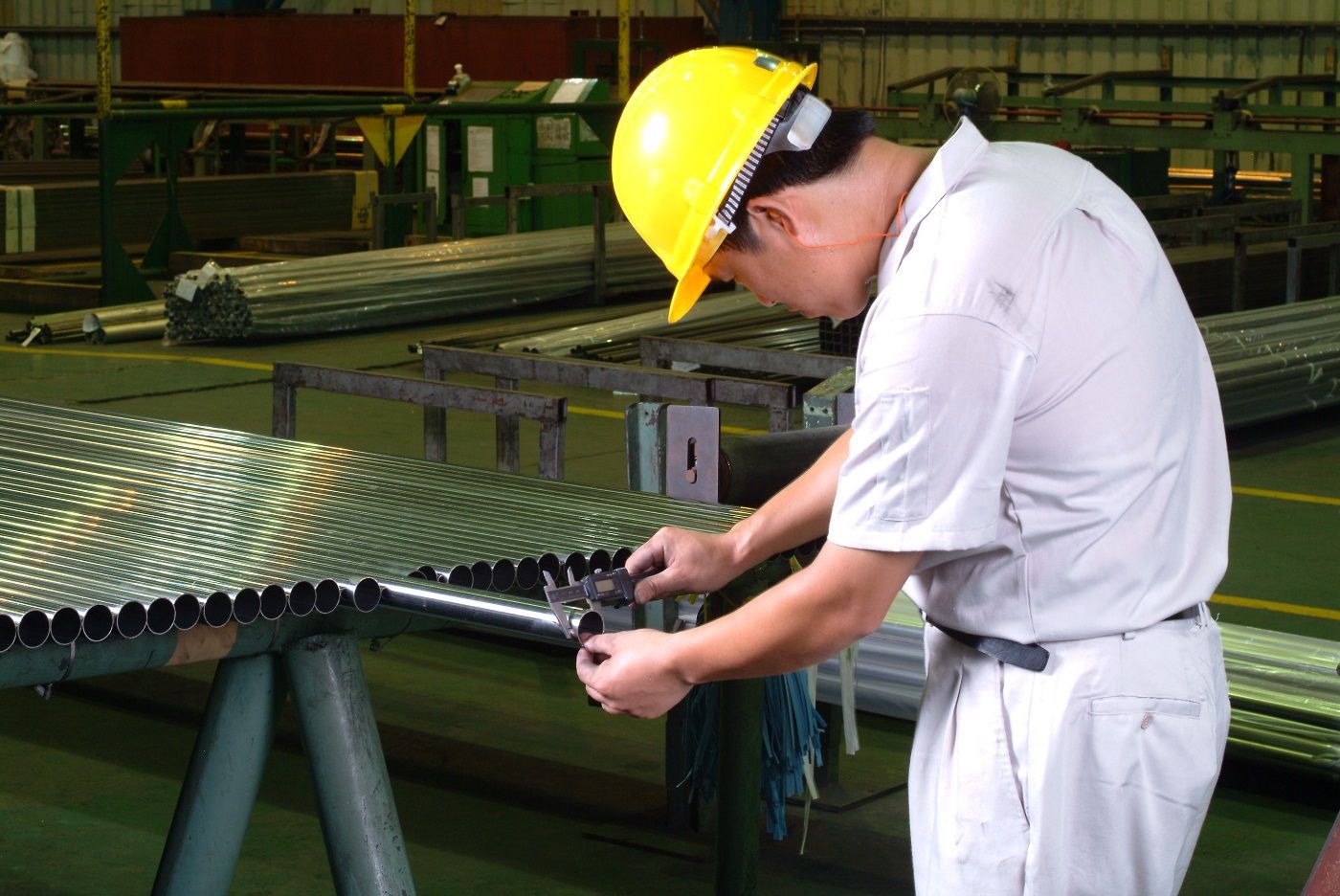
nickel alloy tubes arranged for industrial inspection
Built for corrosion, heat, and demanding service
Nickel alloys are chosen because they can help solve problems that standard carbon steel or some stainless steels cannot handle well. In many plants and processing systems, the challenge is not one single condition but a combination of heat, chloride exposure, acidic media, seawater, vibration, or pressure cycling. Nickel alloy tubes provide a practical material option when durability, compatibility, and service life are central to the purchase decision.
Common uses include chemical processing, heat exchangers, condensers, marine systems, power generation, oil and gas processing, aerospace support equipment, and high-temperature industrial lines. The exact alloy should always be selected according to the medium and design code, but the buying logic remains the same: choose the tube that can perform in the actual service condition, not simply the tube that is easiest to source.
Key performance priorities often include:
- Resistance to corrosion in aggressive or mixed environments
- Strength retention in elevated-temperature service
- Compatibility with welding, bending, flaring, or machining
- Dimensional consistency for assemblies and exchangers
- Surface condition appropriate for fluid cleanliness or process control
- Traceable material documentation for quality-driven projects
- Availability in the lengths, sizes, and forms required by the design
Product options for nickel alloy tubes and related forms
A complete nickel supply requirement often includes more than tubing alone. Project teams may need nickel alloy tubes, nickel alloy pipes, plate, fittings, and cut-to-size material from coordinated specifications. Sourcing related forms together can reduce mismatch risk, simplify documentation review, and make it easier for engineering, purchasing, and quality teams to work from the same material basis.
Available product categories may include:
- Seamless nickel alloy tubes for applications that require a uniform body without a welded seam.
- Welded nickel alloy tubes for projects where suitable standards allow welded construction and efficient production.
- Nickel alloy pipes for process lines, pressure service, and fluid transfer systems.
- Cut lengths and project quantities based on drawings, bills of materials, or maintenance needs.
- Nickel alloy pipe and plate combinations for fabrication shops, repair work, and plant projects.
- Custom packaging and marking to support identification during receiving, storage, and installation.
If you are searching for a manufacturer of nickel alloy tubes, look for support that goes beyond simply listing sizes. A useful supplier should help confirm the product form, alloy grade, tolerance, condition, test requirements, and documents needed with the shipment. That support is especially valuable when the tube will be welded into a larger assembly or installed in a critical process system.
Selection factors that protect performance and budget
Choosing nickel alloy tubes only by price can create problems later. A lower-cost option may become expensive if the wall thickness is wrong, the documentation is incomplete, or the alloy does not match the fluid chemistry. The best purchasing decision balances performance, availability, compliance, and total installation risk.
Use this checklist before requesting a quote:
- Define the service environment. Identify the process fluid, external exposure, temperature, pressure, and expected duty cycle.
- Confirm the required product form. Decide whether the project calls for tubing, pipe, plate, or a mixed package of nickel alloy pipes and tubes.
- Specify the alloy family. Match the alloy to corrosion resistance, temperature performance, and fabrication requirements.
- Check dimensions carefully. Include outside diameter, wall thickness, length, tolerance, and any end preparation.
- Clarify manufacturing route. Note whether seamless or welded construction is required or acceptable.
- Identify testing requirements. Request inspection, mechanical testing, hydrostatic or nondestructive testing, if applicable to the standard.
- Ask for documentation. Confirm mill test certificates, heat traceability, marking, and any project-specific paperwork.
- Plan fabrication. Share whether the nickel tubing will be welded, bent, expanded, machined, or cleaned before use.
This process helps reduce overbuying as well as under-specifying. Some applications genuinely require a higher-alloy product, while others may perform well with a more available grade. The right conversation early in the buying process can prevent redesign, rejected material, or urgent replacement orders.
Specifications and ordering details
A clear specification is the fastest way to get accurate pricing and practical lead-time guidance. Nickel alloy tubes can vary by alloy, size range, wall, condition, finish, manufacturing method, and testing package. Without those details, any price is only a rough starting point and may not reflect the product actually needed.
When preparing an inquiry, include as many of the following details as possible:
- Alloy grade or equivalent material requirement
- Seamless or welded tube preference
- Outside diameter and wall thickness
- Required length or random length acceptance
- Quantity by piece count, total length, or weight
- Applicable standard, drawing, or project specification
- Annealed, cold worked, pickled, polished, or other finish needs
- End condition, such as plain ends or prepared ends
- Inspection, test, and certification requirements
- Packing, labeling, and shipping instructions
- Required delivery locati0n and target delivery date
If you do not know every item, that is normal. Share the available design information, operating conditions, and intended use. A qualified supplier can help translate those details into a practical nickel alloy tubes quotation and identify where engineering confirmation may be needed.
Practical benefits for industrial buyers
Nickel alloy tubes are not usually selected for simple, low-demand service. They are chosen when the cost of downtime, leakage, corrosion, contamination, or repeated maintenance is high enough to justify a stronger material decision. That is why buyers should evaluate the product as part of the whole system rather than as a standalone commodity.
For maintenance teams, the benefit may be longer replacement intervals in aggressive service. For fabricators, it may be consistent dimensions and weldable material that supports cleaner assembly work. For procurement teams, it may be traceable supply, clear documentation, and the ability to order nickel alloy applications across tubes, pipe, and plates from a single source.
A typical before-and-after scenario is a plant line where frequent corrosion-related replacement has become routine. Instead of repeatedly installing the same material and accepting the same failure pattern, the team reviews the media, temperature, and cleaning chemistry. By upgrading to a more suitable nickel alloy pipe or tube specification, the project can be approached as a reliability improvement rather than a short-term repair.
Pricing is based on alloy, size, and project requirements
Nickel alloy tube pricing depends on the alloy grade, market conditions, dimensions, quantity, manufacturing route, test requirements, certification package, and delivery schedule. Because these factors can change the final cost significantly, fixed generic pricing is rarely useful for serious industrial purchasing. A project-specific quotation gives you a more accurate view of cost, availability, and any technical considerations before the order is placed.
To receive a focused quote, provide the alloy, size, wall thickness, quantity, standard, and delivery destination. If you are comparing nickel alloy pipes and tubes for the same project, include both requirements together so the quote can account for compatible materials, packaging, and shipment planning. If your specification is still open, request options rather than guessing at a grade that may not fit the environment.
Why sourcing support matters
The best nickel alloy purchase is not only about finding stock. It is about preventing specification gaps before the material reaches your floor. A manufacturer of nickel alloy tubes or a specialist supplier should be able to review the request, flag missing details, and help align the supplied material with the project’s technical and commercial needs.
Good sourcing support can help with:
- Selecting between nickel tubing and nickel alloy pipes when both appear possible
- Matching tube dimensions to fabrication or installation constraints
- Coordinating nickel alloy tubes pipe and plates requirements for multi-form projects
- Confirming marking and documentation expectations before shipment
- Reducing order delays caused by incomplete specifications
- Supporting repeat orders for maintenance and replacement programs
This level of communication is especially important for custom or critical work. When a tube will be installed in a heat exchanger, chemical line, marine system, or high-temperature process, small specification differences can affect fabrication and service results.
Request a quote for nickel alloy tubes
If you are ready to buy, send your alloy grade, tube size, wall thickness, quantity, specification, and required delivery details. If you are still choosing between nickel alloy tubes, nickel alloy pipes, or related plate requirements, share the operating conditions and intended use so the inquiry can be reviewed properly.
Use the quote request as a technical checkpoint, not just a price check. The more clearly the application is described, the easier it is to recommend a suitable product form, avoid unnecessary substitutions, and supply documentation that supports your project from receiving through installation.
 English
 Afrikaans
 Arabic
 Bengali
 Catalan
 Chinese
 French
 Dutch (Belgium)
 Dutch
Dutch German
 Czech
Czech Greek
Greek Hindi
Hindi Japanese
 Italian
 Portuguese
 Spanish (Chile)
 Spanish (Colombia)
 Spanish (Argentina)
 Persian
 Estonian
 Albanian
 Russian
 Spanish (Peru)
 Indonesian
 Thai
Thai Vietnamese
 Georgian
 Bhojpuri
 Moroccan Arabic
 Korean
 Nepali
 Polish
 Ukrainian
 Malayalam
 Xhosa
Xhosa