 वेनझोउ काइक्सिन काइक्सिन मेटल कंपनी लिमिटेड

You are specifying a data center cooling system, and the coolant distribution unit (CDU) keeps stealing the spotlight. But here is the uncomfortable truth most specifiers learn too late: the CDU is only as reliable as the piping you bolt around it. In this guide we map the full demand chain — from the AI boom to the stainless steel tube in your rack — and show you exactly why piping design decides whether your liquid cooling deployment ships on time or leaks on day one.
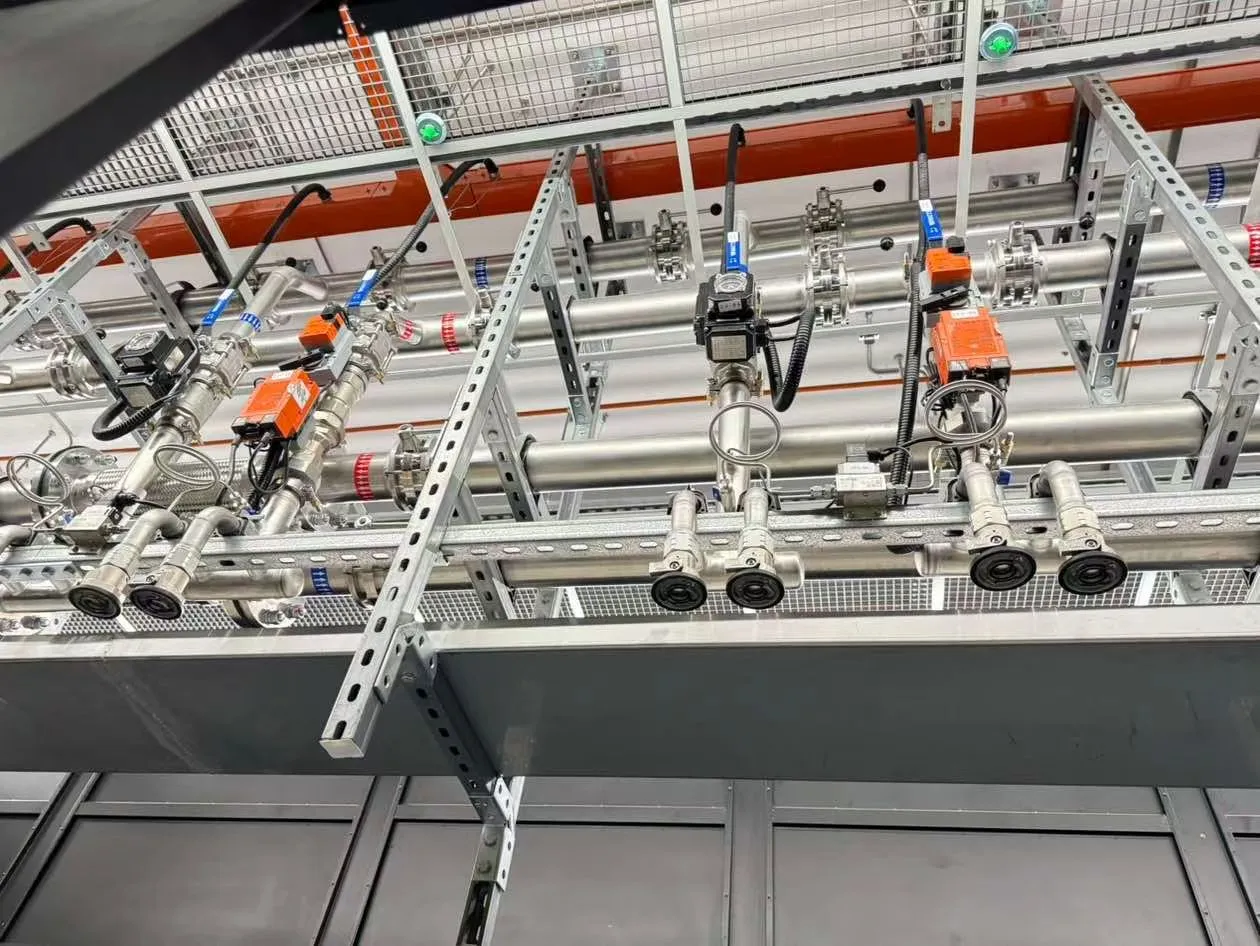
The Market Demand Chain Behind CDU Piping
Before you choose a tube size, you need to understand why the market is pulling on this part so hard. The chain looks like this:
- AI and hyperscale workloads are pushing rack densities past 50–100 kW, where air cooling simply cannot keep up.
- That forces operators toward liquid cooling systems built on direct-to-chip and rear-door loops.
- Every liquid loop needs a coolant distribution unit (CDU) to pressurize, filter, and thermally couple the facility water to the coolant.
- And every CDU needs leak-tight, corrosion-resistant piping — pumping panels, manifolds, and coolant loops — to move fluid safely.
For you as a B2B buyer, the takeaway is direct: CDU volume is the leading indicator for stainless steel cooling-pipe demand. When hyperscalers announce new campuses, your RFQ pipeline for tubing follows within quarters.
What a CDU Actually Does (in 30 Seconds)
A CDU is the hydraulic heart of a liquid cooling system. It takes warmer facility water on one side, runs it through a plate heat exchanger, and pushes temperature-controlled coolant through the 304L vs 316L stainless steel pipe network on the other. It manages pump head, filtration, flow balancing, and leak detection. Get any of those wrong and the piping — not the server — fails first.
Why Piping Design Is the Critical Link
You can buy the best CDU on the market and still lose the deployment to poor piping. Here is where design makes or breaks you:
1. Pressure Drop Defines Your Pump Budget
Oversized or poorly routed tubing spikes pressure drop, forcing bigger pumps, more energy, and noisier cabinets. Right-sized ड्यूपलेक्स स्टेनलेस स्टील पाइप keeps velocity in the 1.5–3 m/s sweet spot.
2. Leak Risk Is a System Problem
A single weep at a manifold joint can take a row of racks offline. Smooth-bore, orbitally welded stainless lines with verified passivation beat threaded joints every time.
3. Coolant Chemistry Demands the Right Alloy
Deionized water and glycol blends are corrosive to the wrong metal. 304L and 316L stainless, plus duplex grades for higher pressure, give you the compatibility margin you need.
4. Manifold and Loop Topology Control Your Scalability
A well-designed coolant manifold lets you add racks without re-plumbing the whole loop. Bad topology turns every expansion into a shutdown.
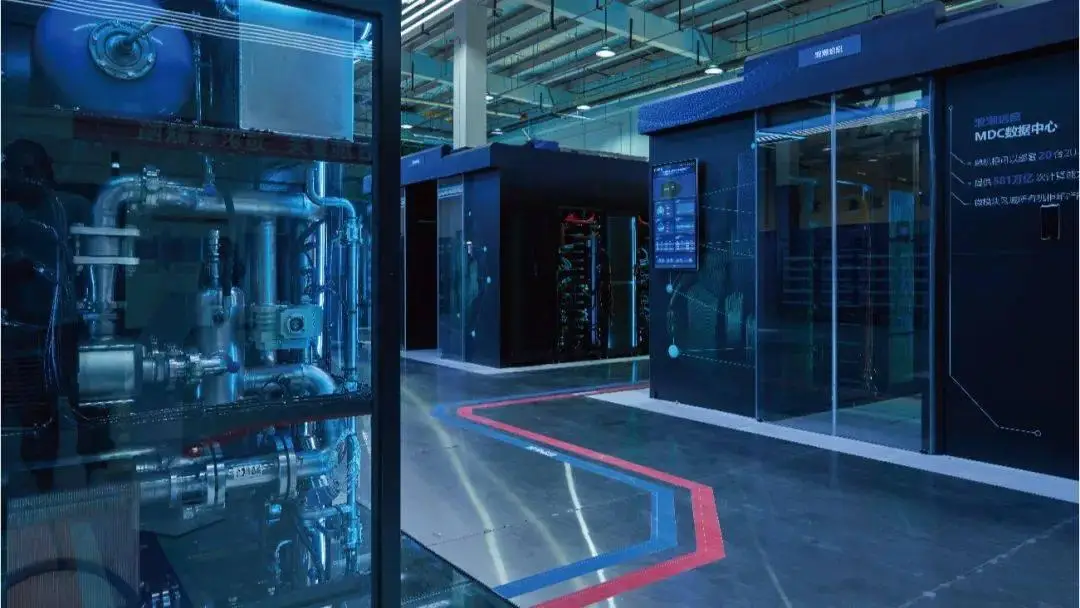
Kaixin insight: We have supplied stainless steel tubing to data center projects in 130+ countries. The failures we are asked to fix are almost never the alloy — they are the design: wrong bends, wrong weld specs, wrong cleanliness for DI water.
Material Choice: Why Stainless Steel Tubing Wins for CDUs
When you specify the coolant loop, stainless steel is the default for a reason:
| सामग्री | Best For | Why Specifiers Choose It |
|---|---|---|
| 304एल | Standard DI-water loops | Cost-effective, weld-friendly, low carbon |
| 316एल | Glycol / harsher chemistry | Molybdenum boost, better pitting resistance |
| Duplex (2205) | High-pressure manifolds | ≈2x strength, thinner walls, longer life |
Need help choosing a grade? Our 304L vs 316L stainless steel pipe guide breaks down the trade-offs by coolant chemistry and pressure class.
Specifying a CDU cooling loop?
Get mill-test-certified stainless steel tubing sized to your flow and pressure. Kaixin ships worldwide.
The B2B Buyer’s Demand Chain: Where You Sit
Understanding the chain tells you who to sell to and what to stock. The flow is:
- Hyperscalers & colocation operators set capacity roadmaps.
- CDU OEMs and ODMs design the units and release tubing specs.
- Fluid-system integrators build manifolds and coolant loops.
- Tube and fitting suppliers — like Kaixin — fulfill the Bill of Materials.
If you are a distributor, integrator, or OEM, the signal is clear: qualify your stainless steel supply now. Lead times on certified orbital-welded tubing are the new bottleneck. Explore our data center tube solutions to see what BOM-ready lengths and grades look like.
CDU Piping Specification Checklist
Use this quick checklist before you release a CDU piping drawing. (A printable version is available on request.)
- ✅ Alloy selected for your coolant chemistry (304L / 316L / Duplex)
- ✅ Velocity held in 1.5–3 m/s to control pressure drop
- ✅ Orbitally welded or validated press joints; no threaded leaks
- ✅ Passivation + cleanliness verified for DI-water service
- ✅ Manifold sized for planned rack expansion
- ✅ Leak-detection taps and isolation valves specified
Ready to source CDU-ready tubing?
Send us your drawing or BOM. Kaixin (WZ INOX) delivers certified stainless steel pipe and fittings to 130+ countries.
अक्सर पूछे जाने वाले प्रश्न
What flow rate and pressure should a CDU piping loop be designed for?
Typical CDU loops run 10–40 L/min per rack branch at 1–4 bar, but the right numbers come from your server cold-plate specs and total rack count. Design to the worst-case branch, then add about 20% pump head margin for filter loading.
How do you size stainless steel tubing for a CDU coolant loop?
Start from required flow and target velocity (1.5–3 m/s), then solve for internal diameter. A 10 L/min branch at 2 m/s needs roughly 9–10 mm ID. Always verify pressure drop across the full loop, including the manifold and fittings.
What is the difference between a CDU and a chiller?
A chiller produces cold facility water; a CDU sits closer to the racks and uses a heat exchanger to isolate that facility loop from the corrosive coolant loop. The CDU’s piping is what actually touches the server-side fluid.
Should you use hard piping or flexible hose for CDU connections?
Hard orbital-welded stainless is best for permanent runs and leak integrity. Use flexible hose only at vibration isolation points (pump outlets, movable racks), and specify hose rated for your coolant chemistry and temperature.
Which standards apply to CDU coolant piping?
Common references include ASTM A312/A789 for tubing, ASME BPE for high-purity loops, and SEMI F57 for fluid-purity requirements. Specify the exact grade, heat number, and cleanliness class on your purchase order.
How often should CDU piping be inspected or flushed?
Inspect joints and leak taps at commissioning and quarterly after. Flush and re-passivate if conductivity or particulate counts drift out of spec — typically annually in DI-water service, sooner if you see corrosion.
संबंधित संसाधन
- एआई डेटा सेंटर बूम: स्टेनलेस स्टील कूलिंग पाइप की मांग क्यों बढ़ रही है
- एआई डेटा सेंटर की लिक्विड कूलिंग के लिए स्टेनलेस स्टील पाइप्स क्यों आवश्यक हैं
About Kaixin (WZ INOX)
Wenzhou Kaixin Metal Co., Ltd (Kaixin / WZ INOX) is a source-factory stainless steel pipe and tubing manufacturer serving B2B buyers in 130+ countries. We produce stainless steel seamless pipe, duplex and nickel-alloy tubing, and capillary tube to ASTM/ASME specs, with mill test certificates and fast worldwide delivery. This article reflects field experience supporting data center cooling projects.
 English
 Afrikaans
 Arabic
 Bengali
 Catalan
 Chinese
 French
 Dutch (Belgium)
 Dutch
Dutch German
 Czech
Czech Greek
Greek Hindi
Hindi Japanese
 Italian
 Portuguese
 Spanish (Chile)
 Spanish (Colombia)
 Spanish (Argentina)
 Persian
 Estonian
 Albanian
 Russian
 Spanish (Peru)
 Indonesian
 Thai
Thai Vietnamese
 Georgian
 Korean
 Nepali
 Polish
 Ukrainian
 Malayalam
 Xhosa
Xhosa