 شرکت وِنژو کایشین کایشین فلز

مقدمه
Selecting the right ss tube is a critical decision for any engineering project. Whether you need the high-pressure strength of a seamless stainless steel pipe or the cost-efficiency of stainless steel welded tubes, understanding how they are made is the first step toward quality. This guide explores the professional world of metal tube fabrication.
What are the Two Main Types of SS Tube
Before we step onto the factory floor, your business needs to understand that in the world of metal tube fabrication, we generally split production into two massive families. Each has its own “personality” and best-use case.
The Structural Divide: A seamless stainless steel pipe starts its life as a solid hunk of metal. It has no seams because it was never folded or joined. In contrast, stainless steel welded tubes start as a flat ribbon of steel that is rolled up and welded shut.
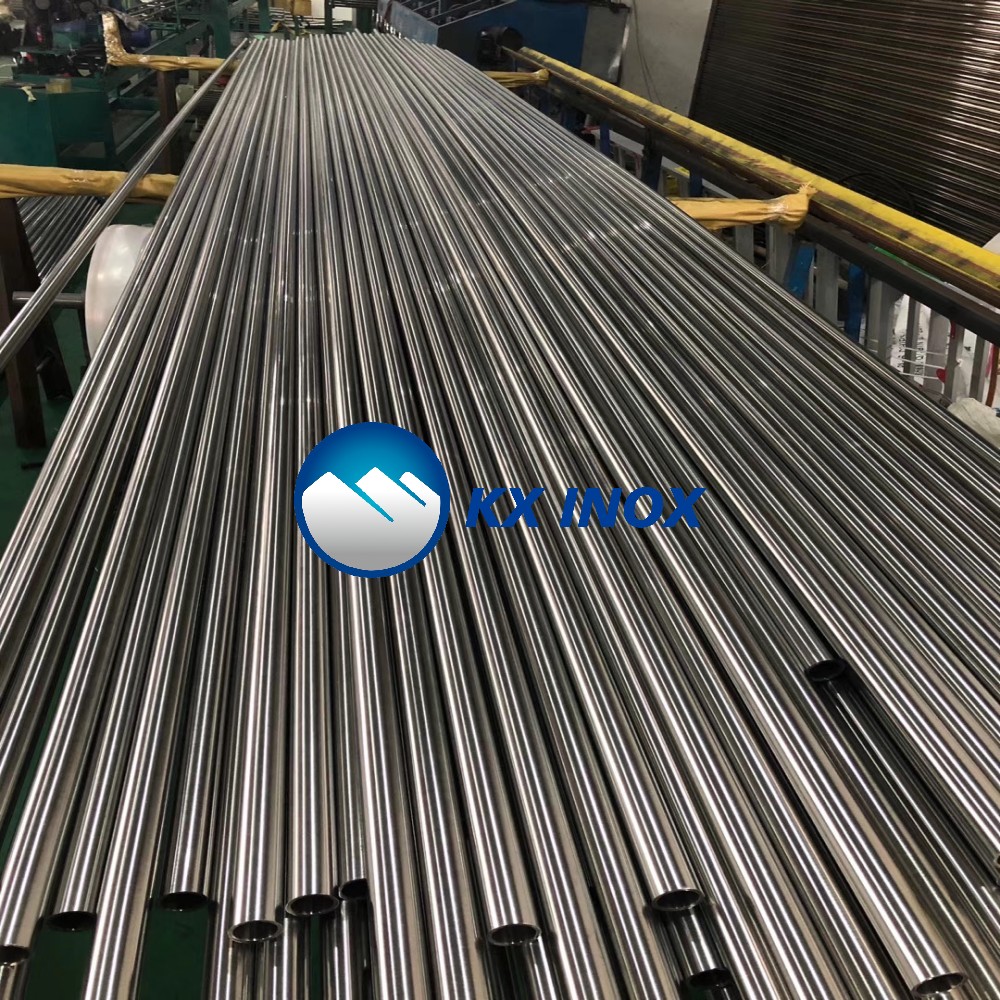
Performance Expectations: If your project involves high-pressure steam, oil and gas, or volatile chemicals, you will likely choose seamless tube manufacturing. However, for architectural handrails, automotive exhaust, or food processing lines, the stainless steel welded pipe is the king of versatility and budget.
The “Pipe vs. Tube” Language: You might hear engineers use these words interchangeably, but there is a subtle difference. “Pipe” usually refers to moving fluids under pressure (measured by nominal size), while “Tube” often refers to structural or mechanical precision (measured by exact outside diameter). Regardless of the name, the manufacturing heart remains the same.
How is a Seamless Stainless Steel Pipe Manufactured Step-by-Step
Creating a pipe without a seam is a high-energy, violent process. It’s about taking a solid piece of steel and “forcing” a hole through it while it’s white-hot. This ensures there is no “weak link” in the metal’s structure.
Step 1: Billet Preparation and Heating
The story starts with a “billet”—a solid round bar of high-grade steel. Seamless pipe manufacturers place these billets in a rotary hearth furnace. We heat them until they are glowing at roughly 1,200℃. At this temperature, the steel is soft enough to be reshaped but hasn’t melted into a liquid.
Step 2: The Piercing Mill Operation (The Heart of Seamless)
This is the core of seamless tube manufacturing. The hot billet is gripped by heavy rollers and spun at high speed while being pushed against a pointed mandrel (a piercing plug). This creates a hollow center. Imagine pushing your finger through a piece of warm clay—that’s the logic, just with thousands of tons of pressure.
Step 3: Elongation and Rolling (Setting the Wall Thickness)
Now we have a thick-walled hollow “bloom.” To make it longer and thinner, the tube passes through a series of rolling mills. These machines stretch the metal out, refining the inner and outer surfaces until the pipe reaches the rough dimensions required for an astm a312 stainless steel pipe.
Step 4: Cold Drawing & Pilgering for Precision
For high-precision stainless steel mechanical tubing, the “hot” process isn’t enough. We take that shell and pull it through a die at room temperature (Cold Drawing). This makes the surface smooth as glass and the dimensions incredibly tight—perfect for parts that need to fit together perfectly.
What is the Production Flow for Stainless Steel Welded Tubes
If you walk into a factory making stainless steel welded tubes, you’ll see a much faster, continuous rhythm. It’s a masterpiece of modern automation.
Step 1: Slitting and Uncoiling
We start with a massive, flat stainless steel coil. A slitting machine acts like giant scissors, cutting it into narrow strips. The width of this strip is calculated down to the millimeter, as it will eventually form the exact circumference of your ss tube.
Step 2: Continuous Forming with Molds
The strip enters a long line of forming rollers—known as the stainless steel pipe mold. These rollers gradually bend the flat edges upward. It moves from a flat plate to a “U” shape, and finally to a perfect “O” shape. This is done “cold,” meaning the steel stays at room temperature. For specialized applications, engineers often look for ways to improve the mold design of stainless steel pipes to reduce surface friction and ensure a more consistent diameter during high-speed production.
Step 3: Advanced SS Tube Welding Techniques
As the two edges of the “O” touch, they are joined forever. SS tube welding usually happens via TIG (Tungsten Inert Gas), Plasma, or Laser. These methods use high-intensity heat to melt the edges together. No glue or filler metal is added; the two sides simply become one solid piece of metal.
Step 4: Weld Bead Removal (Scarfing)
A fresh weld leaves a “bead” or a bump on the surface. To make the stainless steel welded pipe look and act like a single piece, a mechanical blade trims that bead away while the pipe is still moving. In a high-quality factory, the seam becomes nearly invisible.
Comparison: Seamless vs. Welded Stainless Steel Tube Production
| ویژگی | Seamless Stainless Steel Pipe | لولههای جوشی فولاد ضد زنگ |
| Starting Material | Solid Round Billet | Flat Stainless Steel Coil/Strip |
| Manufacturing Core | Hot Piercing & Rolling | Roll Forming & SS Tube Welding |
| Wall Uniformity | Can vary slightly | Excellent (Consistent strip thickness) |
| Production Speed | Slower (Batch process) | High-speed (Continuous process) |
| بهترین برای | High pressure, oil & gas, boilers | Structural, food-grade, mechanical |
Why are Heat Treatment and Finishing Essential for All SS Tubes
Manufacturing “shocks” the metal. Whether it’s the intense heat of the weld or the massive pressure of the piercing mill, the steel’s molecules get stressed out.
Solution Annealing (The Molecular Reset): Every quality ss tube must be heat-treated. We heat the tubes to about 1,050°C and then quench them rapidly in water or air. This “resets” the grain structure and ensures your ss 304 corrosion resistance is at its maximum potential.
Pickling and Passivation (The Acid Spa): Manufacturing leaves “scale” and tiny iron particles on the surface. We dip the tubes in an acid bath. This “pickling” removes the gunk and lets the chromium in the steel react with oxygen to form a fresh, clean protective shield.
Straightening and Polishing: Pipes can warp slightly during the heating and cooling phases. A straightening machine uses offset rollers to “massage” them back to being perfectly straight. If your business needs a “Mirror” or “Satin” look, this is where the heavy-duty polishing belts come in.
Different alloys react differently to heat. While 316L is the industry standard, materials like 904L require specialized handling. Explore the differences between 316L and 904L to see how material choice impacts pipe performance.
How to Choose Reliable Stainless Steel Tube Suppliers in China
Buying from china stainless steel tube suppliers can save your business a fortune, but you have to know how to spot a professional operation. In a crowded market, the difference between a high-performance ss tube and a failing one often comes down to the manufacturer’s internal culture.
Look for Integrated Production Power: The most reliable stainless steel tube manufacturers are those that control the process from start to finish. If a factory outsources their annealing or their testing, they lose control over the quality. An integrated factory ensures that every seamless stainless steel pipe is treated with the same level of care.
The Certificate Checklist: Check if the supplier holds ISO 9001 or specific pressure equipment certifications (like PED). These certificates act as a global green light, proving that the factory’s metal tube fabrication methods are audited by international experts.
Request “In-Process” Photos: A professional china stainless steel tube supplier will have no problem showing you photos of their stainless steel pipe mold setup or their testing lab. If they are secretive about their equipment, it’s a red flag.
Evaluate the Logistics Strategy: Ask them how they pack stainless steel mechanical tubing. Do they use plastic plugs to keep dust out? Do they use steel-strapped wooden crates? A supplier that invests in high-end packaging is a supplier that respects your project.
پرسشهای متداول
Is seamless stainless steel pipe always better than welded?
Not always. Seamless handles higher pressure, but welded tubes are more cost-effective and have more consistent wall thickness.
What is the purpose of the stainless steel pipe mold?
The mold rollers ensure the flat strip is bent into a perfectly round circle before the welding process begins.
Does ss tube welding affect the pipe’s corrosion resistance?
If properly annealed (heat-treated) after welding, the seam area regains the same corrosion resistance as the rest of the pipe.
Why do some stainless steel welded tubes rust at the seam?
This usually happens if the manufacturer skipped the annealing process, leaving the weld “stressed” and prone to corrosion.
Can I use stainless steel mechanical tubing for high-pressure fluid lines?
It’s risky. Mechanical tubing focuses on dimensional precision; for high pressure, always use certified seamless stainless steel pipe.
نتیجهگیری
From the white-hot piercing of a seamless stainless steel pipe to the precision of ss tube welding, manufacturing excellence defines project success. Understanding these flows helps your business source better materials from trusted stainless steel tube manufacturers. Contact Kaixin today to get a technical quote and expert advice on your next pipeline project!
 English
 Afrikaans
 Arabic
 Bengali
 Catalan
 Chinese
 French
 Dutch (Belgium)
 Dutch
Dutch German
 Czech
Czech Greek
Greek Hindi
Hindi Japanese
 Italian
 Portuguese
 Spanish (Chile)
 Spanish (Colombia)
 Spanish (Argentina)
 Persian
 Estonian
 Albanian
 Russian
 Spanish (Peru)
 Indonesian
 Thai
Thai Vietnamese
 Georgian
 Korean
 Nepali
 Polish
 Ukrainian
 Malayalam
 Xhosa
Xhosa